Robotaxi rides could be cheaper than traditional taxi rides. The market, estimated at millions of vehicles by 2035


Several car giants have been testing a range of self-driving vehicles in recent years, with analysts estimating that within 10 years at the most they will be in widespread use around the world, with a focus on big cities where demand is expected to be very high, a market analysis shows.
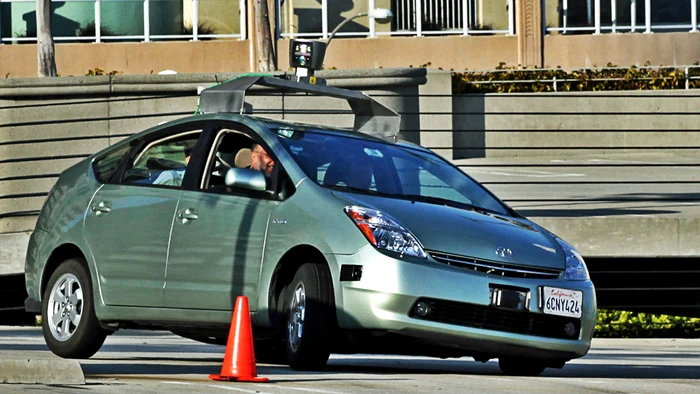
Several auto giants have tested a number of self-driving vehicles in recent years. Archive photo
According to the latest analysis by the Boston Consulting Group (BCG), by 2035 at least 700,000, but even as many as 3 million, fully autonomous robotaxis could be operating in the world's major cities, while in some markets fares for passengers could be lower than those of traditional taxi services.
BCG forecasts indicate that adoption of robotaxi services will be fastest in the US and China. In Europe, the pace of implementation will be influenced by the fragmentation of the regulatory environment and higher operational costs compared to the US and China.
According to the BCG study “Finally here: The evolution of the robotaxis”, conservative estimates indicate that in 2035 there could be 850,000 robotaxis in China, 350,000 in the US, and around 120,000 in Europe.
Of course, consumer attitude is a key factor in the spread of this technology. According to a BCG survey of over 9,000 people, about 60% of Chinese consumers are open to using robotaxis, while in the US and Europe only 30–35% would be willing to use the service.
BCG estimates that by 2030 the acceptance of robotaxis could reach 60% in the US and over 45% in Europe, as they become attractive to those less interested in the novelty factor, but who emphasize safety, cost and reliability.
The technology has already crossed several critical thresholds. Today it is clear that the cost per kilometer can drop significantly: as low as $0.80 in the US and around $0.40 in China. This gives it a competitive advantage over traditional and app-based taxi services (such as Uber, Lyft or Bolt).
“According to the analysis, the spread of robotaxis will not be a revolutionary process, but an evolutionary one, not because of technological limitations, but because the practical conditions for large-scale implementation are gradually developing”said Karakas Ádám, BCG Executive Partner. Even in the current centers of robotaxi, such as San Francisco or Beijing, their share in the total taxi fleet remains below 1%.
“The pace of adoption will be influenced not only by consumer openness, but also by market entry costs, time to scale, and the extent to which services can gain market share from other means of transportation.”Karakas added.
The autonomous vehicle market has undergone major transformations over the past decade. The initial enthusiasm for robotaxis has been tempered by practical difficulties, with several major companies pulling out or changing strategy. Recently, however, commercial robotaxi services have been launched in cities such as San Francisco, Los Angeles and Beijing, giving the market a new boost.
Where the robotaxis will appear
According to BCG, not all cities are equally suitable for robotaxis. They will first consolidate in the economically developed and technological regions. Initially in the US and China, and later gradually in other parts of the world. Emerging economies with weaker infrastructure and cheap labor for drivers will lag behind and may not be ready for robotaxis until after 2040.
Significant regional differences in operating costs are also expected. In Europe, upfront costs will be higher than in the US due to higher energy prices and service costs, as well as stricter regulations. In China, operating costs are 30–50% lower due to cheaper technology and low maintenance labor costs.
Robotaxis: private cars, public transport
BCG estimates that in the long term, in economically developed cities, robotaxis could replace 55–85% of urban travel. From a territorial point of view, they could cover about 20% of a typical American urban agglomeration.
Due to high parking costs, many will prefer the robotaxi to their own car, but private vehicles will continue to play a significant role. Where private car use is not discouraged by high parking fees, congestion charges or low-emission zones, private cars will remain dominant.
At the same time, larger autonomous vehicles – for example robotic suburban buses – could play a key role in the public transport of the future, especially in low-traffic areas where the cost of bus drivers is disproportionate to the number of passengers carried. These vehicles can facilitate the so-called “the first and last kilometer” to public transport nodes and can contribute to the easier integration of less well-served areas into the public transport network.