“Born with Macron, died with Macron.” Why Europe's plan for the fighter jet of the future is collapsing


France and Germany's plan to build a fighter jet of the future, to be accompanied by a swarm of drones and a digital combat ecosystem, is collapsing at a crucial time for Europe amid the growing threat from Russia, according to The Guardian.
German Chancellor Friedrich Merz said this week that the 100 billion euro program was no longer viable for him, insisting that the decision was based on technical, not political, reasons. France needs an aircraft that can carry nuclear weapons and take off from aircraft carriers, while Germany does not. However, the project's problems are much older, notes The Guardian.
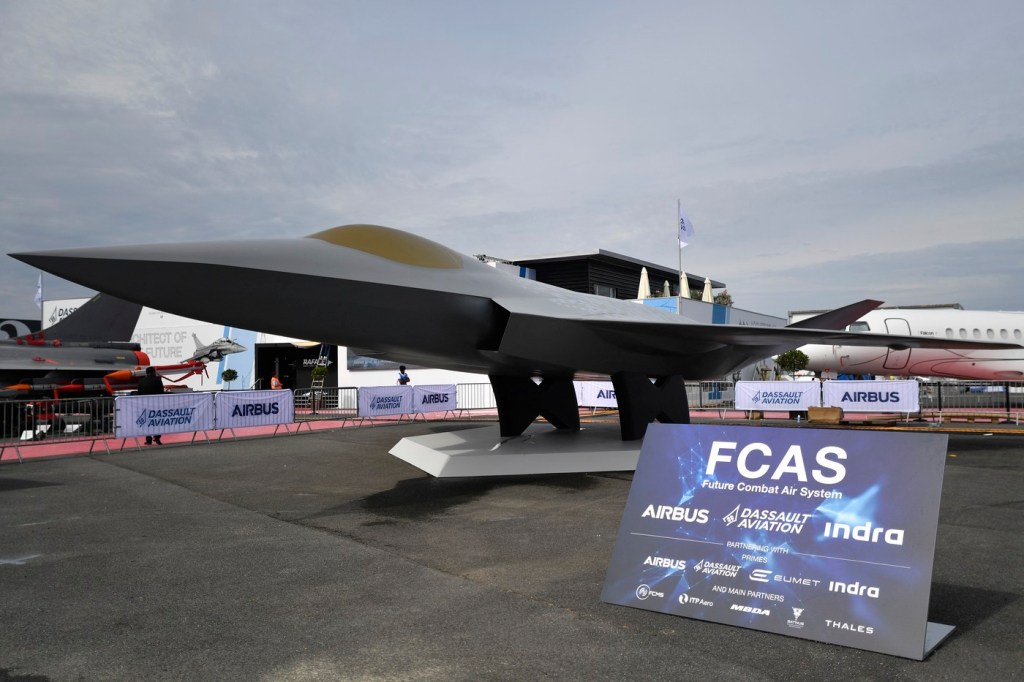
Known as the Future Combat Air System (FCAS), the program was announced in 2017 by French President Emmanuel Macron and then-German Chancellor Angela Merkel, with Spain joining in 2019.
The project was meant to replace France and Germany's existing fighter jets by 2040, being equipped with camouflage capabilities and accompanied by drones to scout the terrain or draw enemy fire, all sharing real-time data.
Europe already has three competing fighter jets — Eurofighter Typhoon, Rafale and Gripen — and the collapse of FCAS could accentuate this fragmentation, writes the British publication. While Airbus executives have constantly warned of the need to consolidate projects on the continent, the failure of the Franco-German program would leave room for other initiatives, such as the British-Italian-Japanese Tempest project or the successor to the Swedish Gripen model.
For a bloc that spent a total of 381 billion euros on defense last year but is struggling to turn that sum into military capability, the stakes are high. Threats from Russia are on the rise, and Donald Trump has told Europe it's time to pay for its own security.
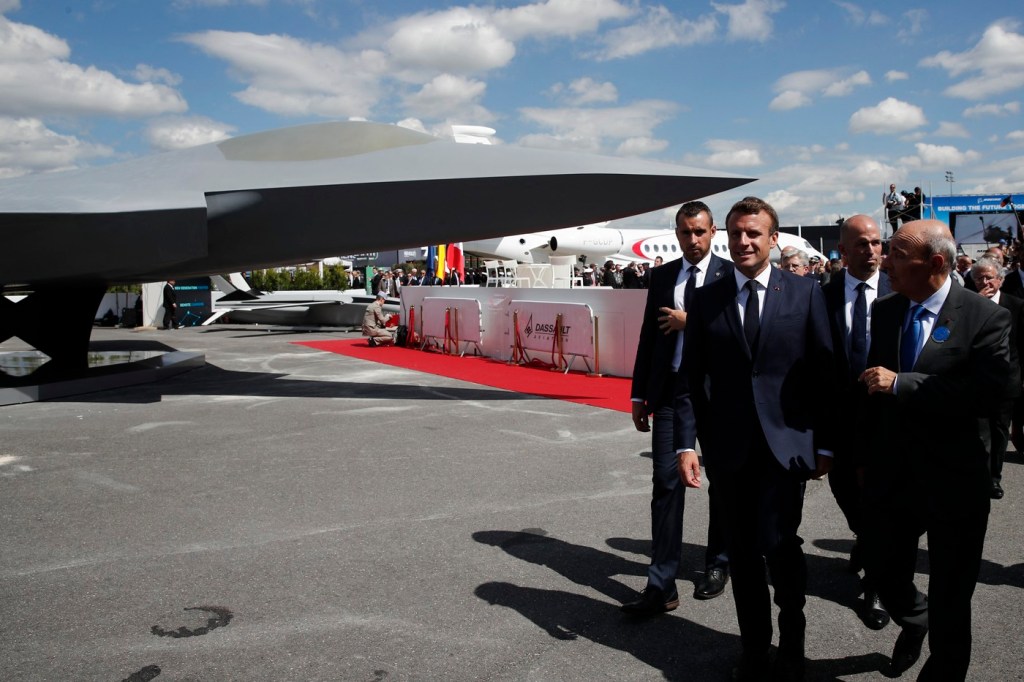
For years, the companies building the Franco-German plane have been unable to agree on the coordination of the project. Dassault Aviation, the French maker of the Rafale jet, insists on leading the fighter jet, while Germany-based Airbus's defense division is calling for equal involvement.
Dassault's chief executive, Eric Trappier, stressed that his firm had the expertise to handle the project alone, refusing to transfer critical technology to German partners.
In this context, a former senior French official, who asked to remain anonymous, said the project appears to have been conceived “at a very high political level” without wider discussions within the defense ministry about whether the countries have the same needs. “Germany and France do not have the same way of making war,” he said. “I was quite disturbed by this.”
Dassault vs. Airbus
Eric Trappier clarified the company's position last year, saying his team has the expertise to handle everything on its own. “If they (the Germans) want to do it themselves, let them do it themselves,” he told reporters. “We know how to do everything, from A to Z.”
The commercial success of the Rafale jet, with orders stretching back to the mid-2030s, gives Dassault a comfortable market position.
“Dassault is not easy,” said the former senior French official. “They have great engineers, but politically they do whatever they want. And now they don't even need this program, given that the Rafale gives them big export sales. So they're very comfortable, and their spirit of collaboration is not good. It annoys me.”
This dynamic was evident recently when President Emmanuel Macron promoted the sale of more than 114 Rafale jets to India, acting as a supporter of Dassault while the company refuses to cooperate on its replacement.
Dassault also has a history of this, having withdrawn from the Eurofighter program in the 1980s out of a desire to hold the lead; ultimately that plane was built by Britain, Italy, Germany and Spain, minus France.
Defense analyst Francis Tusa believes that while France is the only one of the three countries with the proven ability to design a fighter jet from scratch, the company's attitude is blocking collaboration. “Dassault is right, but if you want to collaborate, you shouldn't humiliate others,” he says.
The dysfunctionality is not only on the French side. Bertrand de Cordoue, Airbus' former head of public relations for the EU and NATO, said there had been tension between the two companies from the start, with Airbus engineering teams seeing Dassault as competition.
“For the German side of Airbus, it was not natural to accept the exit from the existing Eurofighter program,” said de Cordue, who is now an adviser at the Jacques Delors Institute, a think tank. “The teams working on Eurofighter did not readily accept the idea of completely changing their mindset and working with a French company that, in the export market, was a competitor, not a partner.”
In response, Dassault opposed the transfer of know-how, fearing that a competitor could acquire taxpayer-funded French expertise, although critics argue that this technology should belong to state authorities.
A growing divide
Even if the French and German governments could control the respective companies, the political will to do so appears to be waning — symptomatic of a growing rift between the two countries over defense.
In early February, Johann Wadephul, the German foreign minister, suggested that France needed to spend more on the military. Last year, NATO member states pledged to spend 5% of GDP on defense and security by 2035, but Wadephul said France's efforts had been “insufficient to achieve this goal so far”.
Germany's more assertive approach is partly the result of a shift in power dynamics. When the FCAS program began in 2018, its defense spending was modest. Now, following the decision to rearm following Russia's invasion of Ukraine, Berlin expects to spend 150 billion euros by 2029 – almost double France's budget – following a historic deal last year to ease its “debt brake”.
“France has been the accepted leader for 60 years,” Tusa said. “Suddenly, Germany says: “We must not be deferential”.
In reality, it would be difficult for Germany to go into fighter jet production on its own, Tusa added. Despite Airbus' expertise in commercial aircraft, building a fighter jet from scratch would be “their equivalent of the Manhattan Project” because of their lack of experience in the field, he said.
Even the Eurofighter was a joint project with Britain's BAE Systems and Leonardo. Germany would “basically start from scratch and mobilize all available resources,” the analyst added.
A “two-fighter solution”
What will happen next remains unclear, writes The Guardian. Germany may seek to join the rival British-Italian-Japanese Global Combat Air Program (GCAP), dubbed Tempest, which is due to enter service by 2035 — five years earlier than the nominal FCAS launch date. However, Berlin would probably only accept as an observer, not as a full partner.
But Airbus hasn't given up yet. Guillaume Faury, the company's chief executive, signaled a possible way forward on Thursday, suggesting that France and Germany could each develop separate planes but connect them through common cloud combat and drone systems.
Announcing the annual results, he said the impasse “should not jeopardize the entire future of this high-tech European capability that will strengthen our collective defence”.
“If our customers ask us to do so, we will support a two-fighter solution and we are committed to playing a leading role in such a reorganized FCAS achieved through European cooperation,” added Faury. Although FCAS is at a “difficult time,” he added, “we continue to believe that the program as a whole makes sense.”
Failure would leave Europe fragmented, the quoted source added. Instead of one next-generation fighter, the continent could end up with three or four separate programs — between FCAS, if it survives, GCAP, the potentially separate national efforts of France and Germany, and the proposed successor to Sweden's Gripen fighter.
“I think they should have continued with one plane,” said analyst Francis Tusa. “They (not Airbus and Dassault) need to go to counseling and basically be told, 'Come on guys, play nice'.”
While Dassault Aviation declined to comment, Emmanuel Macron continued to insist publicly that the project could be saved. At the Munich Security Conference, he said: “I find it hard to see how we are going to build new common solutions if we destroy the few we have.”
The former French official quoted by The Guardian, however, remained pessimistic, pointing out that Macron's mandate ends in May 2027, and a possible successor from the National Alliance camp could abandon the project completely. “I have the feeling that this project was born with Macron and could die with Macron,” he concluded.