The harrowing story behind a famous photo: the total drama of teenage children sent to die for Hitler

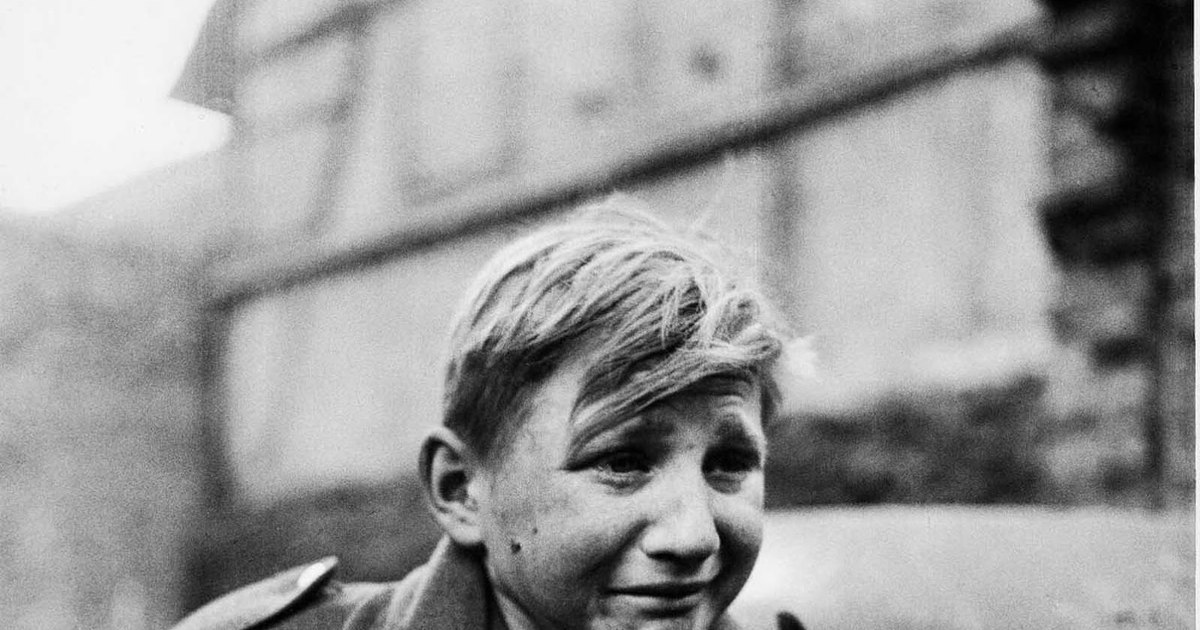
One of the most shocking and controversial images of World War II is that of a teenage Nazi German soldier crying uncontrollably after his unit was destroyed by the Allies. The story behind the photo is heartbreaking.
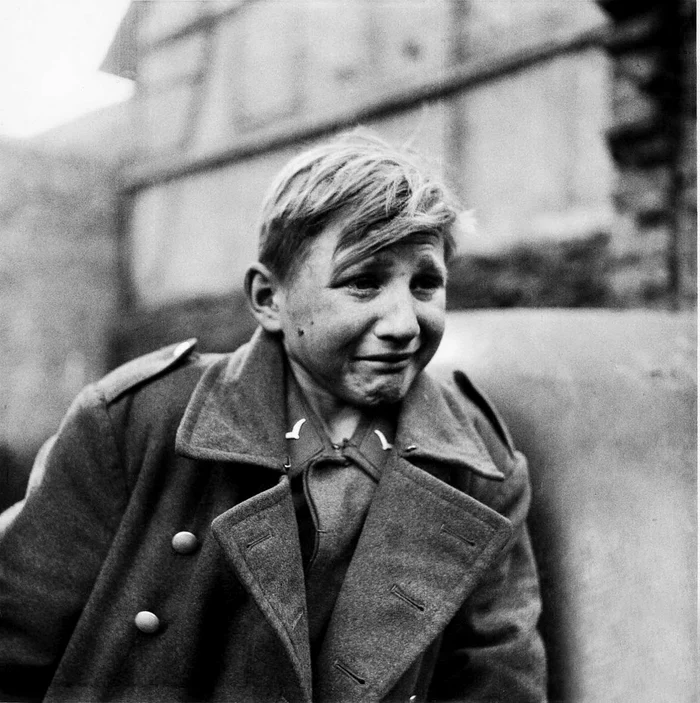
Hans Georg Henke PHOTO John Florea / The LIFE Picture Collection / US Army Archives
In the spring of 1945, World War II was coming to an end in Europe. Nazi Germany was cornered and defending itself with the fury of a dying man. She was caught in a pincer. The Soviet Union was rapidly advancing from the east, and the Allied forces were advancing from the west.
In January 1945, the Red Army launched the Vistula-Oder Offensive, rapidly closing in on Berlin. Cities in Poland and Eastern Europe were liberated, and on January 27, 1945, the Soviets discovered the Auschwitz-Birkenau extermination camp, revealing the extent of the Holocaust. In the west, after the repulse of the last German counter-offensive in the Ardennes, the Allies resumed their advance towards the Rhine. The bombing of German cities intensified.
In short, Nazi Germany was on the verge of collapse. Hitler ended up mobilizing teenagers and the elderly in a desperate attempt to save something. In this context, one of the most moving photographs of the end of the war was taken. A teenager dressed in Nazi Germany uniform serving in an anti-aircraft artillery battery sobbed with a desperate look after his unit had been annihilated. The story behind this set of photos taken by the American reporter John Florea, however, is downright shocking.
Children sent to death in the name of the Fuhrer
As the situation grew more desperate, Adolf Hitler lowered the conscription age and sent children and teenagers into battle.
On the one hand, there were those from the Nazi youth organization, the Hitlerjugend. These were children and young people indoctrinated in Nazi ideology from a very young age. The youth were trained in a spirit of total obedience to the Führer and sacrifice for the fatherland, which made them easy to mobilize in the last months of the conflict. Most were fanatics. The best example was the 12th SS Panzer Division “Hitlerjugend”, made up mostly of 17–18 year olds, which fought in 1944 in Normandy. “Much of what has been said about the Second World War in Germany is wrong, cowardly and dishonest. Today, it is said that we would all have been forced to go to war. We were all proud soldiers defending our home and fatherland”said a Hitler Youth teenager who had participated in the Battle of Berlin at the age of 17.
On the other side were children and teenagers taken with the arcanum or enlisted as needed in the military units sent to defend Berlin. These were the generation of students who in 1945 were pulled out of schools and sent to defend German cities against the Soviet and Allied advance. In October 1944, the Nazis created the Volkssturm, a kind of people's militia or patriotic guard that included children, teenagers and all men able to walk and hold a gun up to the age of 60. Many of these children taken with the arcanum and thrown to the front suffered the most terrible traumas. They didn't want to be there, they weren't trained and they were poorly equipped. Many faced extreme violence and died in battles with no real stake. “We were sent on a suicide mission, although I wasn't aware of it at the time”said Ingo Baldermann, who had fought for the defense of Berlin at only 15 years old.
The orphan sent to defend the Reich
Among those who arrived at the front driven by need was Hans Georg Henke, a child who enlisted at the age of 15 in the German army. And that's because he was orphaned by both parents and had to support his family. He was integrated into the teams that managed and operated the anti-aircraft batteries of the Luftwaffe. His father was a German communist sympathizer and was purged in 1938 by the Nazi regime. His mother died in 1944, following the bombing of his home town of Finsterwalde. His story became known to the whole world after the American photojournalist John Florea who was accompanying the Allied troops, captured him in some absolutely dramatic poses.
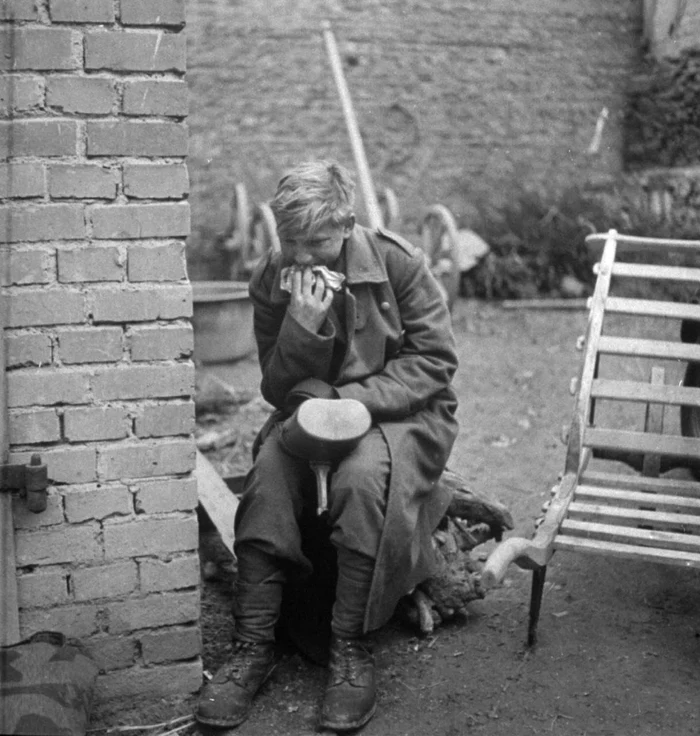
Henke PHOTO John Florea / The LIFE Picture Collection / US Army Archives
In April 1945, the anti-aircraft battery where 16-year-old Hans Georg Henke served was captured by American troops. The German teenager witnessed extremely brutal and intense fighting. Most of his comrades were killed. He was discovered near some rubble, not far from an anti-aircraft gun. Desperation was visible on his face and he was crying loudly. John Florea captured with his camera the drama of this teenager driven by hunger to risk his life to keep Hitler's last hopes alive.
A tale of two sides
Photographer John Florea testified that the photo was taken in April 1945 in the Hessen region. More precisely in the village of Hüttenberg-Rechtenbach, located north of Frankfurt am Main. The Americans destroyed his unit and he was one of the few survivors. He burst into tears, shaking and wringing his hands as he had effectively given up mentally from the hard fighting and pressure put on him at those times. It was effectively a cry of despair and pain over a war that had taken almost everything he had in the world.
Young Henke was captured by the Americans and sent home to Finsterwald. Later, after the division of Germany between the Allies and the Soviets, Henke would voluntarily cross over to East Germany to embrace communist doctrine. Some say it was the convictions instilled by his father since childhood, others believe it was a revolting reaction to all that he had endured under the Nazi regime.
In fact, once he arrived in East Germany, beyond the Berlin Wall, Henke developed his own version of the situation captured by the American's camera. He later recounted that he was actually with the Stettin anti-aircraft unit. More precisely with a battery of 88 mm guns. As the Russians advanced, the German forces were pushed back towards Rostock. That's where those photos were allegedly taken. Henke testified that he began to cry because he felt the world he knew was falling apart around him.
Finally, he claimed, he was captured by the Russians after his unit was destroyed. Until his death in 1997, Henke supported this version. However, photojournalist John Florea's story seems to have been the most truthful version. And this despite the fact that, as the details show, it is obvious that the photos were taken in Hessen.