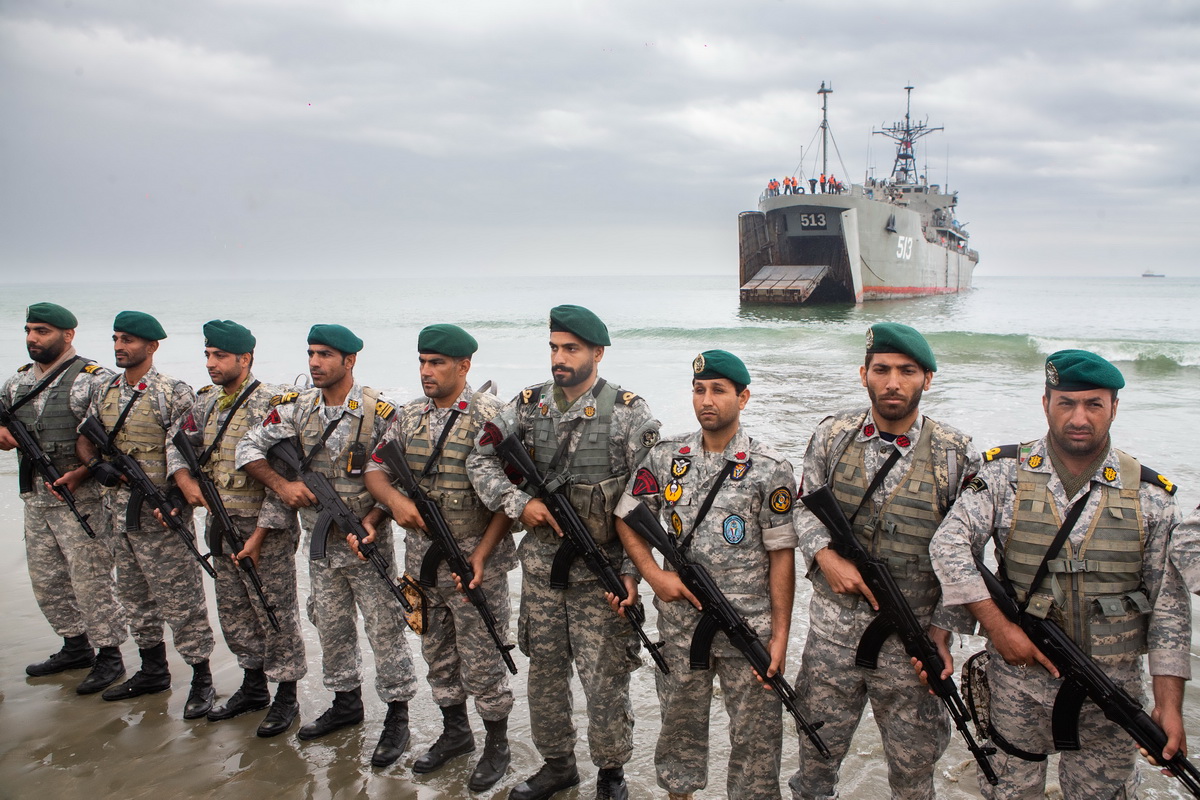
Strait of Hormuz, Gulf of Oman, Iran. Credit line: Iranian Army Office / Zuma Press / Profimedia
The oil market is one of the first to “hear” the sound of geopolitical tension. And when Iran enters the equation, the reactions are immediate.
Crude oil prices rose about 4 percent on Wednesday after US Vice President JD Vance accused Tehran of ignoring key US demands in recent nuclear talks and said military action remains on the table. Sentiment was also fueled by an Axios report suggesting Trump was close to a war with Iran.
West Texas Intermediate crude oil prices (WTI) of the US rose 4.25% to $64.98 a barrel, while Brent rose 3.93% to $70.07. This increase is in sharp contrast to the picture of the previous session, when the markets had moved lower, estimating that the negotiations in Geneva had left room for an agreement, writes the Greek press.
Washington's “Red Lines”.
Vice President JD Vance said that despite continued contacts being agreed, the Iranian side has not acknowledged or substantially addressed the “red lines” that President Donald Trump has set regarding the country's nuclear program.
On the other hand, Iranian Foreign Minister Abbas Araghchi described the talks as “constructive”, referring to an agreement in principle on basic principles. The difference in interpretation is obvious – and the markets have chosen to give importance to tough American rhetoric, but also to satellite images showing that Tehran is preparing.
JD Vance pointed out that President Trump reserves the right to use military force if diplomacy fails. The message was clear: negotiation has limits.
The Strait of Hormuz, at the center of concern
The tension is not limited to statements. Iran has conducted military exercises in the Strait of Hormuz, the main sea passage through which about a third of the world's seaborne crude oil exports pass. It is the most critical “bottleneck” in the global energy market.
Iranian state media reported that some shipping was temporarily affected by the exercises, although flow monitoring companies did not confirm any substantial disruption. However, in the oil market, the possibility of disruption is enough to trigger strong reactions.
At the same time, the US increased its military presence in the Middle East. The aircraft carrier USS Abraham Lincoln is already in the region, while the USS Gerald Ford is headed there. President Trump has said the deployment of a second aircraft carrier acts as a safeguard if talks fail.
Energy markets react not only to events but also to scenarios. A potential military incident affecting flows through the Strait of Hormuz could lead to a sharp contraction in supply, with direct effects on fuel prices and global inflation.
Today's rise in oil prices does not reflect a crisis that has already occurred. It reflects the growing possibility of an escalation that would change the terms of the global energy balance.
For now, diplomacy remains alive. But as long as “red lines” remain inconsistent and warships gather in the Persian Gulf, the market will continue to be based on fear — not calm.