“You're sitting next to a church, you have a meter of sewing room with you, and it's sunny outside. How do you calculate how tall the church spire is?” – Why don't Romanian students know how to solve such problems

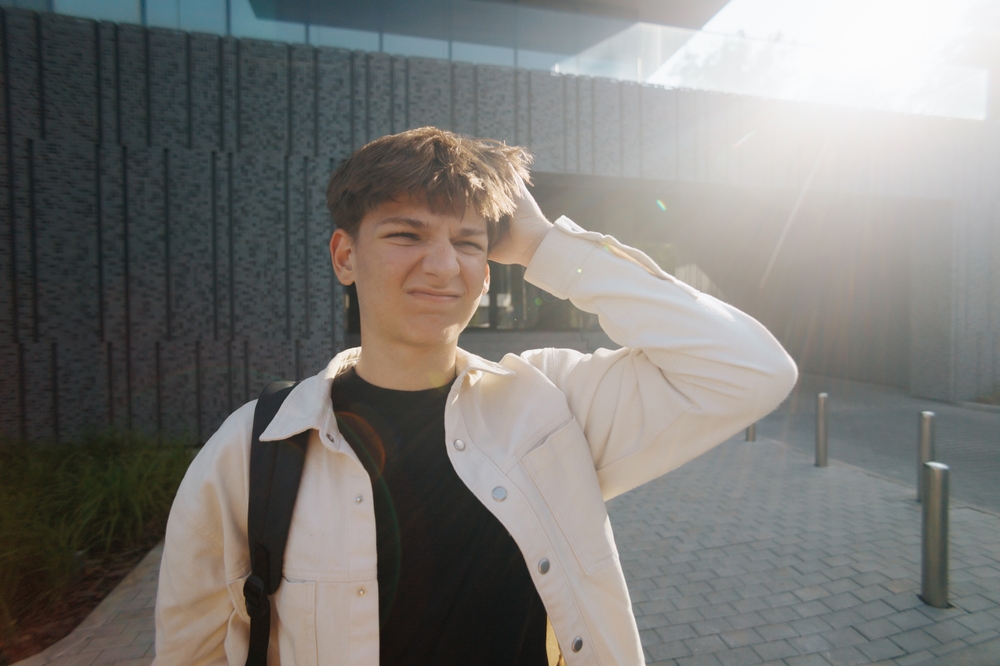

Elementary school students easily understand age-appropriate science concepts and can apply them to everyday life. However, those in middle school and high school have disastrous results in this regard. PHOTO: Shutterstock
In early February, UNICEF released a Science Literacy Report, produced in partnership with the Ministry of Education, which shows how students in grades 1-12 understand science and how they manage to apply the theory they learn at school to their everyday lives. The good news is that primary school students have achieved satisfactory results, which means that they understand scientific concepts for their age and are able to explain the world around them with their help. The bad news is that as they get older, science becomes a blur for students, with the worst results occurring at the high school level.
A quarter of young people have an understanding level considered 'at risk': they do not understand and cannot use basic scientific concepts in everyday life.
Scientific literacy as measured in this research is not about academic performance, nor about completing the subject matter in the curriculum, but about skills that help children and adults in life. Without them, the times we live in, marked by rapid scientific and technological developments, cannot be understood: scientific explanations do not make sense, and critical and evidence-based thinking cannot develop. From there, it's only a step away from misinterpreting scientific information and making dangerous decisions about health or technology use.
I spoke with Dragoș Iliescu, professor at the Faculty of Psychology and Educational Sciences of the University of Bucharest, the coordinator of this report, to understand what the warning signs are, what logical fractures occur at the grammar school and high school level, who are the students who are in the risk zone of functional illiteracy and what parents can do at home to help their children understand science.
Read the rest of the article HERE.