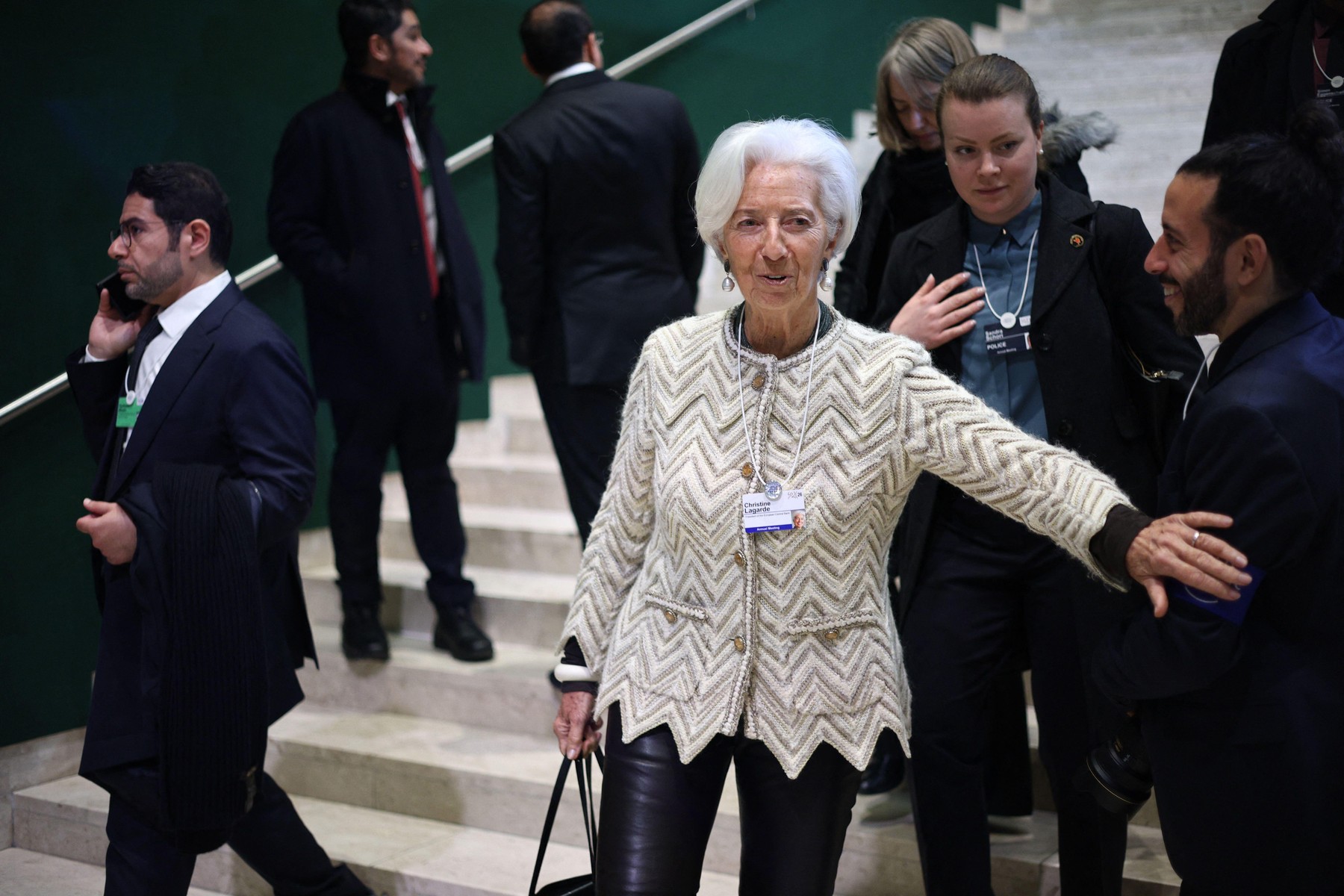
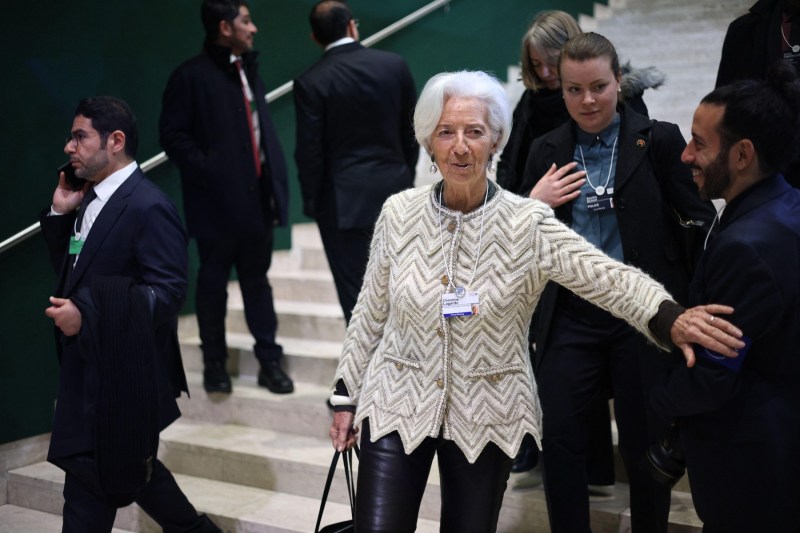
The President of the European Central Bank, Christine Lagarde, during the annual meeting of the World Economic Forum (WEF) in Davos, Switzerland, on January 20, 2026. PHOTO: ABACAPRESS, Abaca Press / Alamy / Profimedia
Christine Lagarde could leave as head of the ECB before the end of her eight-year term, which expires in October 2027, according to a person familiar with the situation, cited by the Financial Times.
Europe's top central banker, who joined the Frankfurt-based ECB in November 2019 from the IMF, wants to step down before the French presidential election next April.
Lagarde wants to allow incumbent French President Emmanuel Macron and German Chancellor Friedrich Merz to find a new head of one of the EU's most important institutions, the source said. It is not yet clear when her departure from office will take place.
The ECB declined to comment.
European economists polled by the FT in December considered Spain's former central bank governor Pablo Hernández de Cos and his Dutch counterpart Klaas Knot as the main options to become the next eurozone central bank president. Isabel Schnabel, a member of the ECB's executive board, said she was interested in the job, and people familiar with Bundesbank President Joachim Nagel's thinking said he was also interested in the position.
People briefed on the Paris talks told the FT that Macron – who cannot run for a third term as France's president – had wanted for months to have a say in choosing Lagarde's successor.
The French presidential election next April will be crucial for the eurozone's second-largest economy and the EU as a whole.
Lagarde's tenure at the ECB has been shaped by a series of crises, including the Covid-19 pandemic, Russia's full-scale invasion of Ukraine and a trade conflict with the US.
Under his leadership, eurozone inflation rose to nearly 11% at the end of 2022 as energy prices soared following Russia's attack on its neighbor and global supply chains suffered pandemic-related disruptions.
The ECB raised interest rates from minus 0.5% to 4% in just over a year.
From mid-2024, the central bank cut borrowing costs to 2% as inflation fell to the ECB's medium-term target of 2%.
Lagarde's appointment as ECB president came after Macron and then-German Chancellor Angela Merkel struck a surprise deal in 2019.
They agreed that Lagarde would take over the leadership of the ECB, and then German Defense Minister Ursula von der Leyen would become the president of the European Commission.
Last month, Lagarde told Bloomberg TV that she accepted the ECB job under the impression she would have a five-year term, comments seen by observers as possible preparation for an early exit.
She recalled telling Macron after accepting the role of ECB president: “I will be in Frankfurt for five years. And at that moment Macron said, 'No, for eight years'.”
Last summer, an ECB spokesman stressed that Lagarde “is determined to complete her mandate [de opt ani],” after former World Economic Forum president Klaus Schwab said the central bank president had discussed a possible early departure to take over the WEF.