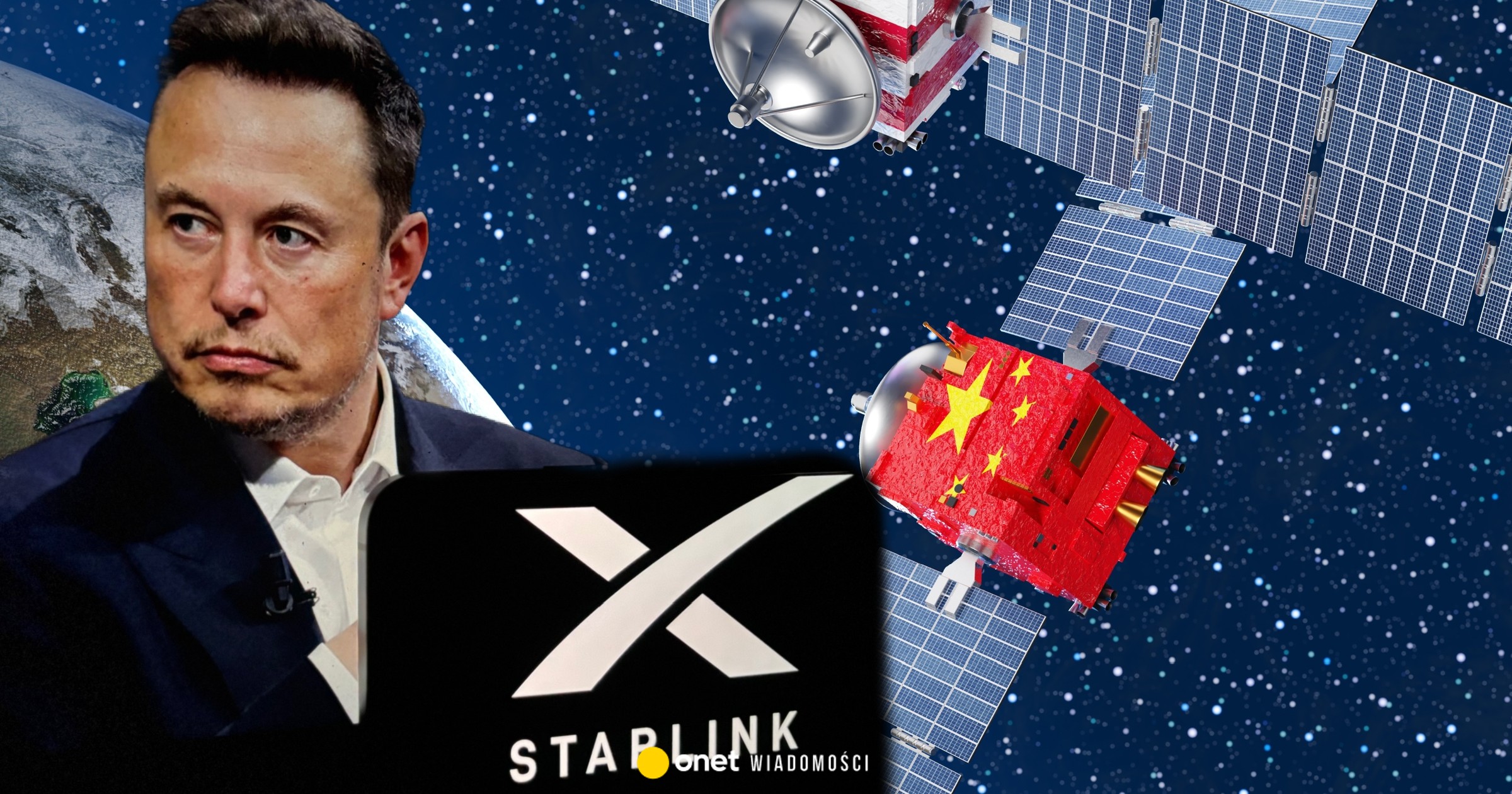
At the end of December, the International Telecommunication Union (ITU) received an official notification from China regarding plans to place as many as 203,000 satellites in low Earth orbit. satellites by the mid-2030s.
For comparison, Elon Musk's SpaceX has so far placed 9,646 devices in orbit as part of the Starlink network. In turn, Amazon's Project Kuiper constellation currently has 3,232 satellites.
According to Bloomberg columnist David Fickling, Chinese declarations are more of an attempt to clip the wings of the leader of the Internet space race than an actual expansion in orbit. The industry website SatNews previously pointed out that the registration of such a huge number of satellites may in fact be a well-thought-out and very sophisticated regulatory maneuver.
However, there is more than just business rivalry lurking in the background of this game – it is about control of the skies and whether orbit will turn into a dangerously crowded risk zone.
According to the portal, it is not necessarily about real technological expansion in space, but about strategic “taking place” on paper – so as to get ahead of the competition and limit its room for maneuver.
In practice, this means using applicable international regulations in such a way that block other entities from accessing the most attractive frequencies and orbital positions before they actually send their satellites into space. This type of action can therefore be perceived not only as an element of technological competition, but also as a form of administrative pressure that may translate into very specific difficulties for competitors.
In practice, the idea is that the ITU treats reserved orbital positions as if the satellites already existed. This means Western engineers must design real equipment to avoid the “ghost interference” caused by Chinese satellites that exist only on paper. As a result, this limits the power and efficiency of American networks even before they launch.
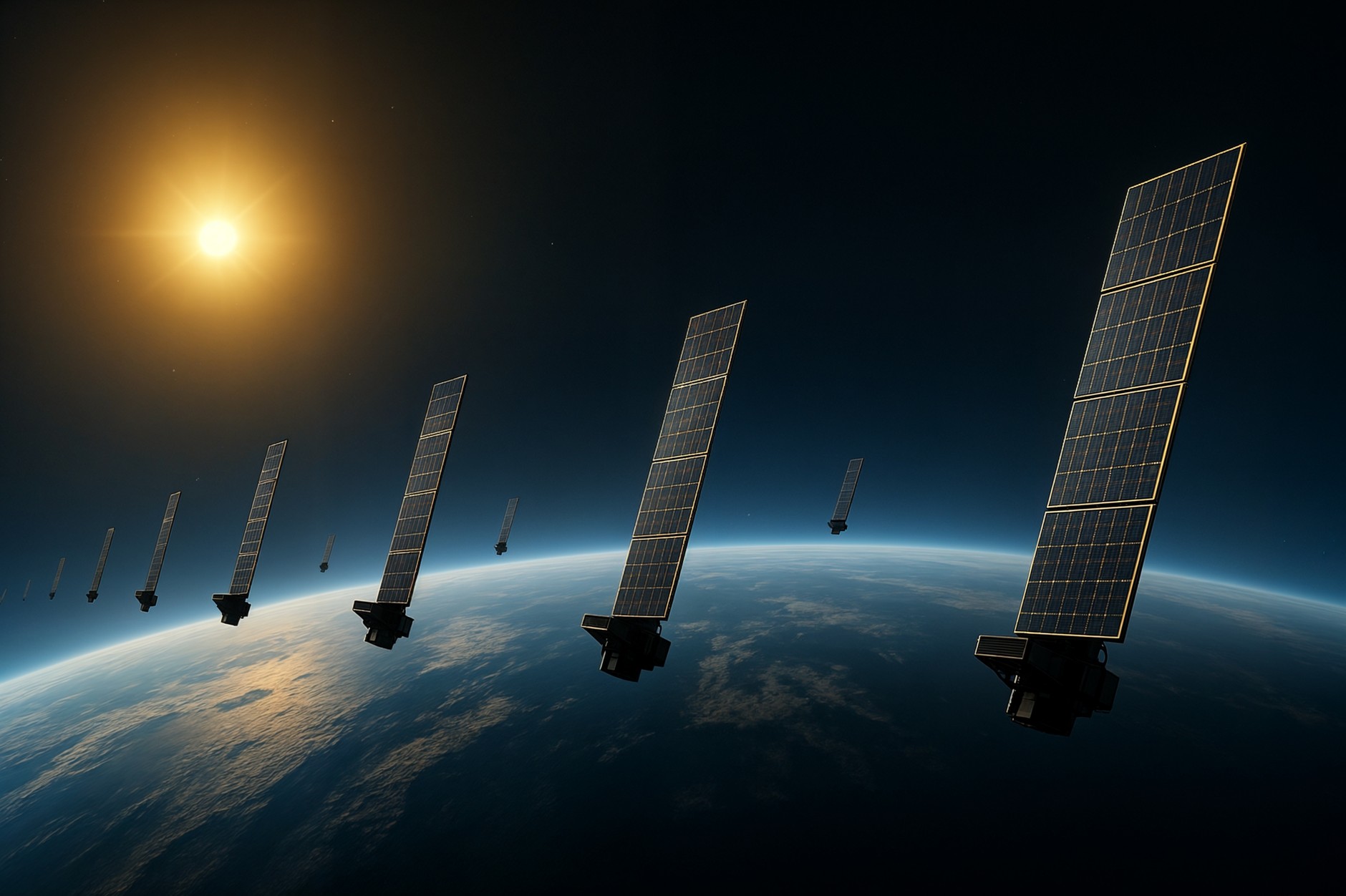
Starlinks in Earth's orbit (illustrative photo)xnk / Shutterstock
In other words – as the authors of the analysis emphasize – China does not have to actually put all 203,000 rockets into orbit. devices. If they ultimately fail to do so, the only consequence will be the loss of previously reserved orbital slots.
The space race is accelerating
The scale of the entire undertaking is truly impressive, especially if we look at the rate at which the Earth's orbit is filling up.
In 2020, the number of active satellites was several times lower, but today it has quadrupled and exceeded 16,000. This shows that in just a few years, space has become one of the fastest growing “infrastructure markets” in the world.
SpaceX alone launches over 2,000 satellites into orbit every year, systematically expanding its constellation and increasing the density of objects in low Earth orbit.
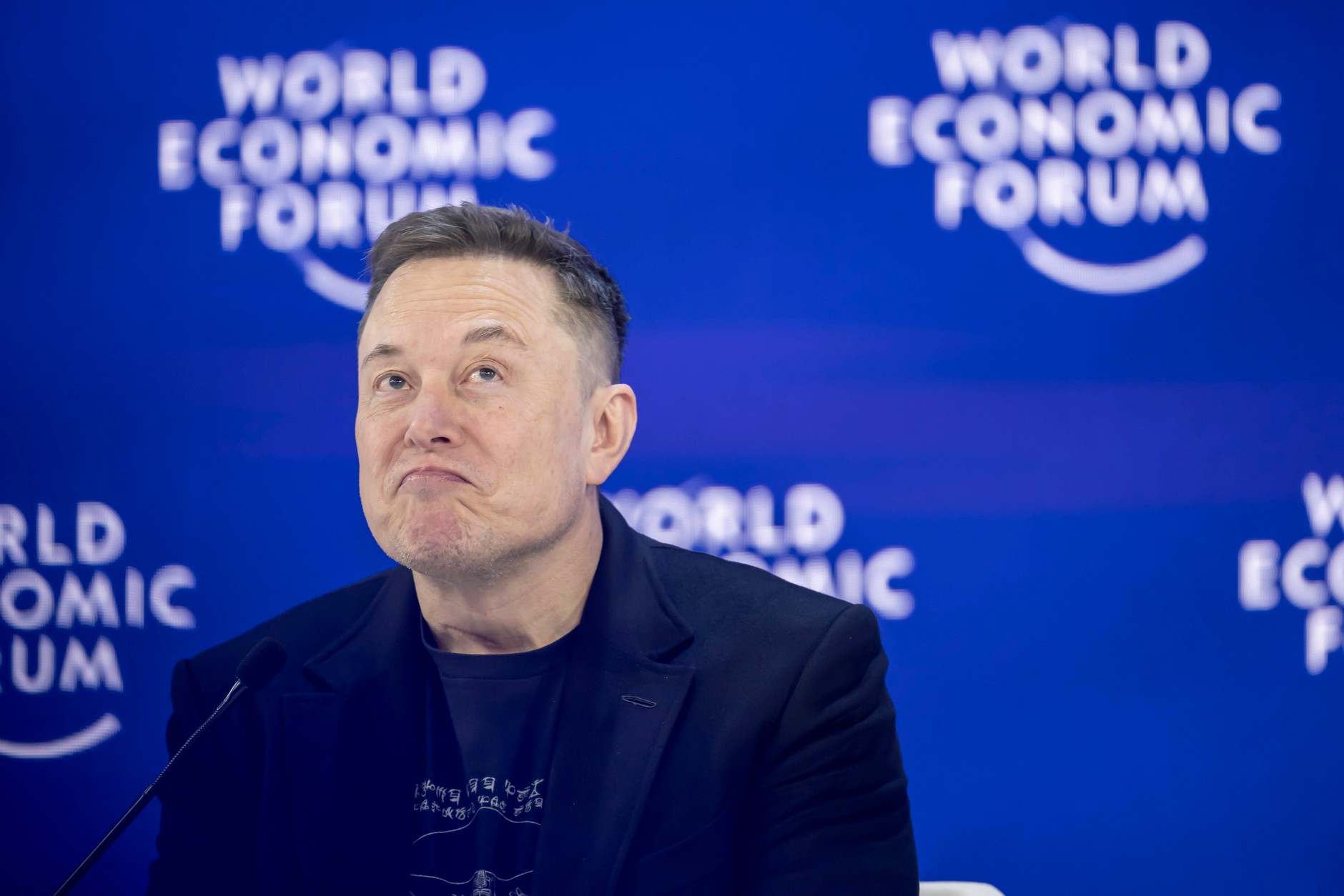
Elon Musk, during the World Economic Forum in Davos, January 22, 2026.EPA/GIAN EHRENZELLER / PAP
A space time bomb
At the same time, scientists are warning more and more loudly that the space around the Earth is not infinite.
A study published last year in the prestigious journal Nature indicated that at an altitude of approximately 600 km above the Earth's surface – that is, where many communication satellites operate – a maximum of approximately 148,000 can operate safely. objects. Above this limit, “the risk of collision begins to increase exponentially”, and each subsequent device increases the likelihood of dangerous collisions.
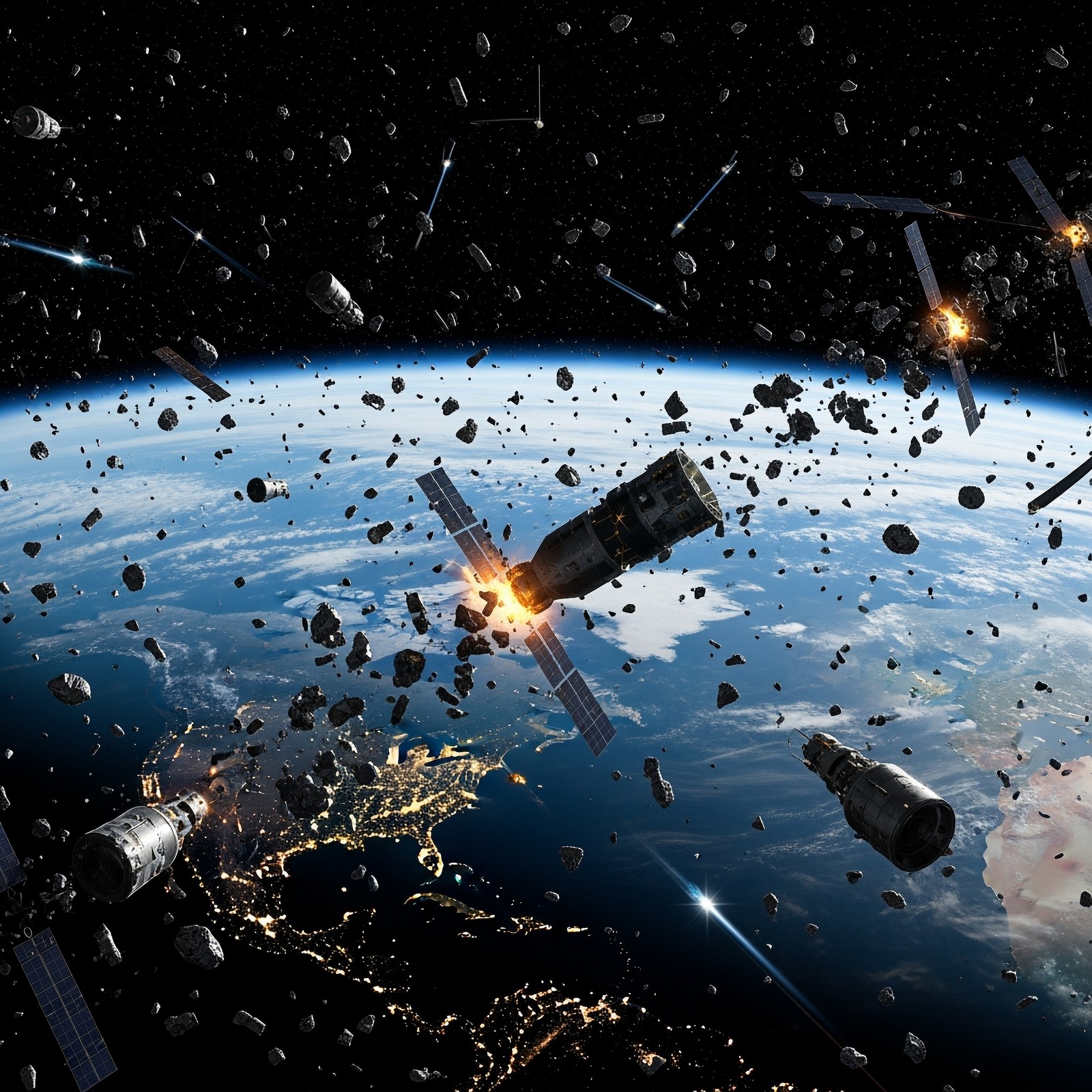
Exceeding this number may lead to “Kessler syndrome” – a scenario that has raised serious concerns among experts for years. It is an uncontrolled chain reaction initiated by the destruction of one satellite, for example as a result of a collision or explosion.
A visualization showing the Earth seen from orbit at the moment of a cosmic catastrophe: a graphic reconstruction of the so-called Kessler syndrome (stock photo)Shutterstock AI Generator / Shutterstock
The resulting cloud of debris moving at enormous speed begins to threaten other objects, causing further collisions and generating even more cosmic debris. In an extreme case, this could lead to a situation in which the Earth would be surrounded by a dense, dangerous ring of debris — a kind of artificial asteroid belt — significantly hindering, or even temporarily preventing, further space flights and the use of satellite infrastructure.