How an influential US senator who arrived in Bucharest sees the Trump administration's strategy to support far-right forces in the EU


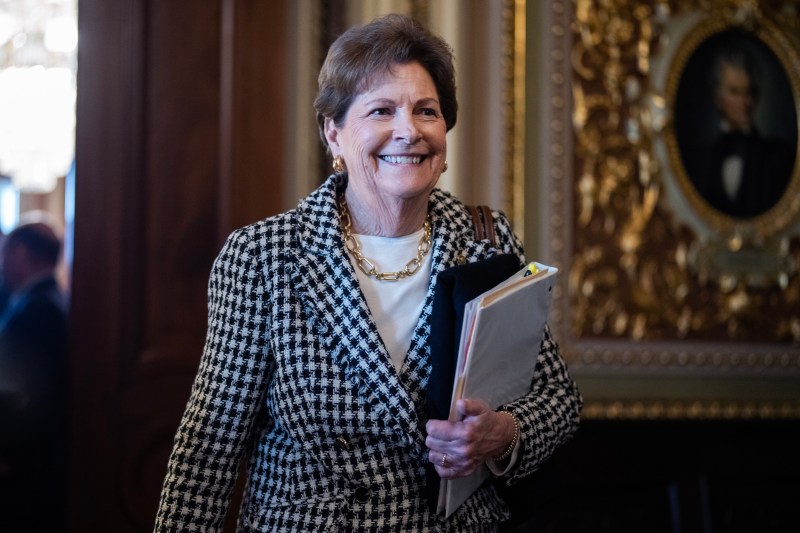
Jeanne Shaheen, the leader of the Democratic opposition on the Senate Foreign Relations Committee. Photo: Tom Williams/CQ Roll Call/Sipa USA
This perspective on foreign policy “is not in the long-term interest of the United States, NATO, or Europe,” Democratic Senator Jeanne Shaheen, leader of the Democratic group in the US Senate Foreign Relations Committee, said in Bucharest.
“I don't know what the strategy of Secretary Rubio and the Trump administration is in supporting far-right groups (in Europe), except that they reflect a far-right element in the United States, which is very ideological,” Democratic Senator Jeanne Shaheen, who came to Romania for meetings with Romanian officials, including President Nicușor Dan, said Monday in Bucharest.
Shaheen gave this answer in a discussion with Romanian journalists, to a question about the visit of Secretary of State Marco Rubio to Budapest, where he announced support for Viktor Orban's government, and the general strategy of the Donald Trump administration to support far-right forces in the EU.
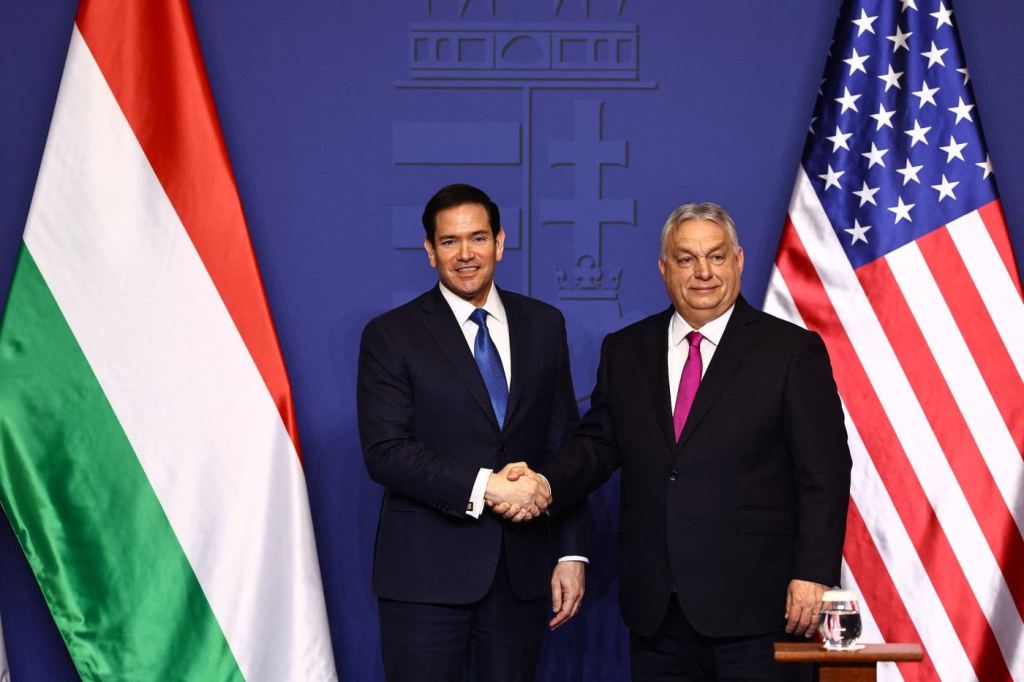 Marco Rubio announces in Budapest Trump's strong support for Viktor Orbán, ahead of the April elections: “A golden age”
Speaking about the “far-right element in the United States,” Shaheen, the Democratic leader of the US Senate Foreign Relations Committee and a critic of the current administration in Washington, said: “I think the foreign policy perspective that this segment has is not in the long-term interest of the United States, NATO or Europe.”
Greenland topic 'is dead'
The senator expressed relief that Marco Rubio's tone at the Munich Security Conference was more conciliatory than Vice President JD Vance's a year ago, and referenced European unease about the Trump administration's rhetoric.
“Like millions of Americans, I have been deeply disappointed by President Trump's rhetoric regarding Greenland and Denmark, which has undermined a NATO ally, a valued and trusted ally,” she said.
“We were part of a bipartisan delegation that went to Copenhagen before the Davos meeting to try to listen to the concerns of our Danish and Greenlandic partners,” Shaheen continued.
“Senator (Thom) Tillis and I were at the Munich Security Conference and we were asked about this topic. One of the things that he said that I found useful, when we were asked if the topic of Greenland would come up again, was that no. It's dead. And it's dead because the Americans have conveyed to this administration that it's not a topic in the US interest. It's not in the US interest to undermine a NATO ally,” the senator said.
Bipartisan support for NATO
Shaheen also assured that there is strong bipartisan support for NATO in the US – amid concerns that the Trump administration is no longer supporting the alliance as strongly.
“NATO has been the strongest military alliance in history. This has been essential not only for European security, but also for American security. We are very aware that the only time Article 5 was invoked was after the United States was attacked, and all of our allies came to our support in Afghanistan,” the senator said.
“There is very strong bipartisan support for NATO, for our transatlantic relationship, and we understand that Secretary Rubio's speech was reassuring, but there is more to be done and we must continue to work on that,” she continued.
“The United States considers Romania a very important friend and ally”
Shaheen also said that “Romania should certainly continue to consider the United States as a friend, because the United States considers Romania a very important friend and ally.”
“While governments and leaders may change, the relationship between the Romanian people and the American people will continue,” she assured.
“We are pleased that, thanks to this partnership, NATO is stronger, Romania is stronger, and the United States is stronger, and this is a very important message that we must convey to our adversaries, especially to Vladimir Putin and Russia,” the senator said.