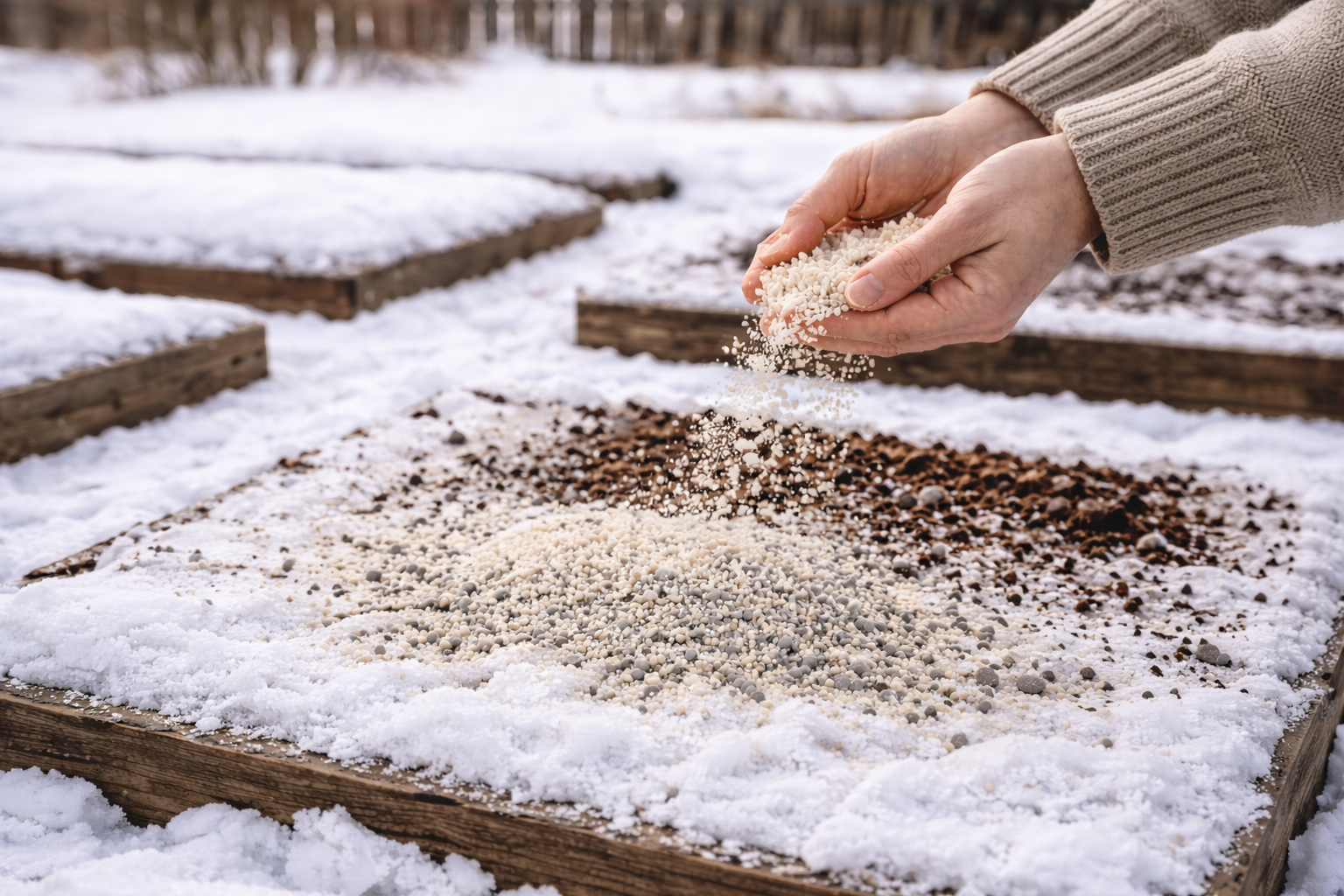
If you want to prepare your beds for the season so that in the spring the soil becomes loose, rich in nutrients and ready for plant growth, there is an easy way to add organic matter to still snow-covered beds. Applying fertilizers directly to the snow is a technique proven by gardeners, which helps nutrients go into the soil with melt water and start working earlier than the spring warmth.
What is useful to sprinkle on the snow in February?
• Dolomite flour – adds calcium and magnesium, reduces soil acidity and improves its structure, which is especially important for vegetables and flowers.
• Bone or fish meal is a source of phosphorus, which supports the development of the root system in future plants.
• Compost or well-rotted manure/humus – add organic matter and microelements, improve the soil structure and help retain moisture.
• Wood ash – contains potassium, calcium and other useful elements that are easily absorbed by plants in the spring.
This method is effective because the snow melts gradually and carries organic matter into the upper layers of the soil. There it begins to work earlier than during spring digging, which is useful for future plantings.
What to avoid in February:
– Fresh manure or bird droppings – they can change the composition of the soil too dramatically and even damage the roots of young plants.
– Mineral nitrogen fertilizers (ammonium nitrate, urea) – in cold soil they do not work well and can enrich the soil incorrectly.
Preparing beds in winter helps create conditions for active plant growth in spring, saving effort and money.