The transatlantic illusion is gone. “Trust is earned in spoons, but lost in buckets.” Europe is taking matters into its own hands [ANALIZA]


In December and January, the United States finally made territorial claims against an EU member state as part of the Greenland farce. Many American officials even considered the possibility of a military invasion for several weeks. In just one year, the United States went from a partner to a potential adversary.
However, during this year's security conference in Munich, the mood was much more positive than last year. Then the idea of transatlantic partnership, which Europe had held on to for so long, collapsed. At the same time, European security politicians had to admit that they had wasted three years since the beginning of the Russian invasion of Ukraine. During this time, they could prepare militarily for the new era.
However, it seems that the depression of that time has given way to a new determination. Last year, Europe finally turned on the turbines of its own defense industry to better supply Ukraine and increase its own defense readiness. The process of becoming independent from Washington and strengthening its European position has begun.
In a world that is increasingly returning to traditional great power politics, “Europe must become a geopolitical power” – said French President Emmanuel Macron. – I am not saying that France or Germany will become a geopolitical power, but Europe – he noted.
Chancellor Friedrich Merz expressed a similar opinion. Merz again emphasized that Germany wants to make the Bundeswehr the strongest conventional armed force on the continent – but not to pursue great power policy, but to strengthen the defense capacity of all of Europe.
This does not mean that Europe can be under the illusion that it is already able to defend itself against Russia without the help of the Americans. Because although many countries are now willing to spend significantly more money on defense, given the bureaucratic procurement processes, it will still be years before Europe closes its capability gaps and is ready to defend itself. Many Europeans also rejected “separation”, i.e. complete independence from America. Instead “risk reduction” is postulated, also in relations with the United States.
Europe must reduce its dependence on external powers – this applies both to supply chains, scarce raw materials and advanced technologies, and to defense.
New world order
Transatlantic agreement was reached in Munich on at least one point. — The old world is over, we live in a new era of geopolitics, said US Secretary of State Marco Rubio before leaving for Munich. The German chancellor sounded similar. — The international order based on laws and rules is being destroyed. That order, imperfect as it was even in the best of times, no longer exists, he said. But what should the new order look like?
US government representatives considered the increase in defense spending by NATO's European partners as a success of Trump's strict policy and assured that they care about a strong Europe. Elbridge Colby, a high-ranking Pentagon official and originator of the MAGA (“Make America Great Again”) foreign policy, stated, for example, that a state of anxiety is a good thing if it prompts those affected by it to take appropriate action.
However, few people in Munich believe that the Americans will soon become a reliable partner again. “Trust is earned by spoons, but lost by buckets,” said Michigan Democratic Gov. Gretchen Whitmer.
Rubio has done much to assure Europeans that they are not yet witnessing the twilight of the transatlantic partnership. In Munich, he called for renewing and rebuilding the alliance and emphasized the deep historic ties between the United States and Europe. At the same time, he made it clear that the old liberal world order was over. “Yesterday is over,” Rubio said.
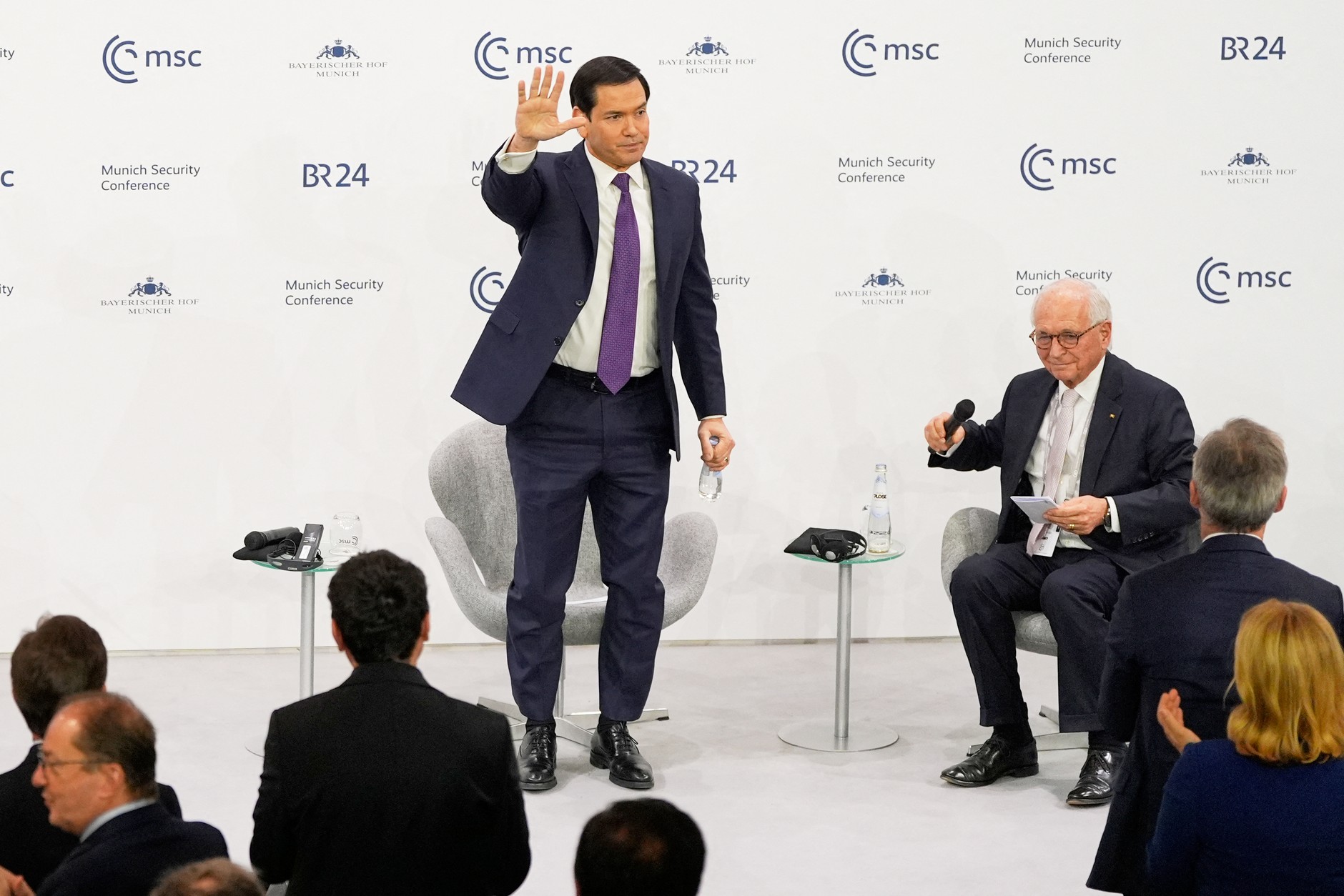
US Secretary of State Marco Rubio receives a standing ovation after his speech at the 62nd Munich Security Conference, February 14, 2026.Alex Brandon / POOL / AFP / AFP
Rubio painted a grim picture of the old ideology of globalization that has led both America and Europe to decline. In his opinion, the triumph over communism promoted the illusion of the “end of history”. This has led, among other things, to a reduction in military spending in the “naive belief” that the world will enter an era of peace, despite the contrary lessons from 5,000 years of human history.
According to him, the West sacrificed its industries on the altar of free trade and long ignored the fact that other countries undermined our economy with unfair trade practices. Moreover, he said, the West had jeopardized its competitiveness with high energy prices “to satisfy the climate cult.” Rubio also argued that open borders ideology threatens Western cultural identity through mass immigration. “The forces of civilizational destruction threaten both the United States and Europe,” he said.
Enemy of the rules-based order
Throughout his speech, the American foreign minister referred to the inseparable civilizational and historical ties connecting the United States and Europe. He tried reestablish transatlantic relations based on MAGA identity ideologyin which the common Christian faith and Western culture are the supporting elements, not abstract ideas about the liberal world order.
Rubio also made no secret of his contempt for what is still valued in Europe. We can no longer put the so-called rules-based order above the needs of our citizens, he said.
Rubio's assertions about the common Western origins and identity of Europe and the United States, as well as the “fate” that unites both sides, could not obscure the fact that his speech contained many controversial and ideological assumptions about Europe. It is difficult to reconcile them with how most Europeans perceive their continent and the challenges it faces.
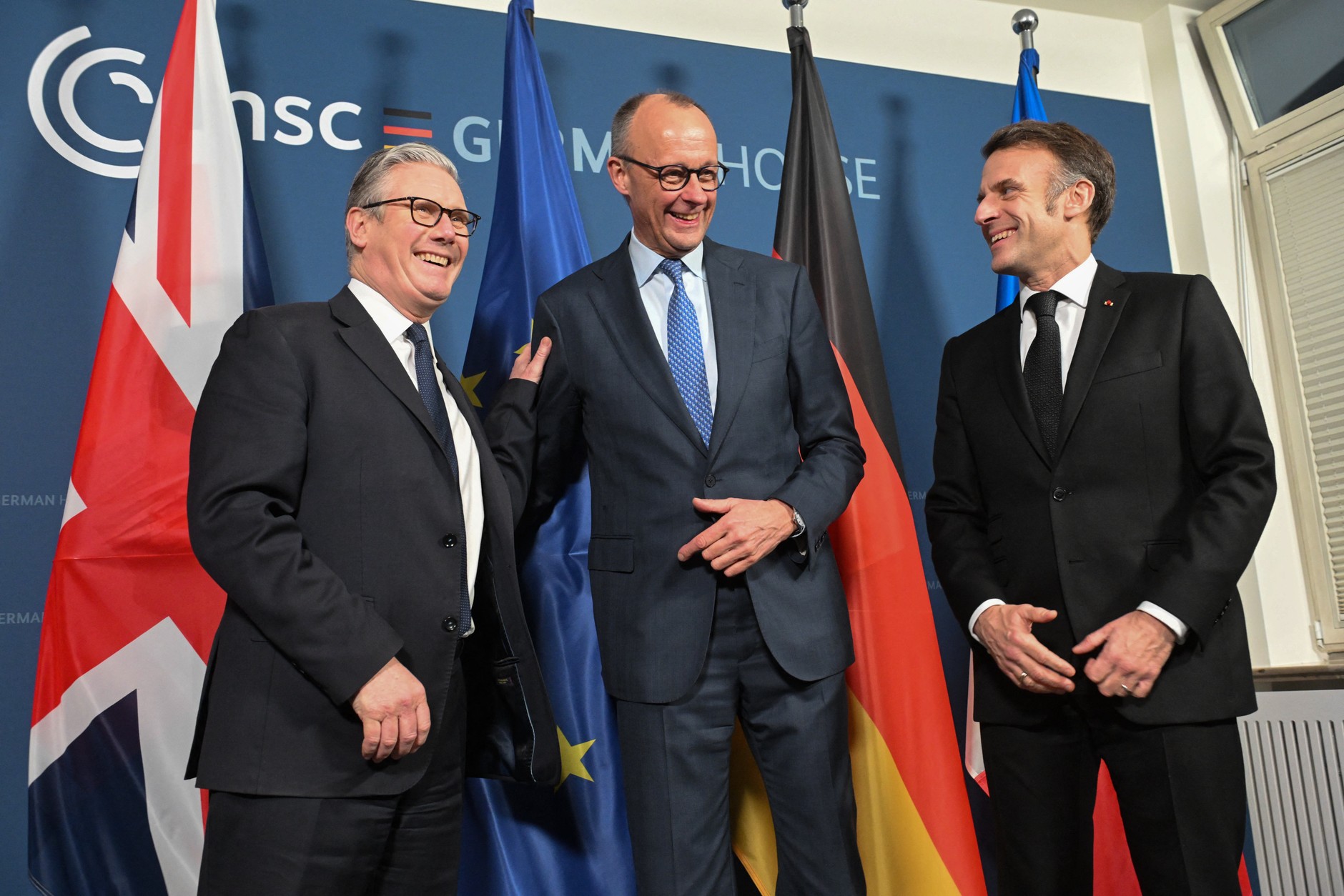
British Prime Minister Keir Starmer, German Chancellor Friedrich Merz and French President Emmanuel Macron during the Munich Security Conference, February 13, 2026.Thomas KIENZLE / POOL / AFP / AFP
The statement about the danger of “civilizational destruction” once again revealed the MAGA movement's obsession with identity and cultural issues. Friedrich Merz the day before expressed opposition to this approach. “The cultural struggle of the MAGA movement is not our struggle,” Merz said. In this way, Rubio's speech showed how deep the gap has become between Trump's United States and Europe.
Europeans want to maintain a liberal world order while the United States becomes an increasingly illiberal power, both domestically and internationally. Therefore, British Prime Minister Keir Starmer warned Europe against letting down its guard. We should not become complacent, Starmer said. This means that a conciliatory speech does not change the fact that Europe must end its security dependence on external power.
An alternative to the brutal politics of great powers
While Chancellor Merz presented a ruthless analysis of the world situation, it was French President Macron who set the tone for European patriotism and optimism. — We should be proud of our achievements. We need a much more positive attitude, he said. He believes there is a reason why many countries are still eager to join the EU. This is a radical and creative design that everyone should follow as an example.
Macron presented Europe as an alternative to the return of the brutal politics of great powers, represented by Russia and China, as well as America under Trump. The message was clear: Europe could become something of a beacon in whose sphere of influence the rules-based world order still applies.
Macron also called on the continent to reduce its dependence on others and give a clear advantage to European producers, for example in the field of armaments. He also confirmed that France is in negotiations with Germany and several other European countries on the matter extending its nuclear umbrella to other parts of Europe.
Europa may be a lumbering tanker that changes course only slowly and with great effort. But the impression it left in Munich is that it has now set a course toward greater independence from the United States. No matter how long it takes.