“Sense of Urgency”. Conclusion of European leaders after the summit, for the EU to face China and the US

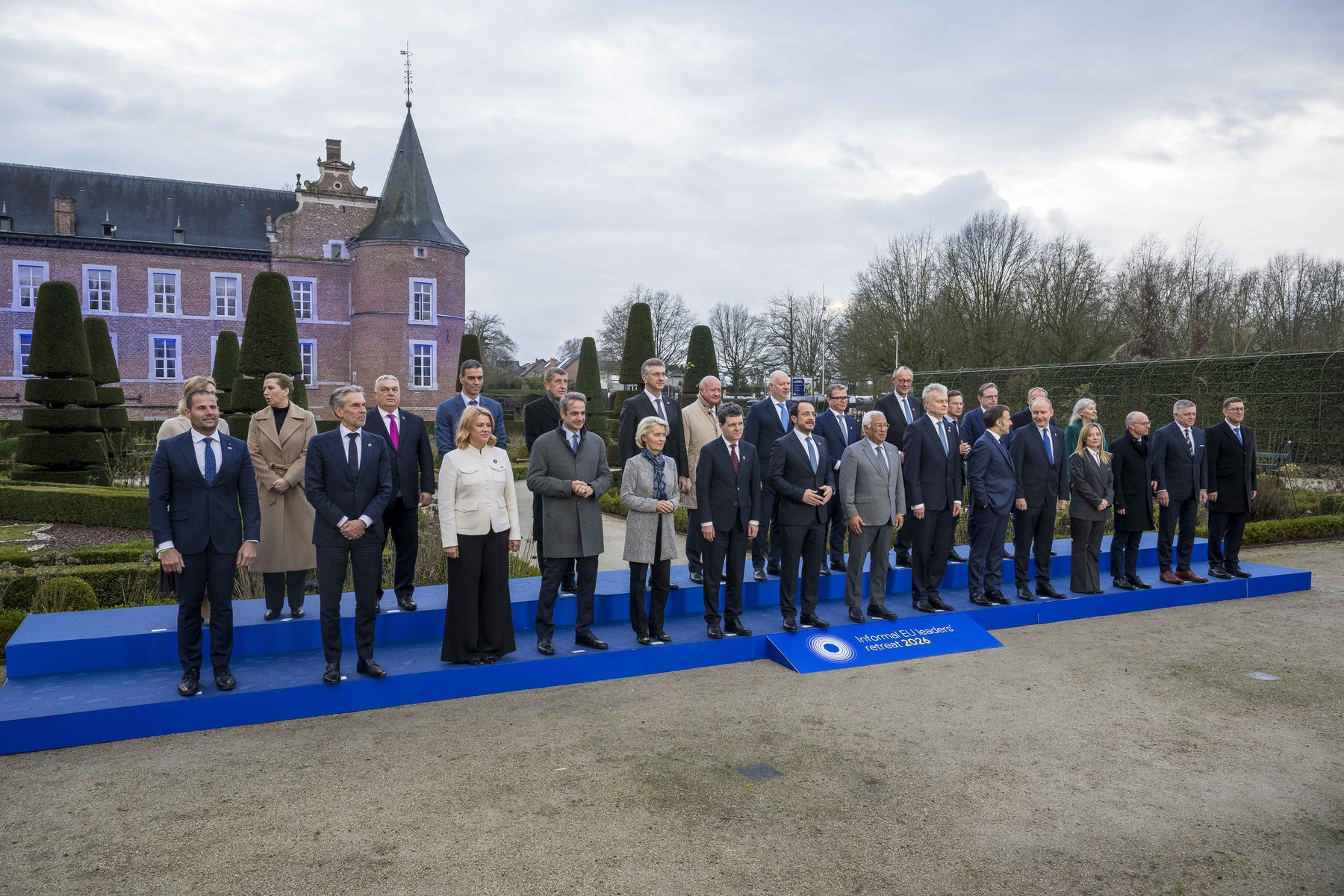
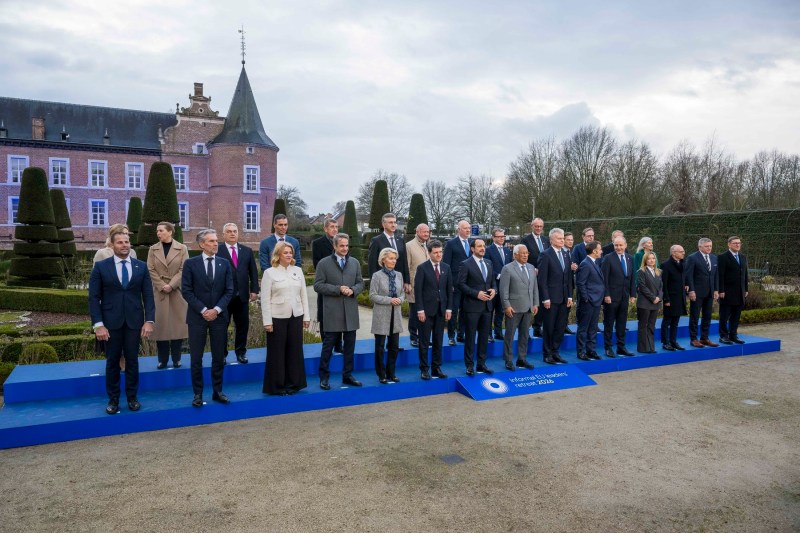
European Union leaders pose for a family photo during the informal meeting of EU leaders at Alden Biesen Castle in Bilzen, Belgium, Thursday, 12/02/2026. Photo: Wiktor Dabkowski / Zuma Press / Profimedia
The leaders of the 27 member states of the European Union pledged on Thursday to apply reforms to restore the competitiveness of the European economy, so that it can better face the pressures from China and the United States, reports AFP, quoted by Agerpres.
Meeting at the Alden Biesen castle in northeastern Belgium, the heads of state and government discussed accelerating economic reforms, such as removing regulations deemed unnecessary, completing the single market and introducing protection measures for strategic sectors.
“We share the same sense of urgency. We must act immediately and accelerate, because we are being pushed by international competition,” French President Emmanuel Macron said after talks with his European counterparts.
However, in a signal that disagreements persist, German Chancellor Friedrich Merz ruled out the joint loans (Eurobonds) proposed by Macron, stressing that this solution should be reserved strictly for “exceptional situations”.
“One Europe, one market!” declared European Commission President Ursula von der Leyen, pledging to improve the integration of the single market, this vast economic area of 450 million consumers still marked by significant internal barriers.
For his part, EU Council President António Costa promised “concrete measures” in March at the next European summit.
“We want a faster Europe and we want to improve it,” the German chancellor also said.
The Draghi plan
Former European Central Bank President Mario Draghi, who spoke to European leaders at Alden Biesen on Thursday, has inspired an ambitious set of EU reforms in 2024.
The plan aims to strengthen the single market, put citizens' savings at the service of companies and reduce the backlog of European and national regulations.
But this shock treatment, launched 18 months ago by the European Commission, has partially bogged down in EU legislative procedures.
Tense energy talks
Thursday's summit was also marked by “intense discussions” on energy prices, Ursula von der Leyen admitted.
Several states, including Italy, are calling for an overhaul of the European carbon market, accused of penalizing industrial companies, and calling for an end to the phasing out of free CO2 allowances.
But “it would be a strategic error to say that competitiveness means abandoning climate action,” Macron warned.
On “European preference”, another point of contention, Macron said the list of targeted sectors would be finalized in March, while Brussels is due to present a draft directive on the matter at the end of the month.
The aim is to establish obligations for certain companies that benefit from public subsidies, such as the car industry, to produce in the EU.
But, in an apparent concession made to Germany, which wanted to keep the partners of the Union, Brussels now proposes that products from countries with regulations similar to those of the EU should be assimilated to those “made in the EU”, according to a preliminary version consulted by AFP.
The idea of a new legal regime for companies, called EU Inc., which would reduce their administrative burdens, enjoyed fairly wide support, as did a relaxation of merger rules to allow European champions to emerge in sectors such as telecommunications.
Several leaders opened up the possibility of “enhanced cooperation” to implement certain measures, which would mean only in countries that volunteer, if reaching an agreement among all 27 proved too complicated.