France announces arrests in a network that defrauded entry to the Louvre Museum with the help of employees, causing huge damage

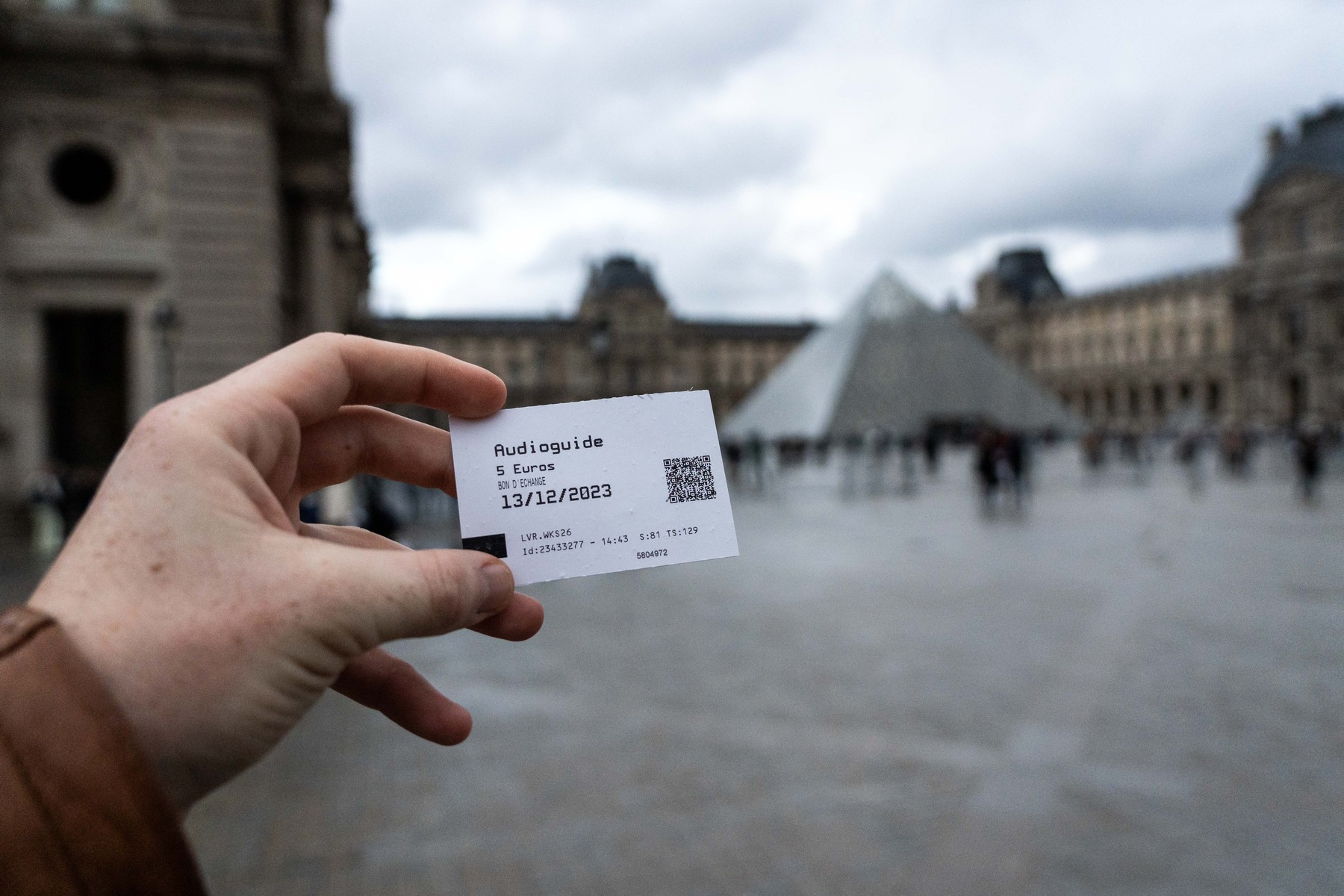
Entry ticket with QR code for the Louvre Museum, photographed in front of its famous entrance, PHOTO: Jumeau Alexis / Abaca Press / Profimedia Images
French police investigating an alleged ticket fraud scheme at the Louvre Museum in Paris have detained nine people, including two staff members, saying the damage they caused to the prestigious cultural institution amounts to 10 million euros, The Guardian reports.
“Based on the information available to the museum, we suspect the existence of a network organizing a large-scale fraud,” a museum spokesman told AFP.
The Louvre, the world's most visited museum, reported the alleged scam to police, which led to the arrests. Two Louvre employees, several tour guides and a person suspected of masterminding the operation are among those detained, according to the Paris Prosecutor's Office.
The Guardian recalls that it is the latest crisis to hit the Louvre, an institution still affected by a robbery on October 19, when a gang broke into the museum in broad daylight, entering through a window and stealing just seven jewels of the French monarchy estimated at 88 million euros, before fleeing on scooters.
Four men have been arrested and are being formally investigated, but the jewelery has not been recovered.
The Denon Gallery of the museum, where the most valuable paintings are exhibited, was affected by a water infiltration on Thursday evening. A full assessment of the damage has not yet been carried out, but museum representatives have stated that the painting “Mona Lisa” was not affected in any way.
The fraud scheme at the Louvre was said to have been operating for years
The Louvre said it was experiencing an increase in ticket fraud of various types. In response, it put in place a “structured” anti-fraud plan in cooperation with staff and the police.
Le Parisien reported that the alleged fraud involved tour guides targeting groups of Chinese visitors. Guides would enter visitors by reusing the same tickets multiple times for different people. The investigation aims to establish whether the network may have brought in up to 20 tour groups a day over the past decade.
The Paris prosecutor's office said surveillance and wiretapping confirmed the repeated reuse of tickets and an apparent strategy to split tour groups to avoid paying the “talking fee” imposed on the guides. This is the official fee charged by museums such as the Louvre for guides who lead tours and give explanations in front of the works.
The investigation also indicated the existence of alleged accomplices inside the Louvre, with guides paying them in cash to avoid ticket checks, according to investigators.
A formal judicial investigation was opened last June into allegations including organized fraud, money laundering, corruption, facilitating illegal entry into the country as part of an organized group and using forged administrative documents.
The Associated Press reported that the suspects allegedly invested some of the money in real estate in France and Dubai. Authorities seized more than €957,000 in cash, including €67,000 in foreign currency, as well as €486,000 in bank accounts.