Government agreement with deeply Eurosceptic parties in the Czech Republic. “The two members of the Babiš coalition will not only be pro-Russia, but probably also pro-China”


The ANO party, the winner of the Czech elections, will sign a coalition agreement on Monday with the eurosceptic Automobilists party and the far-right, anti-EU and anti-NATO SPD party, Reuters and the Financial Times write.
Andrej Babiš, the Eurosceptic Czech billionaire who won last month's election, is set to return as prime minister in a two-party extremist government that will strengthen the right-wing populist bloc in Central and Eastern Europe and weaken Western support for Ukraine, writes the Financial Times.
Babiš – whose ANO party won the most votes in October's election but fell short of a majority – is due to sign a coalition pact with the eurosceptic Automobilisti group and the pro-Russian far-right SPD on Monday.
The coalition is pulling the Czech government further to the right and risks seriously undermining Western support for Ukraine, writes the Financial Times.
Babiš confirmed after the election that his government would end budget funding for sending arms to Ukraine. He also criticized a Prague-led initiative that supplied artillery shells to Kiev.
At the same time, Babiš spoke with Ukrainian President Volodymyr Zelenskiy to express his support and said he would allow private defense manufacturers to continue supplying Kiev.
“The question is whether Babiš will be able to keep his partners under control”
While Babiš's party has moved to the right in recent years, his coalition partners are seen as even more Eurosceptic.
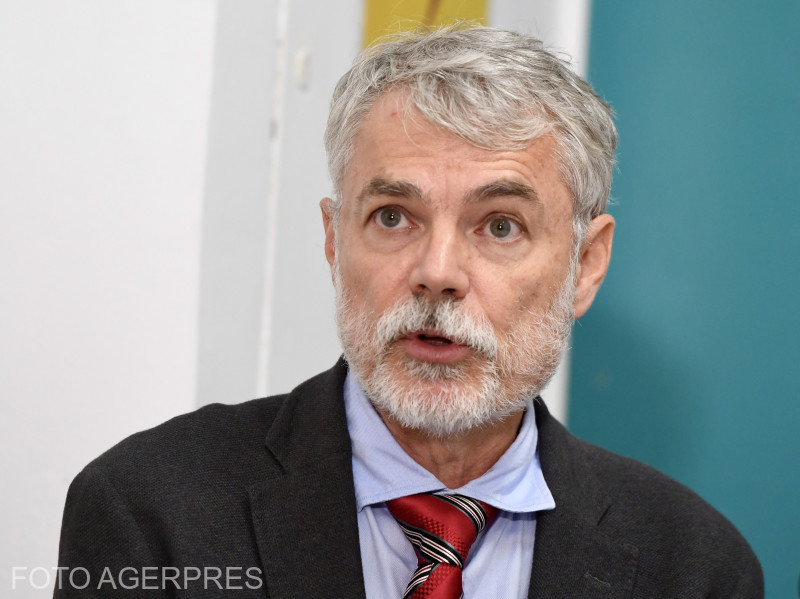
“The two members of the Babiš coalition will not only be pro-Russia, but probably also pro-China,” said analyst Milan Nič of the German Council on Foreign Relations. “The question is whether Babiš will be able to keep his partners under control after giving them geopolitically sensitive ministries,” he said, as quoted by the Financial Times.
The SPD campaigned for a referendum on leaving the EU, and party leader Tomio Okamura said in September that the West had “miscalculated” by trying to isolate Russia. “The reality of European security in the last 300-400 years is inseparable from Russia,” he said.
Protesters gathered in Prague on Wednesday to warn that giving the Defense Ministry to the SPD and appointing Okamura as parliament speaker would help Moscow.
Babiš responded to concerns about the SPD by insisting that they appoint apolitical technocrats to ministerial posts.
In the case of the other party in the coalition, that of the Motorists, their main grievance is the cancellation of the EU Green Deal, and Babiš completely agrees with them.
Consolidation of the eurosceptic front
The coalition deal allows Babiš, a businessman-turned-politician who previously held office for four years until 2021, to win a total of 108 of the 200 seats in the lower house of parliament.
Babiš's return will strengthen the Eurosceptic flank of the EU, alongside Hungarian Prime Minister Viktor Orbán and Slovak Prime Minister Robert Fico.
Last year, Babiš co-founded with Orbán the “Patriots for Europe” group in the European Parliament, which includes far-right MPs from France's National Assembly (RN) and Austria's Freedom Party (FPÖ).
However, unlike Orbán and Fico, Babiš denied being friendly to Russia.
Pavel Havlíček, a researcher at the Czech Association for International Affairs, said Babiš faces less pressure to step up his anti-EU rhetoric than Orbán, who is preparing for a complicated election battle next year.
“I think Babiš will now leave the destruction of EU policies to Hungary and Slovakia, pragmatically staying more in the middle,” Havlíček said.
The Filip Turek controversy
Babiš expects his government to take office in December as the coalition must agree on a program and the division of ministries.
But a row has exposed early tensions within the coalition, as the Automobilists insist their honorary president, Filip Turek, be appointed foreign minister despite being accused of racism and homophobia.
According to Czech newspaper Deník N, Turek recently deleted old social media posts, including one in which he allegedly used a racial slur against former US President Barack Obama and another mocking a Roma woman who survived a 2009 neo-Nazi attack.
Without discussing these specific allegations, Turek said he was now the victim of “manipulation” and a “political attack.” Babiš urged Turek to “convince the public” that he is not racist.
Babiš, some analysts say, could also nominate Turek for foreign minister and count on Czech President Petr Pavel — who has pledged to protect the Czech Republic's ties with Western allies — to force him to withdraw his nomination.