

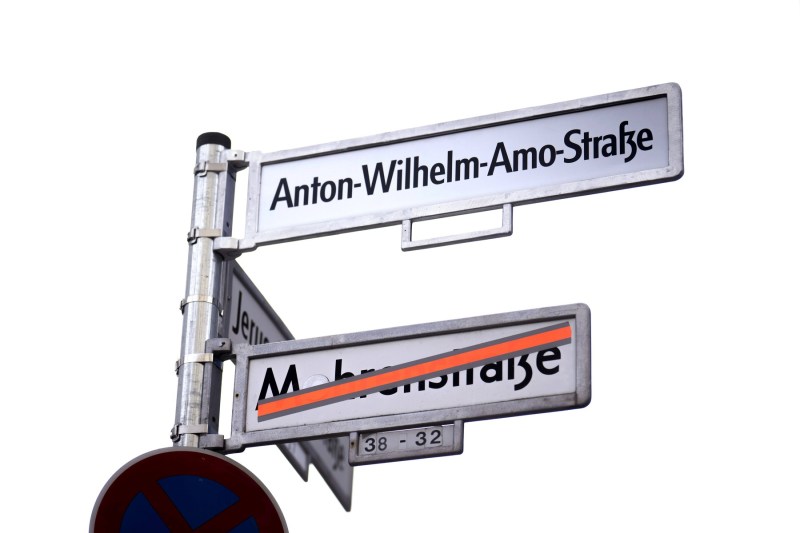
Plate at the Mohrenstrasse subway station. Photo: Stefan Boness / IPON / SIPA Press / Profimedia
A street in Berlin was renamed on Saturday after the name of an African philosopher from the eighteenth century, after years of controversies related to his previous name, considered outdated and offensive, according to AFP.
The Local Council of the Mitte Central Central neighborhood had announced since 2020 the intention to change the name of the street in Mohrenstrasse (“Maurilor Street”) in Anton Wilhelm Amo, the first known color philosopher who taught at a German university.
And the Mohrenstrasse subway station also took over the new name on Saturday, given to coincide with the International Day Trade Commercial Day.
Unlike the English term “Moor” (which initially designated the North African Muslim populations in the Iberian Peninsula, but generally used to designate people with dark skin, but without ethnic precision), the German word has a more direct connotation related to the color of the skin and has been considered a long-time and offensive time.
British writer and activist Sharon Dodua Otoo, established in Germany, revealed one of the plates with the new name with the mayor of the district, Stefanie Remlinger.
“Anton Wilhelm Amo Street represents solidarity and recognition. An authentic respect of African people in the seventeenth century German,” said Otoo.
“It is a great success of civil society, which has requested the change of the name of over 30 years,” said Tahir della, representative of the Berlin Decolonize group, who organized the festivities for marking the moment.
“This shows clearly why the old name is so problematic for many color people in Germany,” he said.
The origin of the name “Maurilor Street” is not clear
It dates from the beginning of the eighteenth century, during the peak of transatlantic trade with slaves, and some suggested that they could refer to former slaves that settled there.
Another theory is that the name would refer to an African diplomatic delegation.
Regardless of the exact origin, Della said that the name represents “a racist description of people of color”.
However, some residents in the area have initiated legal actions against the Local Council to try to stop the renaming.
A last -minute decision of the court, pronounced on Friday, temporarily threatened to block the trial, although the workers had already begun to replace the street plates.
But a higher court annulled the decision after a few hours, allowing the renaming to go further.
Anton Wilhelm Amo, born around 1700 on today's territory, is believed to have been sold as a slave and then brought to Europe.
“AMO was just a child when he was brought from Western Africa to Germany,” Otoo said.
Subsequently, he had the chance to receive an education that carried it at the prestigious universities in Wittenberg, Halle and Jena, becoming an important figure in the light period in Germany.
The Berlin Decolonize group states that the new name honors a symbol of “resistance, self -affirmation and knowledge in the African diaspora”.


