What did the girls who fell into Epstein's net have in common? And what can we parents learn from this?


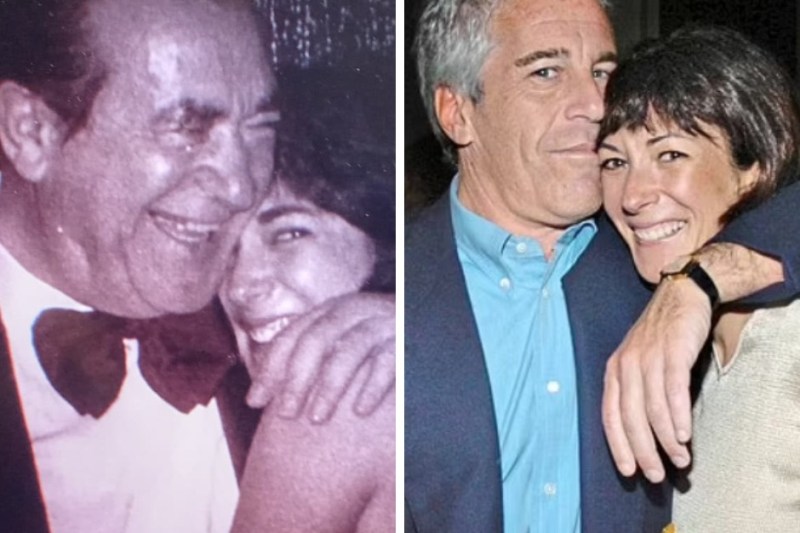
Ghislaine with her father (left) and her partner, Jeffrey Epstein (right). This photo says more than meets the eye. It talks about how relationship patterns learned in childhood can influence choices later – including how we recognize or tolerate power imbalances. SOURCE: Netflix photo capture
When we talk about sexual predators, we imagine violence and clear danger. We think of kidnappings, of easily recognizable monsters. In reality, many abuses of girls begin with something that doesn't seem dangerous: an offer, a promise, an adult who “sees potential.” The Epstein-Maxwell case forces us to look more closely not only at the perpetrators, but also at the road leading to them.
Vulnerability does not appear overnight. It is formed over time – sometimes even in the family – when girls are brought up to be liked, admired, not to disturb, not to say “No!”. We are not talking about a distant world. We are talking about the signals that we unwittingly send to our children every day.
In March 2025, the series Adolescence dominated conversations about teenagers, violence and the danger of social media. The story of a 13-year-old boy who kills his classmate after she rejects his advances was, for many, just fiction. An exaggerated scenario. A drama built for the audience. Then reality set in. At the beginning of 2026, the crime in Cenei, Timiș – committed by minors – destroyed the illusion that such tragedies belong to other societies. Beyond the shocking details, the case raised a question we often avoid: What kind of messages are our children getting about power, rejection, desire and control?
These days, public attention has shifted overseas to the case of Jeffrey Epstein and Ghislaine Maxwell. Jeffrey Epstein was an American financier accused of sexually exploiting dozens of minors using money, influence and promises. He died in 2019, in custody. Ghislaine Maxwell, his close partner, was jailed for recruiting and facilitating the abuse of the girls. The case revealed a mechanism of manipulation and exploitation that operated for years. The fact that a woman played a central role in this mechanism was, for many, the most difficult to understand, because it forces us to accept that abuse does not have one face.
Epstein is spoken of as an anomaly: a deviant billionaire, an island, a circle of the privileged. But Epstein is no exotic deviation. It is the extreme form of a mechanism that works everywhere in the world, including in Romania: in safe cities, in good schools, in educated families. A mechanism that does not start with the abuse itself. It starts much earlier with the social messages girls receive from a young age. We tell them to be nice. We teach them not to get upset. We praise them for how they look before we praise them for how and what they think. We encourage them to take advantage of opportunities, but we don't teach them enough how to say no. This is how the ground is prepared on which predators know how to tread without noise.
Read the rest of the article HERE.