Cuba has told international airlines that it will not be able to supply them with jet fuel from Tuesday, as US President Donald Trump's decisions have reduced the communist island's oil reserves.
The move, at the height of tourist season, prompted Air Canada to suspend flights to the island and is expected to affect US, Spanish, Panamanian and Mexican airlines. The notification, issued over the weekend, stated that the measure would be valid until March 11.
Cuba has not received oil or fuel for a month after Trump cut off Venezuelan supplies to the island and pressured Mexico to halt supplies. Havana does not produce enough domestically to meet its needs.
Stopping refueling will put further pressure on Cuba's tourism industry, which saw an 18 percent drop in visitors last year compared to 2024 and is a vital source of foreign currency, which is in short supply.
Many of the island's hotels have never recovered from the Covid-19 pandemic, and others have closed in the past year. Two large resorts on Cayo Coco Beach on the north coast recently closed and some tourists were displaced due to a lack of fuel. Representatives of the resorts could not be reached for comment.
Spanish hotel chain Meliá Hotels International said it had closed three of its 35 hotels in Cuba and moved affected guests to other hotels to use fuel reserves more efficiently.
“We have fuel, but we must not waste it,” he said.
Many tourism businesses in Cuba are partially or fully controlled by the Grupo de Administración Empresarial (Gaesa), a military conglomerate that controls about half the economy. A year ago, the Trump administration included Gaesa on the list of sanctioned entities, which were subject to restrictions.
Cuba last received oil from Mexico on Jan. 9, which sent 814 tons of food and other humanitarian aid over the weekend as it seeks a diplomatic solution with the U.S. to resume oil shipments.
The government announced measures such as fuel rationing, a four-day work week for workers in state-owned companies, the cancellation of classes at the University of Havana and the postponement of cultural and sporting events.
Díaz-Canel compared the restrictions to the “special period” of the 1990s, when Cuba suffered enormously after the collapse of the Soviet Union, its main benefactor.
Even before the latest crisis, Cubans had become accustomed to regular blackouts that grew longer and longer as the country's Soviet-era power plants broke down. Over the past month, power outages have hit most of the capital every day. They ended up lasting more than 24 hours in some provinces, residents say.
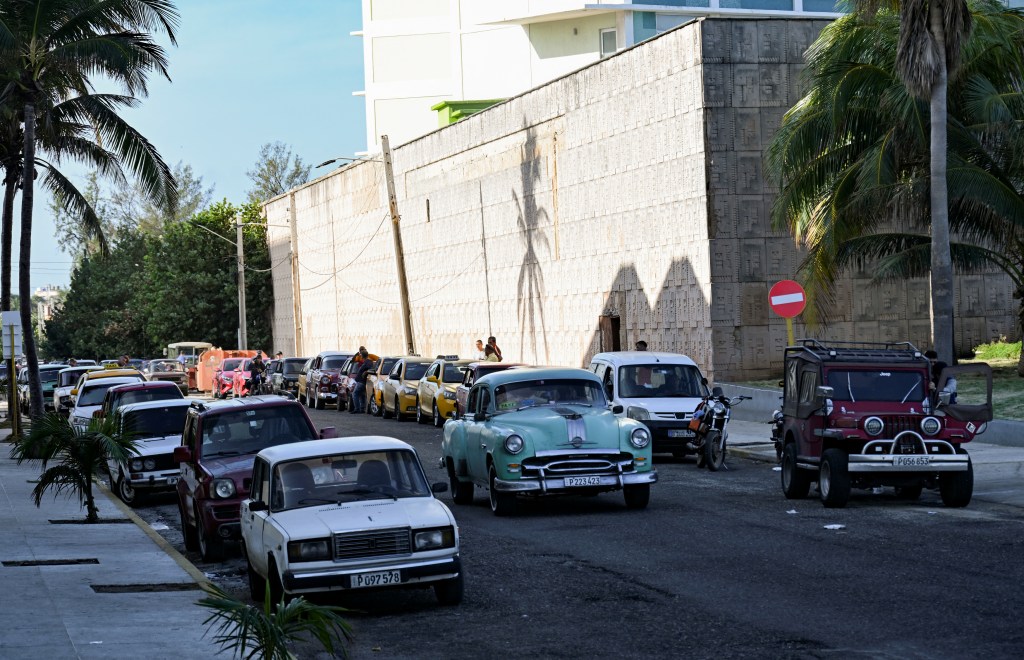
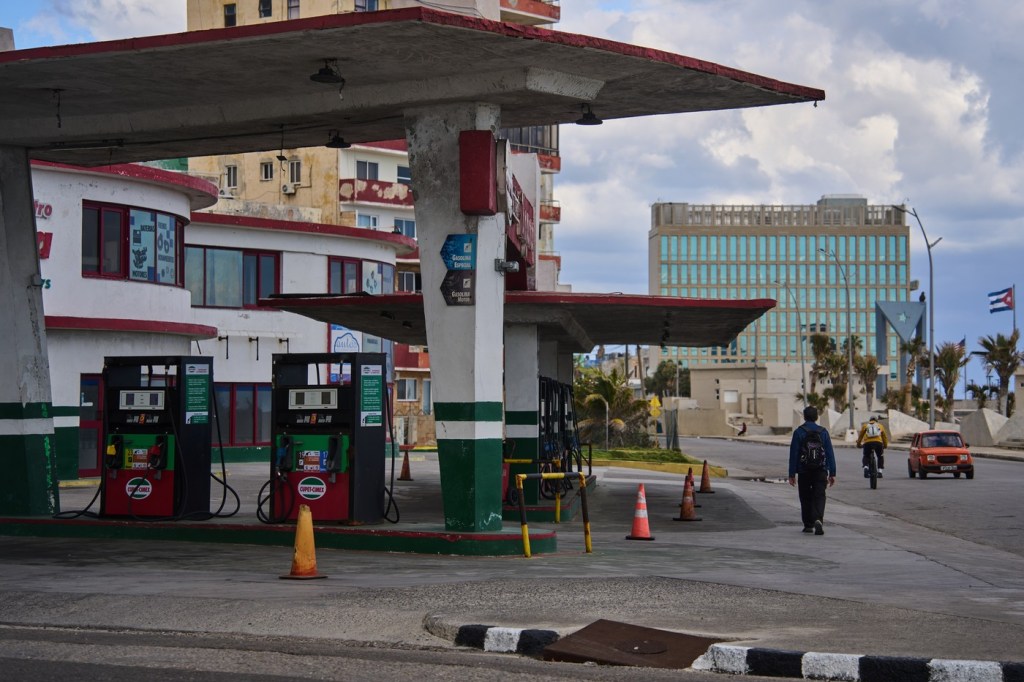
Public transport has been drastically cut, and drivers queue for hours at gas stations for increasingly scarce supplies, available only at prices most can't afford.
But Deputy Prime Minister Óscar Pérez-Oliva Fraga, a great-nephew of Fidel Castro, said the government had “introduced measures to diversify fuel imports”, telling state television “we will not collapse”.
Russia has supplied Cuba in the past, and Kremlin spokesman Dmitry Peskov criticized the US's “stifling tactics” and said Moscow was trying to “provide all possible assistance.”
Because Cuba has long received oil and fuel under preferential agreements, experts said it has little incentive to upgrade its declining infrastructure.
At the Antonio Maceo thermal power plant in eastern Cuba, hit by a blackout last week, 80 percent of the parts needed to keep the plant running were made by its workers, state newspaper Granma reported last year.
The plant was to operate for 30 years when it was commissioned. Now nearly 60 years old, its output has practically halved from its peak of 500 MW in the 1980s.
The energy crisis was “just another manifestation of the island's economic difficulties,” said Ricardo Torres, a researcher at the American University in Washington and an expert on Cuba's energy infrastructure. Its economy contracted by 1.1% in 2024, according to the World Bank.
Although spending on electricity, gas and water facilities rose to 13 percent of Cuba's total investment in 2024, it was outpaced by the 37 percent spent on hotels and tourism, he noted.
The Cuban government has resorted to energy-saving plans in the past, but has never met its ambitious renewable energy goals.
The island has agreements with Beijing to build solar parks, but solar energy provides only about 10 percent of daily output, Torres said. Wealthier citizens have imported solar panels themselves, flown them in and installed them on their roofs, but their cost is unaffordable for most.
Havana has contracted eight Turkish floating power plants which, by 2023, will provide 23% of the national electricity production. But most of the barges left after not being paid, local businessmen said. Now there is only one barge left, suffering from a lack of fuel.