
How do home energy storage systems work? 3 essential benefits for efficiency, economy and energy profit

Is a home energy storage system a smart investment or just a fad? This article aims to explain to everyone how it works and look at the three key values: reducing bills, providing backup power and generating additional income, to help you decide if it's worth the investment.
Have you ever wished that the energy produced by photovoltaic panels during the day could also be used at night? Or for your home to stay lit even during a power outage? A home energy storage system (HESS) is designed to make these things possible.
This concept goes beyond the stage of mere “technological innovation” and is already adopted by thousands of homes, becoming an essential element of a sustainable and intelligent lifestyle. In this article, we will explain how such a system works and analyze its practical value for users.
How does a home energy storage system work?
Think of it as “a smart energy backup” for your home.
- Load (Storage): When solar production exceeds consumption (for example, on sunny days), the surplus is not wasted or sold to the grid at a low price, but is stored in the battery. Similarly, the system can be charged from the grid during off-peak hours.
- Download (Usage): When solar production is insufficient (at night or on cloudy days) or during high-tariff hours, the system automatically releases energy from the battery to power the home.
- Intelligent management: All these processes are coordinated by a “brain” – the energy management system – which optimizes self-consumption, flattens load peaks and maximizes the efficiency and energy independence of the home.
Three main benefits of home storage systems
1. Increasing photovoltaic self-consumption and significantly reducing bills
This is the most visible advantage. Without storage, surplus solar energy is sold cheaply during the day, and in the evening you buy expensive energy from the grid. With a storage system, the combination of “solar + storage” can increase self-consumption from 30-40% to over 70%, reducing the purchase of expensive energy and significantly lowering monthly costs.
2. Backup power in case of power failure
In the event of a network outage, the system automatically switches (usually within a few milliseconds) to battery power for critical consumers (refrigerator, lighting, Internet access equipment, medical devices). This provides energy security, both in the sense of continuity of supply and protection of household devices. Because storage systems are installed in garages, basements or near residential areas, product quality and rigorous testing are essential to ensure operational safety throughout their lifetime.
3. Participation in demand response programs and revenue generation
In some regions, network operators offer financial rewards for reducing consumption during peak hours or for supplying electricity during peak consumption periods in order to reduce the load on the distribution network. Homes with storage systems can participate in such programs or “Virtual Power Plants” (Virtual Power Plant), obtaining consumption reductions or compensation payments and contributing to the stability of the energy grid – basically, “earning while consuming energy”.
Is it worth investing in a storage system?
It depends on several factors:
- Local energy rates: large differences between peak hours and off-peak times reduce the investment payback period.
- Consumption habits: homes with high consumption in the evening have greater benefits.
- Photovoltaic system capacity: the value of storage systems is greater when there is a surplus of solar energy generated.
- Network Reliability: in areas with frequent power outages, the advantage of a backup power supply is very great.
- Government Incentives: subsidies and tax breaks can shorten the payback period of the investment.
- Product reliability and after-sales services: investing in storage systems is a long-term decision. The reliability of the product, its adaptability to the environment (summer, winter) and the ability of the manufacturer to provide prompt and reliable localized services are essential to ensure return on investment and avoid future risks. Many users experience equipment failure and lack of support after choosing low-priced, poor-quality products, or products without local support.
Overall, amid falling battery costs and increased electricity price volatility, storage systems are becoming more cost-effective – not just a green choice, but a sound financial investment with long-term benefits.
ROI analysis for photovoltaic systems + storage (in Romania)
As of July 1, 2025, Romania removed the price cap mechanism for residential electricity, which led to a significant increase in household electricity prices. Currently, the average price of residential electricity in Romania has risen to around EUR 0.30 per kilowatt-hour, ranking among the highest in Europe. This high price of electricity significantly increases the economic attractiveness of photovoltaic and energy storage systems. Below is a simplified ROI estimate for a typical three-person household (annual electricity consumption around 3,600 kWh, electricity cost around €1,000) in three common scenarios:
Single photovoltaic system: The end-user price of a 6kW Huawei residential PV system (including equipment and installation) is around €4,300. Assuming a self-consumption rate of 20%, the investment payback period is approximately 5.5 years.
Photovoltaic system with energy storage: The end-user price of a 6 kW Huawei PV system paired with 5 kWh storage (including equipment and installation) is around €6,600. If the self-consumption rate increases to 75%, the investment recovery period reaches approximately 4.5 years.
Adding a storage system to an already existing photovoltaic system: Upgrading an energy storage system can significantly increase the self-consumption rate of the original photovoltaic system, thus increasing profitability. In this context, the payback period for adding storage is about 4 years.
In conclusion, given the current high electricity prices in Romania, own investments in photovoltaic and energy storage systems offer considerable economic returns, even without government subsidies.
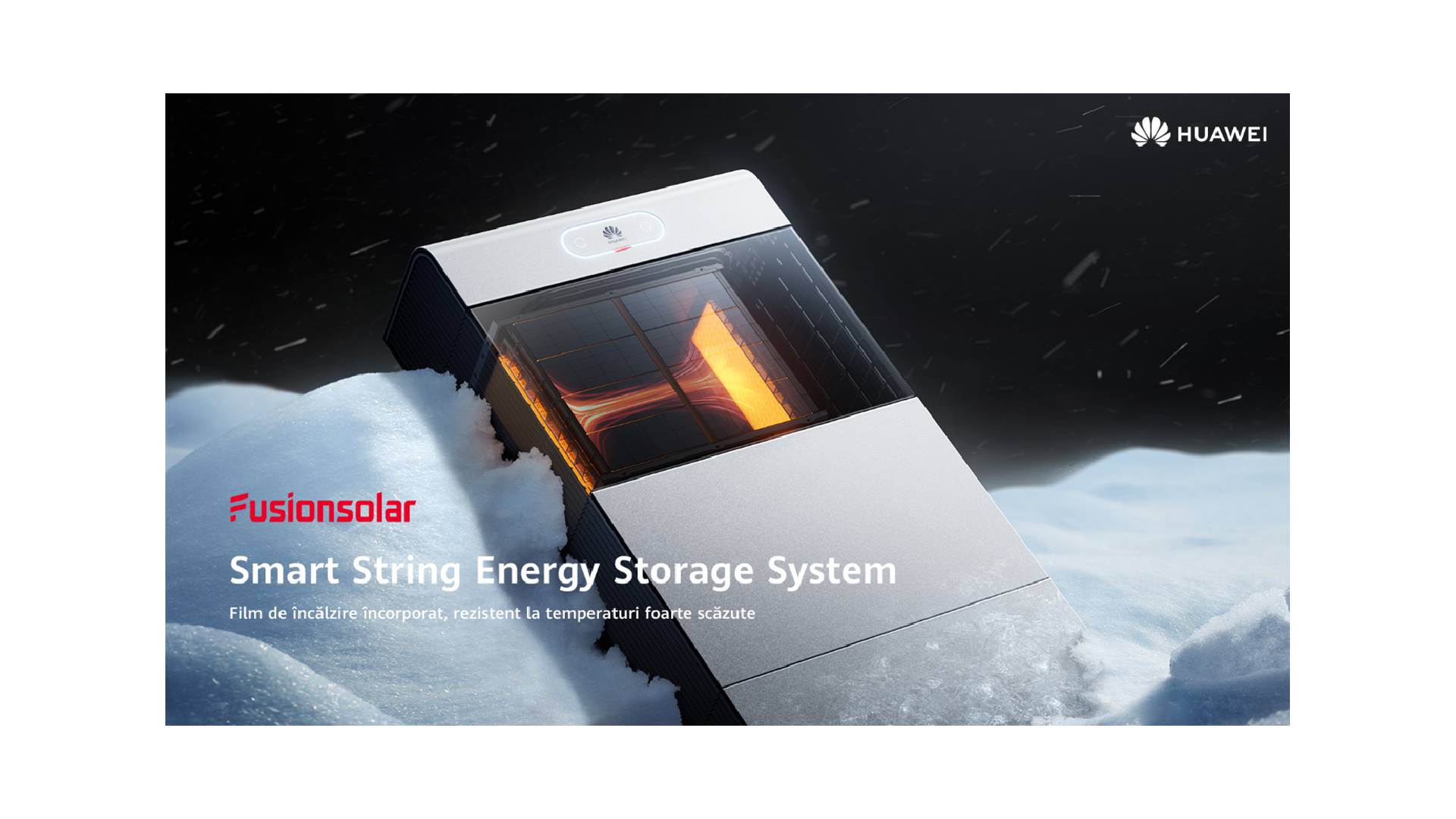
Product example: Huawei MONTH 2000-5/7/10/12/14/15/17/19/21-S1
Take the Huawei LUNA2000 series as an example – it's not just a battery, it's a “smart energy assistant”:
Smart String Architecture: manages battery modules such as photovoltaic strings, avoiding parasitic circulation and increasing system efficiency and lifetime. Its batteries use high-quality cells, supporting operation from -20°C to 55°C, easily adapting to most global climates and avoiding the risks of lower-quality batteries that do not work at low temperatures.
Integrated intelligent management: the FusionSolar mobile app provides real-time visibility into generation, consumption and storage data, allowing settings for various modes (such as self-consumption, time of use), making energy management clear and easy to understand.
Safe and reliable: Prioritize safety with five-level security, protecting your home from the cellular level to the system level. Each unit undergoes exhaustive testing before leaving the factory, ensuring that every product delivered is safe. This is in stark contrast to some similarly priced brands but with a history of recalls due to quality defects.
Localized Service Guarantee: Huawei has over 20 years of operational experience and qualified local teams in expanding markets such as Romania. This ensures that users receive a premium product, along with a quick response to partners, professional installation and continuous service from local experts, significantly reducing the risks of long-term use.
Conclusion
The operating principle of a home storage system is simple, but the benefits it brings are complex and real – from direct savings to energy security and active participation in the energy market. It marks the transition from “passive consumption” to “active energy management”. In the context of the energy transition, installing a smart, efficient and safe storage system is a wise choice for the future.
For more information, visit: https://solar.huawei.com/ro/products/LUNA2000-7-14-21-S1/.
Article sponsored by Huawei


