Why doesn't PIP complete the inspection at Dino? It's the network's fault. The Chief Labor Inspector explains why


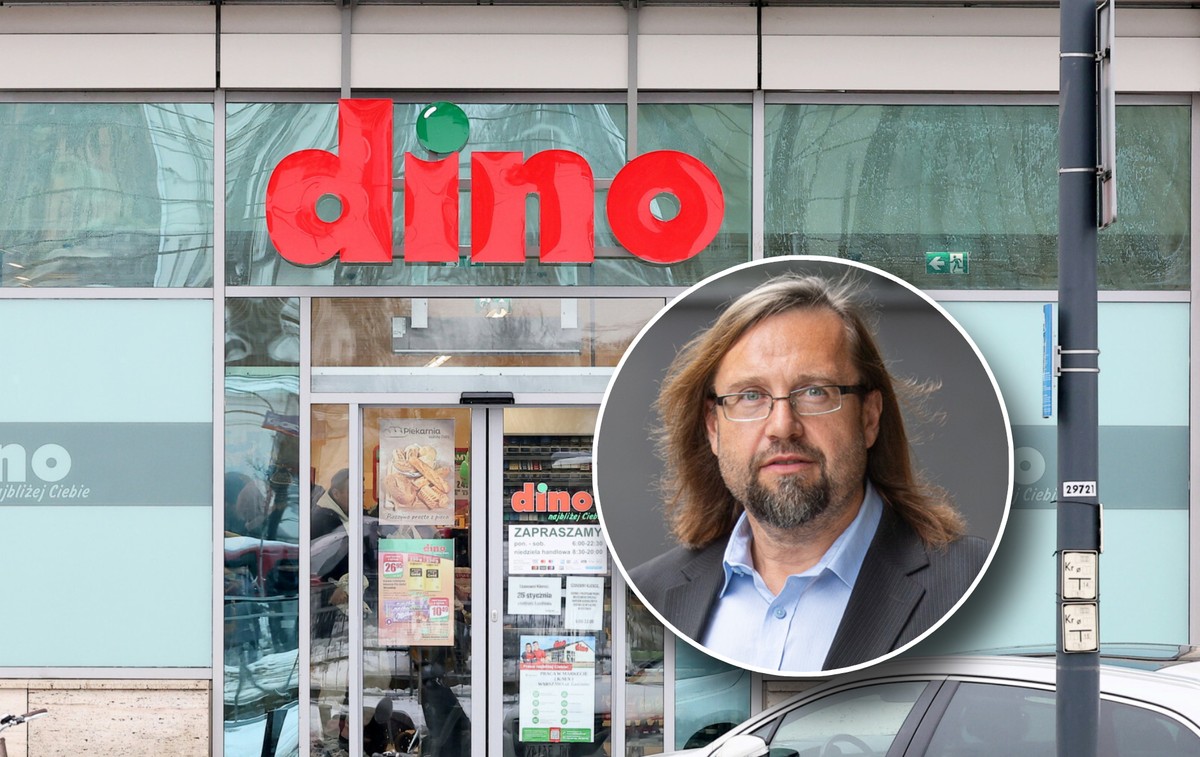
Low temperatures in stores of the Dino Polska retail chain sparked a nationwide debate on working conditions in the trade and the effectiveness of the activities of the National Labor Inspectorate. It is heated by Adrian Zandberg, MP and co-chair of the Razem party, and Agnieszka Dziemianowicz-Bąk, Minister of Family, Labor and Social Policy, tries to cool down the discussion and tone down emotions. However, one key problem faced by the National Labor Inspectorate is lost in the media noise. A problem that may also reveal itself during inspections of improperly concluded employment contracts.
See also: Labor market reform. The head of the National Labor Inspectorate will issue interpretations on mandate contracts. Will he gain power like the taxman?
Over 80 percent inspection is still ongoing
So far, inspectors have started throughout Poland 146 inspections, of which 120 were not completed. Why? – For formal reasons – explains Marcin Stanecki, Chief Labor Inspector, head of the National Labor Inspectorate.
In accordance with the applicable administrative procedure, the employer's representative must confirm reading the post-inspection report with a signature. Only then does the 7-day period for the employer to submit comments to this protocol begin to run. Without carrying out these activities, the inspection cannot be formally completed and a decision in this matter cannot be issued.
— Currently, as many as 57 reports of completed inspections are waiting for their signature – says Stanecki.
See also: The new PIP rules may change the work of Poles. The Chief of the Inspection speaks directly
Head of the National Labor Inspectorate: the powers of attorney of store managers have been modified
Why does it take so long to collect signatures? The problem turned out to be the internal reorganization of competences on the employer's side. This concerns the scope of power of attorney of store managers.
— According to the information we obtained from the managers of the inspected stores, theirs powers of attorney to act on behalf of the employer have been modifiedtherefore they can no longer sign post-inspection reports of the Labor Inspectorate at the place where the inspection was carried out. This activity has been moved to the regional level – explains the Chief Labor Inspector.
We asked the Dino network whether the powers of attorney had been modified, but by Sunday we had not received an answer.
Changing the power of attorney extends the inspection
Such a change on the employer's side requires the Inspection to take additional actions. What are these additional activities?
The point is to properly deliver the protocols to persons authorized to confirm their receipt. Firstly, the signing of the protocol may take place at the headquarters of the District Labor Inspectorate, and secondly, such a protocol may be sent by traditional mail, with acknowledgment of receipt, or sent to such persons electronically.
— For reasons beyond the control of the office, this extends the administrative procedures that must be carried out in this casebecause failure to comply will destroy the effects of the inspection and will prevent the inspector or labor inspector from issuing a post-inspection decision – explains Marcin Stanecki.
The inspection must follow procedures
However, he emphasizes that maintaining administrative procedures always takes time.
— This protects employers and guarantees them time to read our findings and respond to them. IN In the case of low temperatures, the findings of labor inspectors are indisputable and from the point of view of the law, the consequences will be drawn. I understand that from a practical perspective this may cause dissatisfaction among employees. Fortunately, when employees' health is at risk, we can issue oral decisions that should have been made during the inspection, and such decisions were issued in many such cases, which led to an increase in temperatures in the stores we visited – explains Stanecki
Formally, most inspections have been extended and formally are still ongoing, and PIP is waiting for the employer's reaction to our findings.
What are the possible consequences not only for Dino
The question arises about the consequences of possible deliberate delaying of procedures. Are entrepreneurs at risk of negative consequences?
– I think that the employer cannot be accused of extending the inspection if he wants to standardize the responses to the post-inspection findings of labor inspectors in individual stores of this chain at the regional level – says Stanecki.
At the same time, he emphasizes that In health-threatening situations, inspectors respond immediately.
— It is different if a violation of occupational health and safety regulations is confirmed during an inspection, explains Stanecki.
In such cases, PIP has the opportunity to impose sanctions.
— In such a case, the inspection has a whole range of possibilities, from the decision to suspend work at low temperatures, through the post-inspection decision indicating specific actions and investmentsactions that should be taken to improve working conditions, to a fine of up to PLN 2,000 for endangering employees' health, or an application to court for a fine of up to PLN 30,000. PLN – explains Stanecki.
What about inspections of civil law contracts?
Looking at the course of inspections in Dino stores, where irregularities are clearly visible, we cannot forget about the PIP reform project. In its original version, the procedures were planned to be simplified – so that the protocol would not need to be signed.
Stanecki admits that v The original version of the amendment to the PIP Act provided for the simplification of inspection procedures, so that it would be sufficient to send the employer an inspection report without the need to confirm it with his signature.
— This change was supposed to apply to all our inspections, not only those regarding civil contracts. It would also speed up our actions in the event of violations of occupational health and safety regulations, says Stanecki.
He emphasizes that nothing would change at the next stages, such an entity would still have seven days to respond to our findings.
PIP reform without simplifying inspections
Unfortunately a favorable change for the Inspectorate was included in the latest version of the amendment to the National Labor Inspectorate Act. On Thursday, it was adopted by the Standing Committee of the Council of Ministers. Now the Law Committee is dealing with it, because the SKRM took into account many of the submitted comments.
If the provision requiring the head of the inspected facility to sign the protocol remains, will there be another way to extend the procedure?
— The National Labor Inspectorate is bound by an administrative procedure and carrying out inspections by labor inspectors is actually not the easiest thing. However, I assure you that our actions, sooner or later, bring results – says Marcin Stanecki.
However, the example of an inspection in Dino's aunt shows that this procedure can be a weapon for employers.
Dino is as cold as a refrigerator
Since the turn of the year, labor inspectors have been inspecting temperatures in the Dino network. It was then that the first signals about too low temperatures in some stores began to appear. What results from the inspection?
Firstly, they did not note irregularities in all the stores they visited, but in some cases intervention turned out to be necessary. — At the beginning of January, an inspector inspecting one of the stores in Skierniewice measured that the temperature at the cash register was only 3.2 degrees Celsius. – says Marcin Stanecki, chief labor inspector.
As a result of the inspection, heaters were installed in some stores and the air conditioning was turned up in others.
— Our re-inspections show an improvement in temperatures in the facilities we visited, adds Stanecki.
According to applicable regulations, the temperature in rooms where work takes place cannot be lower than 14 degrees Celsius. Wherever light work takes place that does not require any effort and in office rooms, the temperature cannot be lower than 18 degrees Celsius. These are ordinary work rooms, not cold stores or halls where the temperature must be lower due to technological processes.
– Then the employer is obliged to provide employees with warm clothing, meals, hot drinks and breaks – explains the head of the National Labor Inspectorate.