Pebble Index 01 is a smart ring with a starting price of $75. (later $99), designed as an “external memory” rather than a health monitoring tool. Instead of heart rate and sleep, we get a button and a microphone. You hold it, say briefly what you want to remember, and the application turns it into a note, reminder, timer or calendar event.
Three things are important in this concept: local processing (transcription and categorization are to take place on the phone, without sending data to the cloud), no subscription and no charging. Pebble uses small silver-oxide batteries found in hearing aids, which are expected to last about two years of average use. The first units are scheduled to be shipped in March 2026.
The next part below the video:
This approach is a response to two trends in the wearables sector. First: everything in subscription, and second – another thing to charge. The manufacturer believes that many people no longer want to pay further subscriptions and do not want to have another device that will need to be charged.
At the same time, Pebble is adding something that is usually associated with platforms for hobbyists. The application and integrations are intended to be open to modifications, a the button itself can be assigned to additional actions (e.g. music or automation control). For those interested, there is also an “ask a question” mode with a ChatGPT-style answer, but it requires the Internet and is disabled by default.
Read also: A new AI tool from AWS for IT teams
Two ways of smart rings
At the same time, a parallel trend of “thought collection” rings is emerging, represented by the Stream Ring from Sandbar. The concept is similar (whispered voice notes and organizing thoughts), but the philosophy is the opposite – a stronger AI layer, emphasis on the service and a paid model in which the Pro version after the introductory period costs $10. per month (although the company also declares a free level with limitations). This is important because the market is starting to divide not only into “health vs. gadget”, but also into “local and private vs. cloud and subscription”.
In parallel, the classic branch of biomarker-oriented smart rings is growingincluding sleep, recovery, activity, sometimes temperature and stress metrics. Oura, the largest brand in this category, strongly ties the experience to membership. PDuring the trial period, access to all functions costs $5.99. monthly. Anyone want to pay a subscription fee for some data and software for the ring? Yes, apparently millions of people.
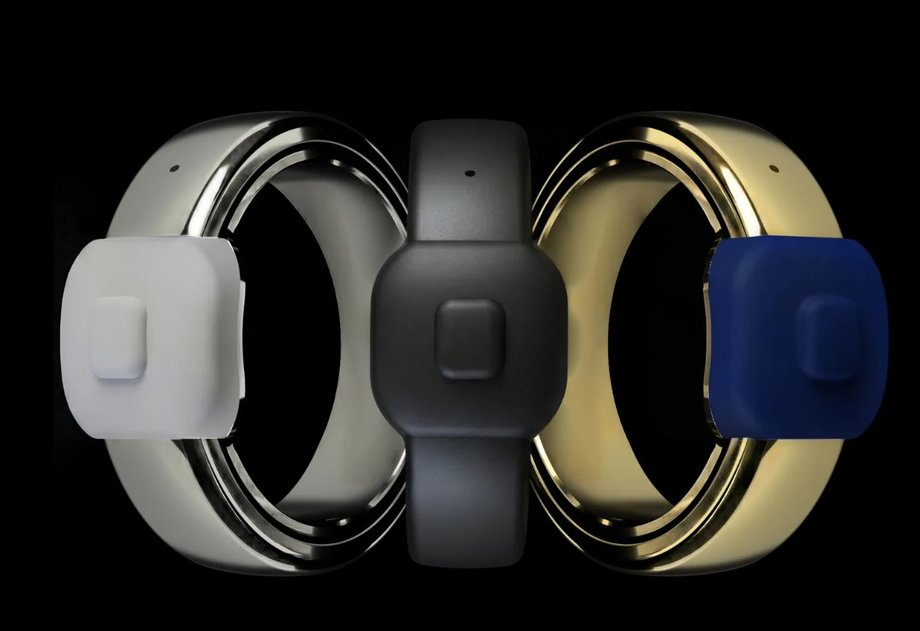
The Pebble Index has a button that you press with your thumb to activate it
|
Pebble / mat. press releases
However, competitors are trying to win with the slogan “no subscription”, such as Ultrahuman Ring Air (the company emphasizes the lack of recurring fees) or RingConn (also declares no subscription).
Will this be a growing trend? Industry data suggests growth, but with caveats. This is still a small segment compared to smartwatches. IDC reported approx. 880 thousand rings sold in 2023 and forecast an increase to 1.7 million in 2024 and 3.2 million in 2028. Omdia, in turn, describes the acceleration and indicates that the volumes could exceed 1.8 million in 2024, and in 2025 they may reach just over 4 million pieces.
This looks like a growing trend, driven by the discretion of the form, the convenience of 24/7 wear and the fact that a ring is easier to sell as jewelry than another screen on the wrist.
Check also: AI agents plug into a “socket”. Google's new product may change many companies
Mass adoption? There are a few challenges
Simultaneously mass adoption is not certain. The segment has friction that can slow it down. These include patent disputes (Oura is involved in high-profile legal battles that affected the availability of competitive rings in some markets), as well as image and safety issues, such as isolated reports of overheating of devices.
There is also the prose of life. The ring must fit perfectly in size so that the measurements are reliable and it cannot be removed, which increases the purchase threshold. In the case of Pebble Index 01, there is also a controversial element “no charging, but also no meaningful battery replacement”because after approximately two years, the product logic assumes the purchase of a new copy (with the option of recycling the old one).
See also: A new era of AI images. Google Nano Banana Pro is conquering the Internet
The most likely scenario for the coming years is that smart rings will grow and become more common, but mainly as a supplement, not a replacement for watches or bands. Some users will choose a “health ring” instead of a watch because they do not want a screen on their hand, others will reach for new rings like Pebble Index 01 because they need an instant way to take notes and remind them without the cloud and without a subscription. It is this second wave – the ring as a discreet button + microphone for managing current affairs and observations – that may make the category go beyond the biohacking niche and begin to reach people who have previously viewed smart rings as a gadget for athletes.
Author: Grzegorz Kubera, journalist of Business Insider Polska