
“We need a reset.” Bolt's founder paints a grim scenario for Europe. The continent is losing the race to China and the USA

At the age of 27, Markus Villig became the youngest self-made billionaire in Europe. An entrepreneur from Estonia founded Bolt, a European competitor to Uber. Using the company's application, you can easily book a ride or order food. The concept of ride hailing has been adopted in many places around the world.
Villig – who says he doesn't have a car or a driver's license – is causing quite a stir in the market. And this, above all, irritates the taxi lobby. However, when “Die Welt” meets the entrepreneur in Bolt's Berlin office, he is occupied with completely different topics.
“Die Welt”: Mr. Villig, you apparently started Bolt with a loan of just EUR 5,000 (PLN 21,000) from your parents. Would you start a freight brokerage company again under today's conditions in Europe?
Markus Villig: In the world of technology, timing is everything. About 10 years ago was the right time to start Bolt – the market was ready for disruption. Today this is no longer the case.
There are already some strong suppliers and the competition is huge.
“Europe will need a reset”
Is this also due to economic conditions and legal regulations in Europe?
In Europe, it is rare for one rule to destroy everything. Rather, it is death by a thousand cuts. New regulations are constantly emerging that burden companies in their daily operations. As a large company we can deal with this, we can hire compliance officers to fill out pointless forms all day long.
However, this is disastrous for a start-up. Europe can continue to function this way for another five years – then a reset will be needed. Otherwise we will become completely irrelevant. On the transport services market, the German market is practically non-existent.
What do you mean? In many cities, cars from various suppliers have become an integral part of the street landscape.
For example, in London there are 120,000. private drivers. There are less than 4,000 of them in Berlin. However, Berlin is not 30 times smaller than London. The only reason is outdated regulations. They prevent millions of people from accessing cheap mobility. If it were otherwise, we would easily invest 100, or rather several hundred million euros: in technology, vehicles for drivers, local marketing. We would probably have 10 times more employees in Germany. But in this situation it is simply impossible.
Is Bolt making a profit despite this?
We are profitable – also in Germany.
And when will the long-awaited listing on the stock exchange take place, which has been speculated about for years?
By entering the stock exchange, we could obtain capital for development, especially in the field of autonomous vehicles. The development of these cars will cost hundreds of millions, or rather billions. However, in Europe, capital market regulations are terrible and stock exchanges are dying.
US consumers are 20 times more active in stock markets than Europeans. Not because they are richer, but because of the lack of action culture in Europe. This has an extremely negative impact on the economy. Without reforms, there will be no successful technology debuts in Europe.
You worry about European capital markets, while German taxi drivers fear for their jobs. They are subject to stricter regulations than Bolt drivers. Do you understand the concerns of taxi companies?
Of course. They are the ones who have the most to lose. From the taxi lobby's point of view, it is logical that they want to prevent competition. However, politicians should keep the public good in mind. Why would they optimize the situation for a small lobby? This is completely absurd.
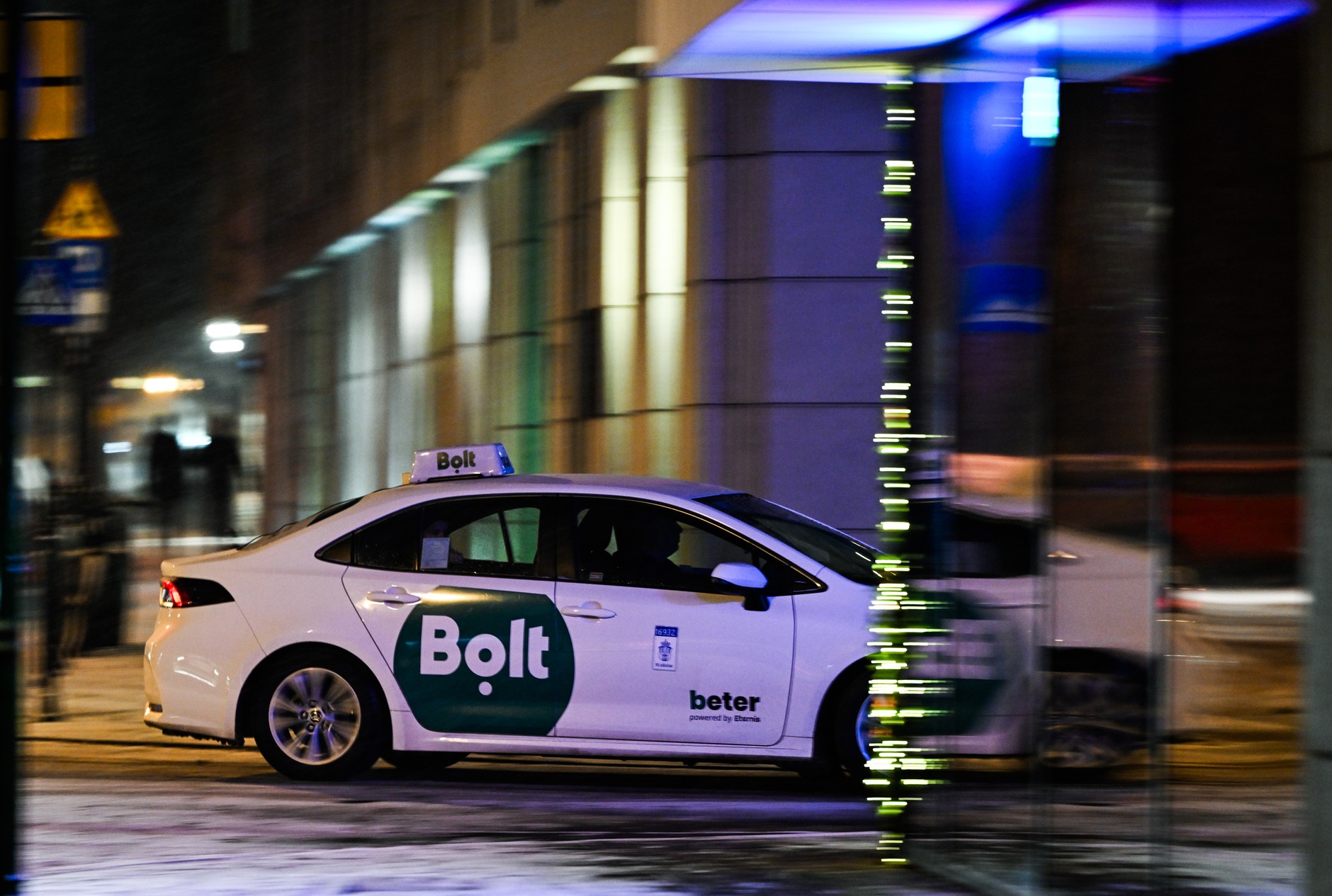
Bolt taxi sign seen on a car in Krakow, Poland, January 6, 2026.Artur Widak/NurPhoto via Getty Images / Getty Images
In Germany, taxi associations are demanding the introduction of minimum prices for Bolt journeys to make the market fairer. Various cities are considering introducing such prices.
Every year there is some new bullshit. This has nothing to do with the well-being of consumers or society. Free markets ensure innovation and falling prices. Instead, competition is blocked and prices are set. This is a completely inverted approach – a perfect example of how Europe is harming itself.
In all European markets, transport agency work is one of the most popular new professions. In Germany, too, thousands of people are waiting in line. If wages were unattractive, there would be no such demand.
“Only autonomous cars will count”
But maybe providers like Bolt are only attractive because there are no alternatives left on the market and the classic taxi industry is dying out?
Then it's good for society. If people who would otherwise earn nothing can work productively and earn an income – why should there be a barrier to this?
If everything goes according to your plan, drivers may not be needed at all in the future.
100 percent In 10 years, autonomous cars will be the only thing that will matter. They are cheaper, safer and more convenient. Millions of people will want to use them. Improving software, producing vehicles, building fleets – this may take at least 10, maybe even 20 years. Our goal is to position Bolt as a leading European player in this field.
What will it look like from a passenger's perspective?
Basically exactly like what we already know today. You open the application, order a ride, an autonomous car arrives, you get in and go. And the best part: most people won't even think about it. It will seem normal – just without the driver. More privacy, security, lower costs, convenience. Many people will realize that they no longer need their own car.
You announced that you will cooperate in the field of technology with the Chinese company Pony.ai. Why not with a European or American partner?
Because there is not a single serious company dealing with autonomous cars in Europe. Not one. It's a disaster. If we don't develop this technology ourselves, the European automotive industry will be finished.
“Europe cannot function like this”
Have you discussed this with European car manufacturers?
Yes, and everyone is panicking. None of them have this technology. Nobody knows how to build it. Currently, there are only two options: China or the United States.
So why not an American company?
Because US suppliers couldn't deliver the product fast enough. They are focused on their domestic market – especially in the current geopolitical situation. Chinese suppliers wanted to enter the European market immediately. Therefore, we were able to start working with them faster.
Cybersecurity experts warn about data risks in Chinese companies. Do you share these concerns?
100 percent It's about data – and who controls the vehicles. This technology must be controlled by European companies. Data must remain in Europe. The software must be tested here. Without this, the technology cannot reach the market – whether it comes from China or the United States.

Markus VilligHugo Amaral/SOPA Images/LightRocket via Getty Images/Getty Images
Considering these aspects, wouldn't it be safer to produce autonomous vehicles in cooperation with a European car manufacturer?
Currently, I don't see any European manufacturer that could build such a car quickly and cheaply. Our discussions with Volkswagen and other carmakers show that development times are five years longer than in China and costs are three times higher. At the same time, in China we can now order vehicles that are half the price of German ones. Europe cannot function like this. If we don't change this, the world will buy cars from China.
Would you also buy from other Chinese companies?
Ultimately, customers want the best product at the best price. If possible, I buy European products. However, Europe has produced nothing significant in technology for 30 years. Among the largest technology companies in the world, there is not a single European one.
The reasons are various: too small investments, too many regulations, poor conditions for talents, difficulties in raising capital. That's why the best people went to the USA. If we do not change this, Europe has no economic future. Without an economy, there is no defense, there is no social state. And time is running out.


