The turning point in energy: Meta, Bill Gates and Sam Altman sign the nuclear future. How AI is forcing a radical rewrite of the world economy

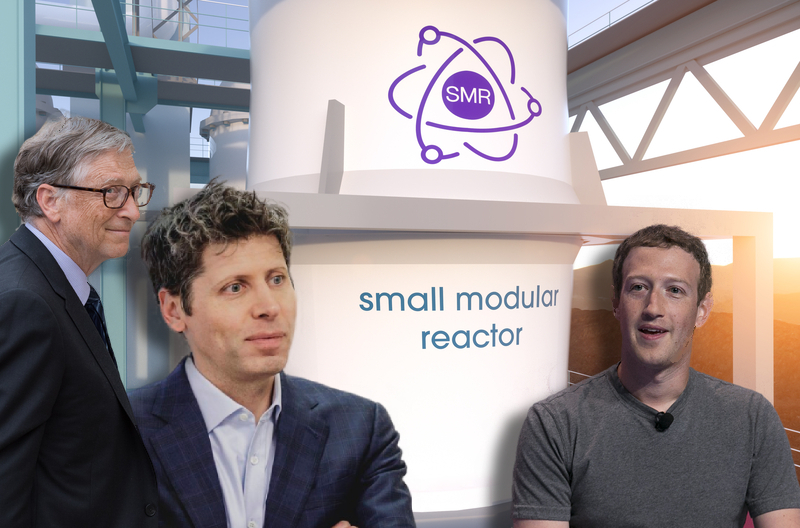
Next-generation nuclear power has reached a tipping point through collaborations initiated by Meta with TerraPower, Bill Gates' company, and Sam Altman-backed startup Oklo. This shift shows how AI-powered demand is forcing a renaissance in the sector, according to a Fortune analysis.
For decades, the nuclear sector has stagnated due to safety concerns and huge costs. An example is the Vogtle power plant project in Georgia, which cost $35 billion and took 15 years, discouraging further investment.
Chris Levesque, CEO of TerraPower, the startup founded by Bill Gates to develop advanced nuclear reactors, explained to the business magazine Fortune that the industry has been stuck.
“We were being rewarded for doing everything the same as last time, maybe 1 percent better. But don't be a cowboy!” Levesque said. He explained that while the safety record was good in the US, it created a culture where innovation was almost punished.
When he joined TerraPower, Levesque left Westinghouse, a traditional pillar of the nuclear industry, for a company guided by the question, “What does nature and science allow?”
That mindset coincides with a historic moment: Seven decades after the first US plant, new small modular reactors (SMRs) and massive demand for AI are setting the stage for what Energy Secretary Chris Wright calls “the next American nuclear renaissance.”
“First Alarm”
The vision already materialized in January, when Meta, the parent company of Facebook, signed an agreement with TerraPower and Oklo, the startup backed by Sam Altman, to develop projects of about 4 gigawatts. Such a huge amount of energy will power the future AI mega-campus “Prometheus” in Ohio, ensuring the constant flow needed by the data centers.
“That was the first red flag,” said Dan Ives, an analyst at Wedbush Securities, a major Wall Street investment firm. He predicts that all major tech companies will make similar moves in 2026, as the number of data centers under construction already outnumbers active units.
Ives pointed out that there are more data centers under construction than active data centers in the US. “I think clean energy around nuclear is going to be the answer,” he said. “I think 2030 is the key threshold to reach a certain level and start the next nuclear age in the United States.”
The solution to this deadline is SMR reactors, which can be built in just three years, compared to the ten years that traditional ones require. These drives allow “hyperscalers” — the giants that operate large data centers — to gradually expand their capacity as power consumption increases.
“There is a major risk if nuclear power doesn't materialize,” Oklo CEO Jacob DeWitte warned Fortune magazine. He explained that the tech giants have understood that the market is real and can play a decisive role in its success.
“We're at a point where we're finally seeing this confluence of innovation in the industry to do things in a different way—for the first time since the advent of nuclear power,” DeWitte concluded.
The return of nuclear energy
Natural gas-fired generation dominates the US grid, but high prices and delivery delays are forcing tech companies to look for alternatives. Although wind and solar power have been attractive, the end of subsidies and new tariffs have increased their costs. Thus, nuclear energy re-enters the equation thanks to new technologies and the simplification of authorizations, in the context of a demand for electricity that could increase by 80% by 2050.
“The electricity industry is slower than the technology industry, and the two are colliding right now,” Levesque explained. He claims his new SMR reactors will compete directly on price with gas-fired power.
TerraPower is already building the first plant of its type in Wyoming, scheduled to feed the grid in 2031. The agreement with Meta calls for two reactors to come online in 2032, with an option to reach eight units, totaling 2.8 gigawatts.
“It defines our order portfolio,” Levesque said of the partnership with Meta. He estimates the firm will have around 12 plants under construction by 2031, many of which will be dedicated to the tech giant.
Collaboration with “hyperscalers” in the technology field
Oklo, the startup led by Jacob DeWitte, will begin construction of the first reactors in Ohio this year. The project is located next to Meta's “Prometheus” campus and will provide 1.2 gigawatts of energy by 2034.
The company is already developing a test reactor in Idaho, scheduled for 2027. Oklo has the most pilot projects in the US government program, surpassing any other competitor in the industry.
Jacob DeWitte met Sam Altman in 2013 when he was running startup incubator Y Combinator. Altman was Oklo's chairman for ten years and remains a strategic investor, owning nearly 4% of the company.
Altman's retirement from leading the board in 2025 was a tactical move. This allows Oklo to sign deals with tech giants that compete directly with OpenAI, the company that Altman runs.
“Hyperscalers are good partners because they act quickly and allocate resources,” says DeWitte. This massive support from tech giants reduces financial risks and allows for lower costs through mass production.
How it all works
Traditional nuclear power plants typically operate with light water reactors, using water for both pressurization and cooling. Instead, TerraPower and Oklo use different versions of sodium-cooled reactors.
Sodium transfers heat much better and allows for low pressure operation. This eliminates the need for those giant concrete and steel structures that doubled costs in the past.
“We're moving to a plant where everything is lighter: simpler components, less piping and less structural steel,” Levesque explains. The technology also allows energy to be stored in molten salt, which acts as a “thermal battery” for peak consumption moments, replacing gas-fired plants.
Another major expense is enriched uranium, in a market where Russia dominates almost half of the processing. As the US builds its own supply chains, Oklo is focusing on nuclear fuel recycling to address these concerns.
The sodium project also takes advantage of air cooling systems to keep the reactor safe when shut down, without requiring external sources of water or electricity. Jacob DeWitte says the $1.7 billion investment in recycling is a game-changer: “The entire U.S. uranium stockpile could power the country for over 150 years.”
Growing regulatory fears
The renaissance of the nuclear industry and how it is being produced has not been met with enthusiasm by everyone, writes Fortune. The White House's goal is to massively expand nuclear capacity, from 100 to 400 gigawatts by 2050.
To speed up the process, the Trump administration's program includes an overhaul of safety rules, transferring more powers to the Department of Energy (DOE).
The DOE claims it is eliminating unnecessary overregulation without sacrificing safety. But while there is some truth to overly burdensome bureaucracy, the Union of Concerned Scientists (UCS) and other outside observers remain concerned that safety is being sidelined to better serve the global AI race.
“Not only has the Department of Energy violated the basic principles underlying effective nuclear regulation, but it has done so in secret, keeping the public in the dark,” said Edwin Lyman, UCS's director of nuclear safety.
He also said that “these long-standing principles have been developed over several decades and are considered lessons learned from painful events such as the Chernobyl and Fukushima disasters.”
Despite the fears, Oklo, Antares Nuclear, Natura Resources and other startups in the pilot reactor program are moving forward, claiming their projects are much smaller and safer than past disasters in the former Soviet Union and Japan.
The Department of Energy has already granted preliminary safety approval for the startup's Antares demonstration reactor, which will come online this summer. In parallel, Google has signed a deal with Kairos Power for 500 megawatts by 2035, and Amazon is backing the x-Energy project for a whopping 5 gigawatts.
Even traditional builder Westinghouse is accelerating, planning to complete ten large reactors by 2030, taking advantage of support from the Trump administration. Jacob DeWitte acknowledges the need for both types of technology, but emphasizes the financial difficulties of giant projects.
“I'm not a fan of the debate between small and large reactors. The large ones play an important role, but they face a difficult challenge in terms of allocating capital,” DeWitte explained. He argues that smaller reactors require less money, making them easier to finance and build.
“They can be iterated more quickly, both in terms of cost and time. This is important because learning cycles matter and compound,” Oklo's CEO concluded to Fortune.