Every game day, chefs at Michigan Stadium prepare food for 100,000 people. hungry fans.
“The stadium is called the Big House because it's the largest stadium in the U.S.,” says Chris Carr, executive chef at Sodexo Live at the University of Michigan.
This is Chris Carr. He manages a culinary team consisting of 35 chefs.
— Everyone is feeling a lot of pressure. It's terribly stressful. Everything we do is time-based, he admits.
Every match matters.
— Restaurants are open 365 days a year. We have to earn as much as we can during the seven match days, explains Michael Jordan, general manager at Sodexo Live at the University of Michigan.
Read also: The elite of world finance without sugarcoating. Women on Wall Street say what success costs
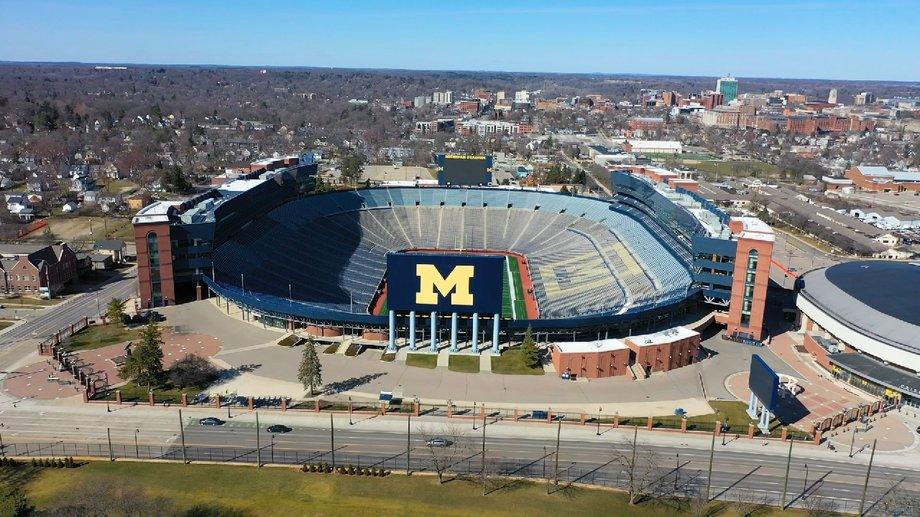
Michigan Stadium, known as the “Big House”, is the largest stadium in the US with a capacity of over 100,000. fans
|
Business Insider
The stadium hopes to make $1 million in food and beverage revenue for each game
— The day passes quickly. If you're not ready, you'll be left behind, says Anthony Ford, pastry chef at Sodexo Live at the University of Michigan.
Achieving this in a stadium that is almost 100 years old is not easy. Food is transported through only one hall and one elevator.
“I usually wait about an hour,” admits Cameron Bremen, a waiter at Sodexo Live at the University of Michigan.
Here's how chefs race against time to feed the largest audiences in the US. There are only 24 hours left until the match and that's when the action picks up pace.
“The goal on the Friday before game day is always to get everything ready to go,” Chris says.
Supplies from the main kitchen are delivered to the service level. Chris says this one truck carries $20,000 worth of food. hole. On Friday, everyone's task is to prepare as many dishes as possible.
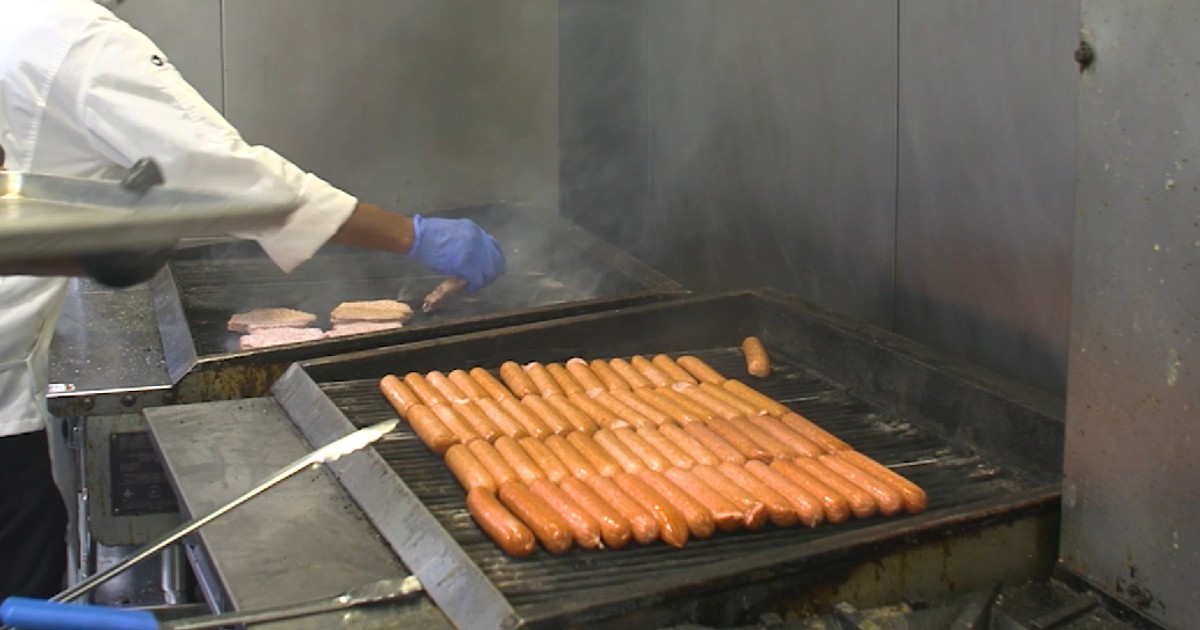
In one part, vegetables and salads are prepared. Hot dogs and meat are grilled.
– It's a quick job. If someone can do it quickly, without dropping food, the process works really well. I'm always excited about match day. I'm a big fan of the band says Chris.
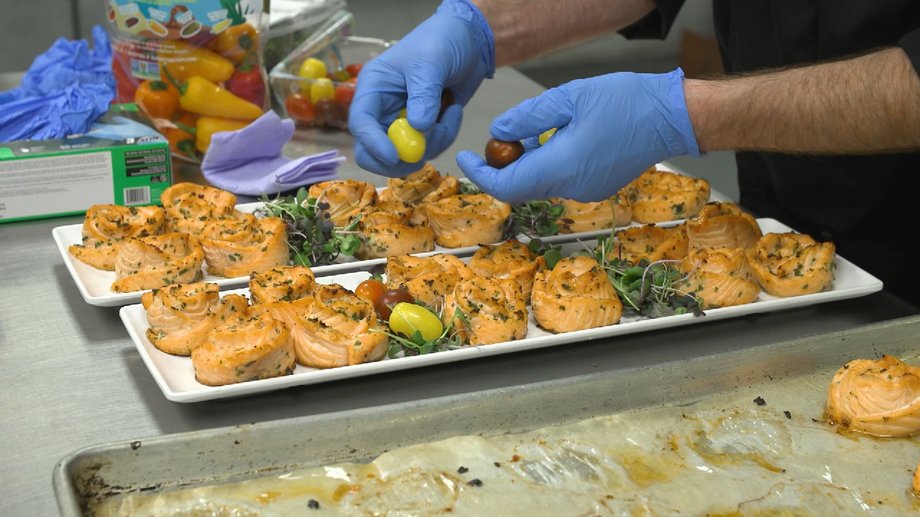
Chris handles the salmon rosettes that will go to private apartments.
— You can't make them too early. It's fresh fish. You always need to stock up, so if there isn't one that looks exactly like I want, I have others I can use, she adds.
Chefs then move the food to the cold storage room, where they load it onto carts. It's an organizational nightmare. Each of these carts goes to one of the stadium's more than 70 kitchens and preparation areas. So chefs check their checklists…
They make sure that the right dishes go to the right cart. They also label each cart with the product name and quantity.
In the main kitchen, hot food is color-coded for each stall. On Friday, before the hall fills with fans, workers move as much as they can. Chris leaves work around 6 p.m.
When we walk through those doors tomorrow morning, everyone will know what's important. A few minutes before 1:00, we are in front of the Big House. Time to get everything up and running. When I enter, I announce my arrival. The stadium will be searched by bomb-sniffing dogs throughout the evening. The last thing I want to do is walk into a dark, quiet kitchen and scare the bomb-sniffing dog
says Chris.
Read also: “I would be surprised if this doesn't happen by 2030.” Sam Altman on artificial intelligence
The team consists of 35 chefs and 700 other employees
|
Business Insider
What does food for fans look like? Good organization is the key
Chef Chris turns on all the appliances and discusses the plan for the day.
“We come to work on Saturday and all we have to do is turn on the equipment and get to work,” he says.
At 3 a.m. his deputies start arriving. At 8 a.m. the chefs are already frying chicken fillets. They must act quickly.
“During each match, 40 cases of chicken fillets go to the VIP box alone,” he explains.
Chefs also cut meat for shawarma and tacos. Just like in the main kitchen, people preparing the pizza are fighting against time.
Preparing 6,000 pizzas in four hours is a challenge
says Spencer Taylor, Buddy's Pizza.
Buddy's is one of the newest vendors at the stadium. Their Detroit-style pizzas are prepared outside the stadium, but must be baked, sliced and packaged at the stadium on game day.
Just like on the pitch, you need to have a great team. We're just trying to put on a good performance
– says.
Hot dogs are the most popular dish at the stadium per 100,000 people. people
|
Business Insider
Buddy's, like every other stadium kitchen, suffers from a lack of space. The University of Michigan Stadium was built in 1927. Although more stands, seats and towers were added over the years of expansion, the skeleton of the stadium remained unchanged.
Most stadiums can accommodate 50,000-80,000. people. It is known that 20 percent no fans come. Here, the percentage of people who don't come is about 5%, so we have over 100,000 people at each match. people
– Michael counts.
This makes transporting food a nightmare. There is only one tunnel through which food can be transported, and only one elevator.
— I stood here for about 30 minutes waiting for the elevator. We're staying on the fifth floor, and they seem to be leaving. I have to wait until they get off on my floor and then I get off on the second floor. So we have to go back to the elevator and take it halfway across the stadium,” Cameron says.
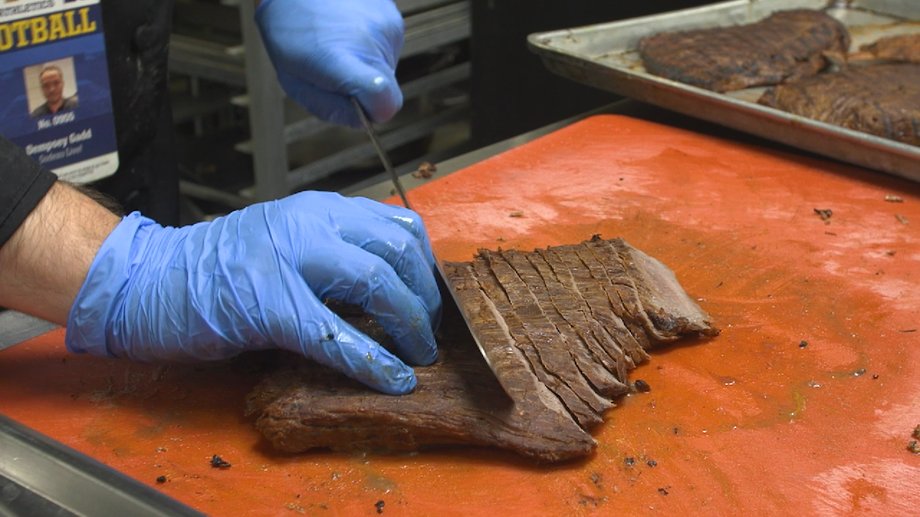
Good work organization is essential when preparing food for a big event
|
Business Insider
Waiters travel many kilometers during the match to deliver food to fans
Waiter Cameron Brenen travels almost 10 km during the match to deliver food. It doesn't seem to bother him. Finally, Cameron delivers the order upstairs. All the lodges are located on this level. They are fully stocked with food and drinks.
– This is where we get our food. It comes packaged, so we have to unpack it, and when our customers come in, I'll take out the cold snacks and spread them out,” explains Sarah Jacobus, a waitress at Sodexo Live at the University of Michigan.
Sarah Jacobus has been manning the same four boxes since 2014. Gates open two hours before kickoff.
“When the gates open, I start walking around the building,” Michael says.
This is Michael Jordan. Not “that” Michael Jordan. He works for Sodexo Live, the catering company that serves Michigan Athletics. There is little space in the Big House, so Michael set up stands outside with water and food in shipping containers.
It turned out to be a great success. Total food and beverage sales increased by over 13%. compared to the previous year, and the stadium's revenues increased by 11%.
Michael says this is partly due to simplifying the menu and improving the flow of people in the aisles. Constant communication via walkie-talkie also helps in efficient food delivery.
Throughout the stadium, workers put popcorn from trash cans. They prepare the pretzels and finish the hamburgers.
— It's impossible to catch up when there are 100,000 people in the building. people – adds Michael.
Queues are starting to form. Hot dogs are the best-selling product at the stadium. About 10,000 of them are sold during each match.
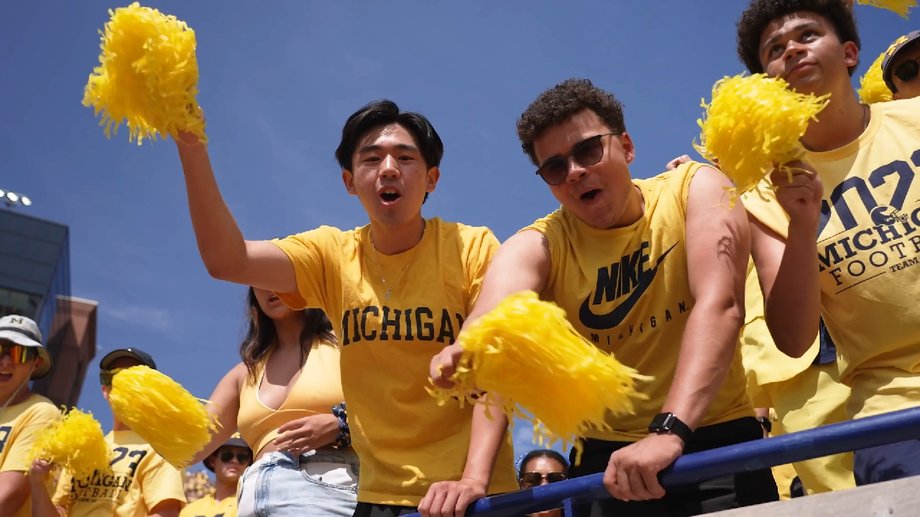
The fans' favorite meal during the match is a hot dog
|
Business Insider
This is the key to success when selling food at the match
Food stands operate very efficiently. Employees try to serve food to customers in less than a minute. Speed helps the culinary team achieve their goal of $1 million in sales per match.
New ordering systems have helped speed up service at some food outlets. People spend an average of just 18 seconds at the self-checkout, which helped this burger stand double its sales this year.
The most important time is coming. The match finally starts. However, food is still served.
“It's during the break that we have to put in the most effort,” Michael says.
Michigan wins over Rutgers. Match day wasn't over for the chef yet, however.
I usually stay until the end. When the match is over, there is no way to leave until everyone else has left. This is what it looks like
– explains Chris.
It's not unusual for employees to be here for 12 hours at a time.
— Many of them spend more time here than at home. It's amazing that they keep coming back here, he adds.
Michael says that's why finding the right team is so important.
“It's hard to hire 700 people to cover an event that takes place seven times a year,” says Michael.
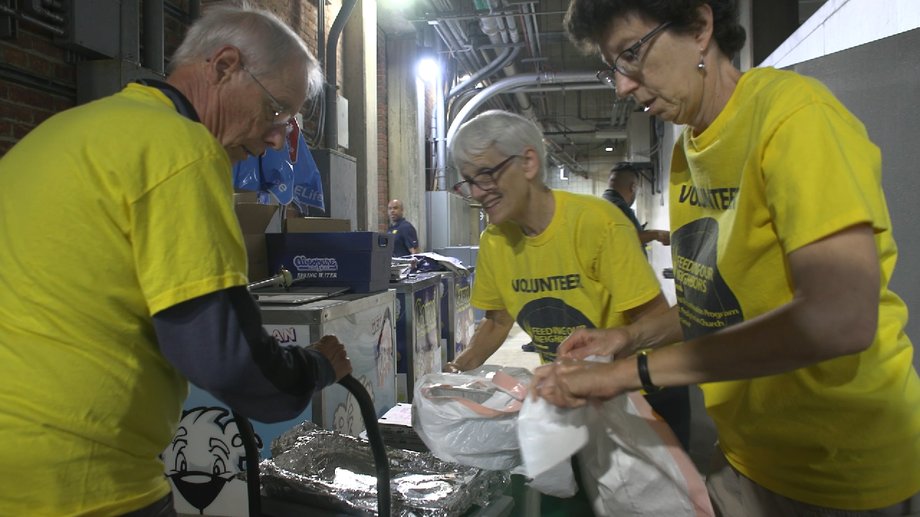
About 500 of these employees are volunteers from local charities. Sodexo Live donates part of the proceeds from food sales to charity. The catering company pays only about 200 of them, including cooks and waiters. They earn between $30 and $50. per hour.
Chris checks the now quiet lodges one last time and assesses the amount of waste.
— The chili was half eaten. The wings are gone. There are a few hot dogs and a few vegetarian sausages left. When the day is over, the trash can never lies, says Chris.
Chris will use this information to adjust his food orders for the next game. Volunteers pack all the surplus food to be donated to local food banks.
They collect about 5,000 products during one match
– he explains.
The volunteers will come back in a few weeks and do it again.
— I rate today a 5+, maybe even a 6-. “I can’t wait for the next three,” Chris laughs.