Romanian politicians ignore a problem that concerns us directly, so as not to upset Trump / Good luck with civil society

What do you think about the reaction of the authorities in Bucharest after the European Commission concluded, after two years of investigations, that the TikTok platform is specially built in such a way as to cause addiction? Exactly, there is no reaction. As if Romania were not the only country in the EU that canceled its elections blaming (and) TikTok algorithms.
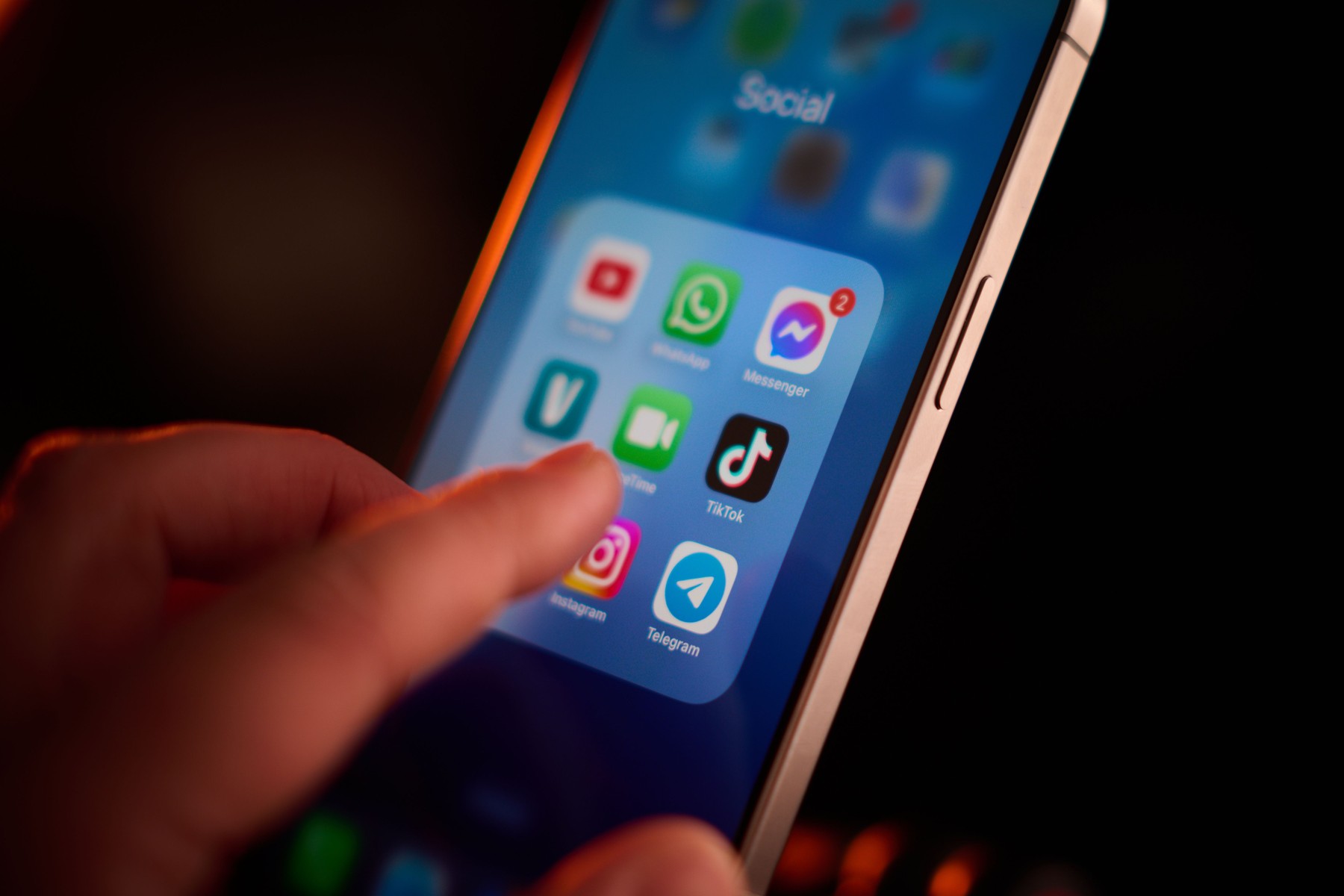
On February 6, the European Commission published the findings of an investigation in which it says that TikTok violates the European regulation (Digital Services Act), because of features such as “infinity scroll”, autoplay, push notifications and highly personalized recommendation, which make the platform addictive. TikTok has 200 million users in Europe.
The decision of the European Commission, the first of its kind in the world against a social network, had a strong echo.
Amnesty International says, for example, that it expects European institutions to “enforce the law to stop this abuse and provide children, young people and adults alike with a safer online environment”. If it does not give up those functions, TikTok risks a penalty of 6% of its annual global turnover.
At the same time, Politico writes that “there are other companies under investigation by the European Commission, mainly Meta (Facebook and Instagram), also for allegedly using addictive algorithms.
Increasing global pressure
Across the ocean, the New York Times notes the growing global pressure towards TikTok and other social networks and recalls that several European countries, but not only, adopt regulations that prohibit access to platforms by teenagers under a certain age, generally between 13 and 16 years.
However, the American publication does not forget to specify that EU policies on social networks have attracted strong criticism from the Trump administration. “The dispute has turned into a larger debate about free speech and who sets the rules for cross-border platforms,” writes the New York Times.
The stakes for Romanians are higher than for others
For Romanians, the European Commission's decision regarding TikTok is all the more important in the context of an ongoing investigation, carried out by the same institution, on this platform, regarding the canceled elections in Romania.
Not by chance, a preliminary report of the Judiciary Committee of the US Congress accuses the intervention of the European Commission in the elections in Romania.
TikTok mentioned 10 times
But if we read the document published in October by the Romanian president about the cancellation of the 2024 elections, we see that the Chinese platform is mentioned at least 10 times. For example, when we are told that, in the case of the promotion of the candidate Călin Georgescu, “the TikTok platform had the highest degree of exposure due to the complex viralization algorithm and the high volume of posted materials”.
You can't help but make a connection between the two documents about TikTok, because they're essentially talking about the platform's algorithms, which decide what and how much content users consume.
Maybe Friday's moment would have been a good opportunity for politicians from Bucharest to react: if TikTok creates addiction (for now it's only about this platform, but the discussion remains open with the others as well), then maybe social networks should be regulated according to the model of tobacco products. Or at least open a discussion in this regard.
But the reactions in Romania are more than disappointing. For example, I saw on a news station today an “expert” in social media who said that the decision of the European Commission is coming now, after “TikTok has become American” and that, in fact, we are seeing nothing more than an episode of the US-EU economic dispute.
We are all entitled to our opinions, but we should keep the facts as they are: “TikTok is American” only in America, where the Chinese parent company, ByteDance, still owns only 19.9% of the company that operates on the territory of this country. In Europe, TikTok is still Chinese.
These days, we see how Western countries try to regulate social platforms and start with the protection of the most vulnerable of users, namely minors. After Australia, which banned access to social platforms for users under the age of 16 from December 11, 2025, many European countries followed: France, Denmark, Spain, Austria and so on.
Of course, things are not at all simple (restrictions are easy to break, many teenagers have accused of feeling disconnected and marginalized, etc.) – I explained in another article what is happening in Australia. But to quote again Inman Grant, the head of this country's online safety agency: “We've started a national conversation about social media safety, and that's a good thing.”
Are we afraid of upsetting Trump?
Politicians in Romania seem rather reluctant to any regulation regarding social networks. The Minister of the Interior, Cătălin Predoiu, fears that “we could enter a dangerous path towards an Orwellian world”, and Prime Minister Ilie Bolojan doubts that “the restrictions could be put into practice”.
The Minister of Justice, Radu Marinescu, is not very clear what he wants, he only says that “I am for a certain rigorous evaluation of the content that minors can access on social networks, in the sense that we must try to limit this access to that content that is clearly inciting violence or antisocial behavior”.
Many words, few ideas.
The feeling that Romanian officials convey is that we do not want to upset Donald Trump, especially now, when President Nicușor Dan is preparing to arrive on an official visit to the United States (it is not known exactly when).
Good luck with child protection NGOs
Ignored by politicians, the topic of social media regulation would probably die in Romania, if there was not pressure from civil society. The “Hope and Homes for Children Foundation” is asking the Government for “a national public consultation process on the impact of social media use on children and adolescents”. It has also launched a campaign in this regard, “Stick to Screens”, about the negative effects of excessive use of screens and social media.
“A study carried out by the World Health Organization shows that over 22% of Romanian children between the ages of 11 and 15 show symptoms of psychological withdrawal when access to the phone is restricted, a percentage that places our country above the average of many European countries”, says the NGO.
Also, the “Save the Children” Organization supports “the total ban and without exceptions of access to social networks for children under the age of 13 and conditional access only with parental consent for those between 13 and 15 years old.
The organization also talks about real penalties for platforms that allow minors to create accounts without verification and the mandatory introduction of digital education and online safety into the curriculum.
In a book about addictions, unfortunately I can't remember the author, he made a joke at one point wondering what aliens who landed on Earth and meet intelligent beings who enjoy smoking sticks that make smoke, even though they know it's bad for them, would think of humanity. To continue his joke, I wonder what aliens would think of the same beings who are so busy scrolling through their phones that they don't even notice that they are being visited by the inhabitants of another galaxy.
The subject of the regulation of social networks will also be addressed in Tuesday's edition of the “Ration, back!” newsletter, produced by journalist Gabriel Bejan. If you want to receive it by mail, subscribe here: