
2026-02-08 06:00
publication
2026-02-08 06:00
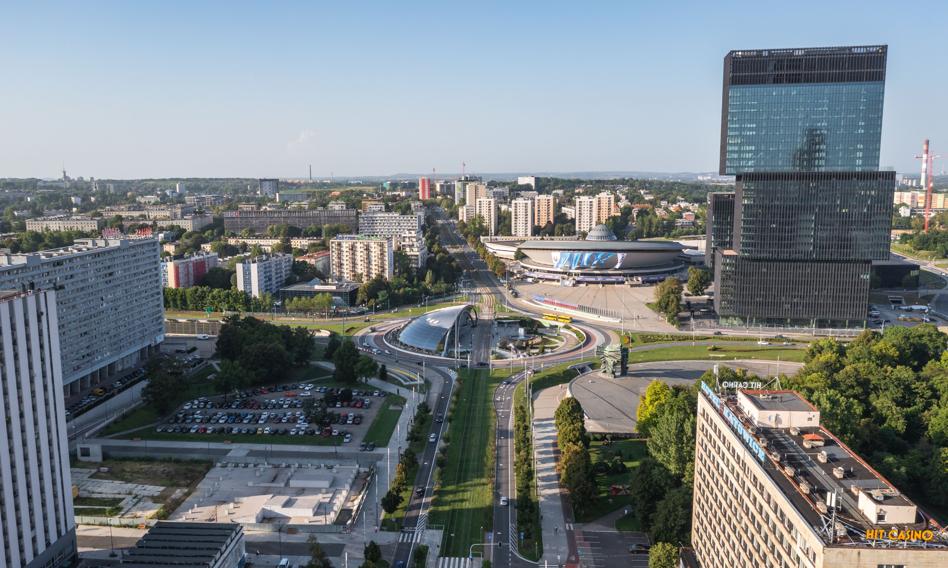
A car is still a much faster means of commuting from the suburbs to European city centers than public transport and cycling, even during rush hours, according to a report by the European Court of Auditors (ECA). This also applies to Katowice, which was examined by EU auditors.
The ECA, the equivalent of the Polish Supreme Audit Office, examined the effect of EU money allocated to promoting alternative means of commuting to work. In the years 2014 to 2027, the European Union will allocate a total of EUR 60 billion for this purpose. This money will go, among others, for regional trains, the expansion of tram networks, the designation of bicycle paths connecting the suburbs with city centers and the construction of transfer hubs ensuring smooth connections between different types of transport.
Katowice was among the six European cities examined by the ECA. The other cities are: Budapest, Lisbon, Prague, Seville and Lille.
The inspectors checked the possibilities of getting to work within 45 minutes from suburban areas. In the case of Katowice, they calculated the travel time from the starting point in Pyskowice to the University of Silesia, located in the city center. They compared the time needed to travel by car, public transport and commute using both types of transport, taking into account the EU-co-financed project on the multimodal transfer hub in Gliwice. It turned out that access by public transport could not compete with driving, even during rush hours.
Of all the cities examined, only in Budapest and Prague is it more profitable to use public transport than to take a car. In turn, in Seville, Spain, the bicycle won, although the ECA noted that the bicycle path ends at the city limits, so cyclists have to make a large part of the journey on the street, which makes it slower and more dangerous.
According to the ECA, the development of sustainable mobility in the six cities examined was not served by the fact that their mobility plans were drawn within administrative boundaries, ignoring the actual flows of people commuting to work.
Katowice was the only city examined that did not introduce regulations prohibiting the entry of vehicles into certain areas.
From Brussels Magdalena Cedro (PAP)
mce/ mal/


