Hyundai's head of Europe: We know how to defend ourselves against aggressive Chinese competition

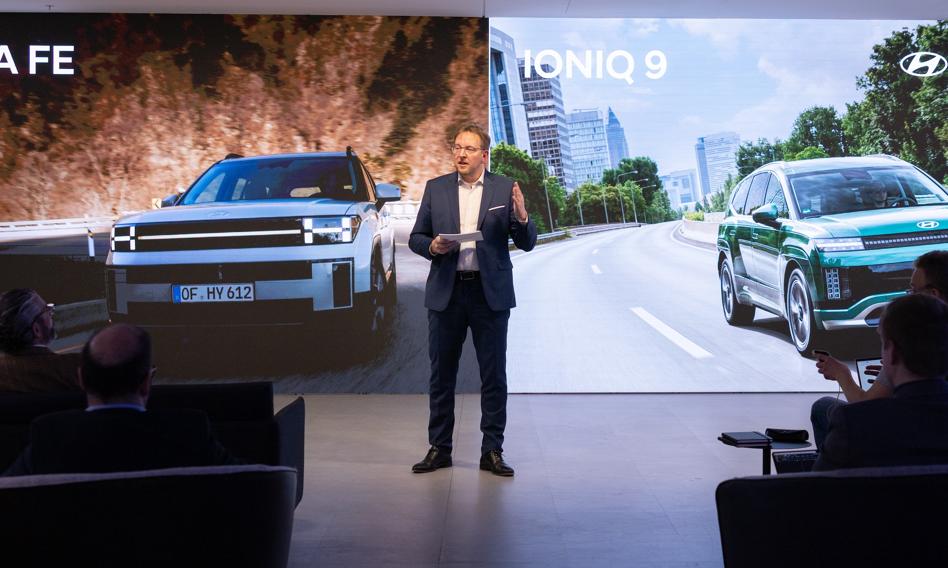
Not in 2035, but a few years earlier, the European automotive industry may face a shock. Xavier Martinet, president of Hyundai Motor Europe, warns: “Manufacturers cannot waste money by pushing a scenario that does not work, and customers will not buy cars they cannot afford.” It also talks about the Korean company's response to the offensive of Chinese brands.
For the Korean giant, Europe is very important not only due to the size of the market, but also the presence of all major players and the most restrictive regulations regarding exhaust emissions. As a group – including the Hyundai, Kia and Genesis brands – the concern is the fourth automotive power in Europe and the largest outside the continent. The Hyundai brand itself ranks in the top ten in sales.
When Bankier.pl asks about its future in Poland – where in 2025 Hyundai with a result of 29.2 thousand cars took eighth place – Xavier Martinet answers diplomatically: – We have the same ambitions everywhere: we want to be a significant player in every market.
But in the very next sentence he confirms that the rules of the game have recently changed.
Lesson from China. What response to aggressive expansion
– What's new on the Polish market is the rapid growth of Chinese brands. We have several countries in Europe where Chinese producers are extremely aggressive – admits the head of Hyundai in Europe, whom we talk to together with other Polish journalists during the conference in Frankfurt.
He does not hide the fact that the industry's approach to the Middle Kingdom had to evolve. He quotes the words of Jose Munoz, president of Hyundai in the global market.
– In an interview with the Wall Street Journal, my boss said something that perfectly reflects this change: “In the past, I went to China to teach their competitors. Now I go there to learn,” Martinet quotes.
What is Hyundai's response to the expansion of Chinese brands, which have already captured about one tenth of the market in Poland? – We need to adjust our strategy to find the best balance between price and sales volume. This is the only way to “defend our universe,” adds Martinet.
Hyundai is often compared with its sister brand – Kia. Why do both brands fight each other and not cooperate? – I wouldn't say we're fighting. We compete with each other in the same way as we compete with Volkswagen, Toyota or Renault, explains Martinet.
The key to success is to clearly distinguish the DNA of both brands. Hyundai focuses on unique design and advanced technology. – People buy our cars because they look great. Ioniq 5 looks like no other car on the market. The new Santa Fe and even the Tucson also stood out when they debuted. Design has been the foundation of our strategy since 1975, when Giugiaro designed the Pony model for us – reminds Martinet.
The percentage that makes a difference
He believes that returning to competing mainly on price would be a mistake. – If we continued to position ourselves as a brand for cheap cars with a long warranty, as we did over a decade ago, we would be defenseless against Chinese newcomers today. What we have done over the last dozen or so years – improving the brand's positioning, great products, localizing production in Europe – allows us to defend our position today – he explains.
The company directly employs 8,000 people on the Old Continent. employees. Last year, the company invested EUR 150 million in the expansion of the research center in Rüsselsheim, Germany. However, the foundations are factories: in the plant in Nošovice, Czech Republic, where the 5 millionth car recently rolled off the assembly lines, Hyundai has invested over EUR 2 billion since 2008. In turn, the factory in Izmit, Turkey, after being financed with EUR 250 million, is now fully ready to produce electric cars.
– We are probably one of the best prepared groups to actually fight new players on the market – says Martinet. – The best proof is the results for 2025. Chinese brands have grown, but we have not lost, and even increased sales in Europe by 1%. This 1 percent It doesn't make much of a difference in absolute numbers, but it does make a huge difference in terms of attitude, he emphasizes.
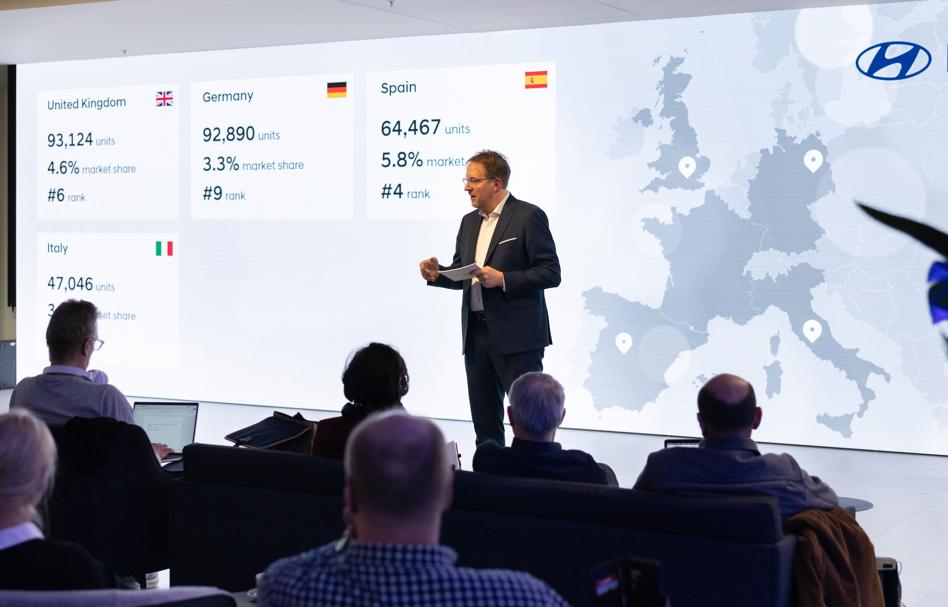
European sales amounted to 603.5 thousand in 2025. vehicles, which gave Hyundai a 4.2% market share.
The Koreans set the pace. Own steel and works
While European giants are struggling with further problems, the Koreans are not idle. – 50 years ago we built the first car. Today we are the third largest manufacturer in the world. In the past, others looked at us as if we were chasing the leaders. Now we can set the pace, emphasizes Martinet, pointing out, among other things, on the 800V architecture in electric cars, which Hyundai introduced in 2021, and the competition is only just implementing it.
A very important advantage of Hyundai over most competitors is vertical integration within the group. The Korean company has its own steelworks, produces robots (including those working on assembly lines) and has its own logistics company, Glovis.
Xavier Martinet recalls that during the semiconductor crisis, Hyundai, thanks to its close relationships with internal suppliers, knew about problems in advance and could look for technical solutions instead of wasting time on legal disputes, as other companies did.
Five premieres, including the new Tucson
Over the next 18 months, Hyundai will introduce five new models to our continent, targeting the B and C segments that are key to the European market. Historically, European manufacturers have been stronger in city cars. Now Hyundai wants to change that.
We ask which of the new models the brand has the greatest hopes for when it comes to sales in our region. Martinet avoids picking a favorite, but emphasizes the strategic role of Tucson.
– Tucson aims to maintain the success story we have had in the C-SUV segment for years. This is the segment where Chinese brands are the most aggressive, notes Martinet. – I was very pleased that last year we managed to increase Tucson sales to private customers in Europe – he adds.
The premiere of the new generation Tucson is expected in the second half of the year.
The electric compact Ioniq 3, which will debut in April in Milan, is to be another step towards the “democratization of electromobility”.
For now, the manufacturer is celebrating the successes of Inster, launched on the market in 2025 – Inster proves that you can build an attractive small electric car at a competitive price, without relying on government subsidies. Last year, Germany was a key market for Inster, even though subsidies there expired, notes Martinet.
We will not pay the competition
Hyundai, thanks to expanding its offer with additional models with electric and hybrid drives (last year it increased their sales in Europe by 24%), is within the exhaust emission limits imposed by the EU. Some companies, in order to avoid fines, buy the so-called carbon credits from Tesla or Volvo. Hyundai doesn't do this.
– I prefer to build and sell my own vehicles with my own technology – hybrids and electrics – rather than giving money to a competitor – declares Martinet. – When you pay your competitors, you have less funds for development and they have more. This is a disastrous strategy in the long run, he emphasizes.
Brussels' December decision to ease the ban on the sale of combustion cars from 2035 calmed the market, but Martinet draws attention to a much closer and more dangerous date – 2030.
Customers will not buy cars they cannot afford
– Everyone is focused on 2035, and the real battle will take place five years earlier. In 2030, the emission limit drops from the current 95 g to 49 g of CO2 per kilometer. Some flexibility was introduced for 2030–2032, but the main goal was not changed. This requires a completely different sales structure, warns a Hyundai representative.
He is skeptical about the current regulatory situation in Europe. – Do I enjoy the flexibility? Yes. But is this enough? I'm not sure. There is no balance between political goals, company economics and customer opportunities. Manufacturers cannot waste money by pushing a scenario that does not work, and customers will not buy cars they cannot afford.
– Honestly, I'm not sure if we've seen the end of this game yet, says Martinet.
It prepares the company for every eventuality. – My motto is: “Hope for the best, prepare for the worst.” This is a good approach to survive, he sums up. That's why Hyundai is developing both advanced electric cars and a full range of hybrids (by 2027, each model will have an electrified version). Martinet has already declared that the company will maintain combustion vehicles and hybrids in Europe as long as it is possible.
The company has to be ready regardless of which direction the market or regulations turn. – I don't know what will happen. If I had known, I would have invested in the stock market and stopped working. But thanks to Hyundai's scale, we are ready for any scenario – he replies.