A British military unit has adopted a technology that has shown promise on the battlefield in Ukraine: using 3D printers to quickly and cheaply produce drones, drone components and bombs, as part of a combat strategy centered on cheap unmanned vehicles.
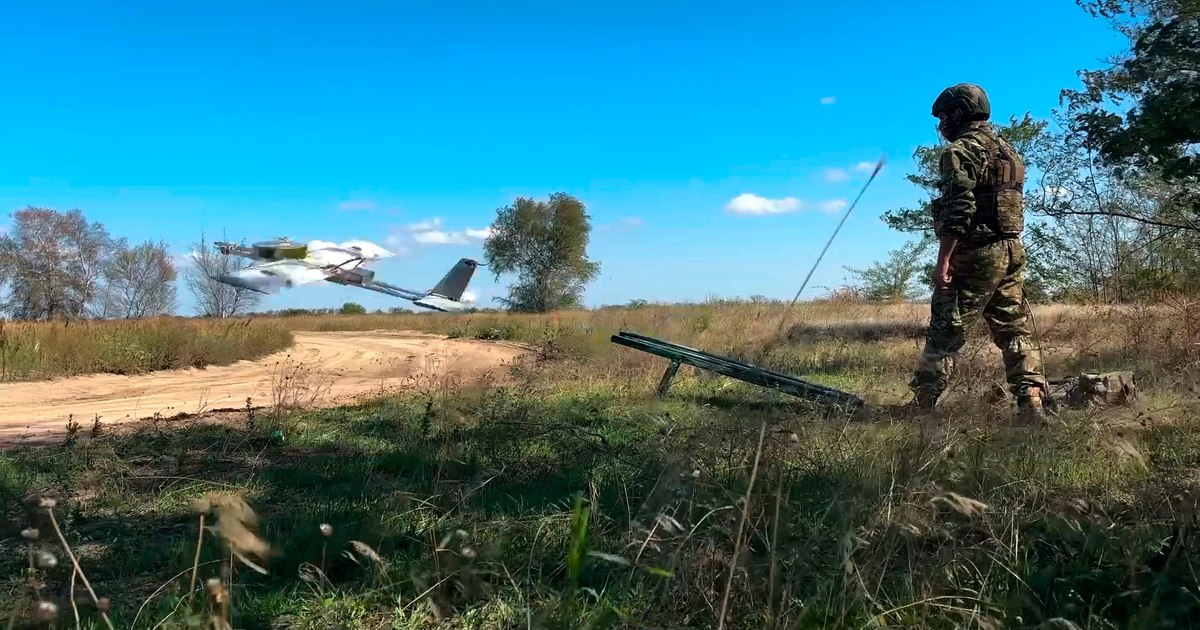
Russia has improved its ability to wage a war with drones Photo profimedia
According to Lieutenant Colonel Ben Irwin-Clark, commander of the 1st Battalion Irish Guards, an elite infantry regiment, his battalion drew inspiration from the war in Ukraine in efforts to prepare for a drone-dominated battle.
These efforts were boosted by training with Ukrainian troops, after which British soldiers understood the importance of having these drones immediately available on the battlefield,
One of the lessons of the war in Ukraine is the need for militaries to adapt, experiment and replace failing equipment at a faster pace than traditional supply chains allow.
In working with the Ukrainians, the soldiers in his battalion understood that small drones are important on a dynamic battlefield, and since then 78 of the 300 members have been trained as drone pilots or instructors.
Being able to repair drones quickly is just as important as flying them. Industry or official procurement channels are time-consuming and resource-intensive – from this point of view, it is more practical to have a 3D printer to solve the problem in a short time.
Speed is essential for other reasons too – in a rapidly changing battlefield, reducing procurement times from weeks to hours can be decisive.
The adoption of this technology has several advantages – from immediate availability for conducting training to the possibility of reproducing copies of Russian equipment.
Inspired by the Ukrainian strategy, the British battalion created its first drone center, the first installation of its kind in the British Army.
The battalion last month printed its first drone casing that can be equipped with components such as batteries, sensors and motors, and plans to expand this effort to rapidly assemble new drones.
According to the quoted battalion commander, the initiative is just beginning, so for now the focus is on replicating existing 3D printing technology. The goal is that soldiers should eventually have the ability to design and print their own innovations.
In this area, the Ukrainians have been the leaders, modifying rudimentary commercial drones according to immediate needs arising on the battlefield.
Another goal is to produce drones close to the battlefield, which involves mobility – which can be achieved by installing 3D printers in vehicles to reduce production time – from a few hours to a few days.
Ukraine has already used 3D printing to produce drone bodies and components near the front line, allowing it to quickly replace faulty drones or build new ones.
Ukrainian soldiers have also printed bomb casings, which are then filled with explosives—a solution to address ammunition shortages when crude explosives are available. A group of volunteers told Business Insider that a case costs less than $4.
Ukrainian companies are also 3D printing drone coils with fiber optics, which cannot be jammed and are controlled by cables.
3D printing has become an important factor in a war where cost, speed and adaptability matter as much as sophisticated weapons.