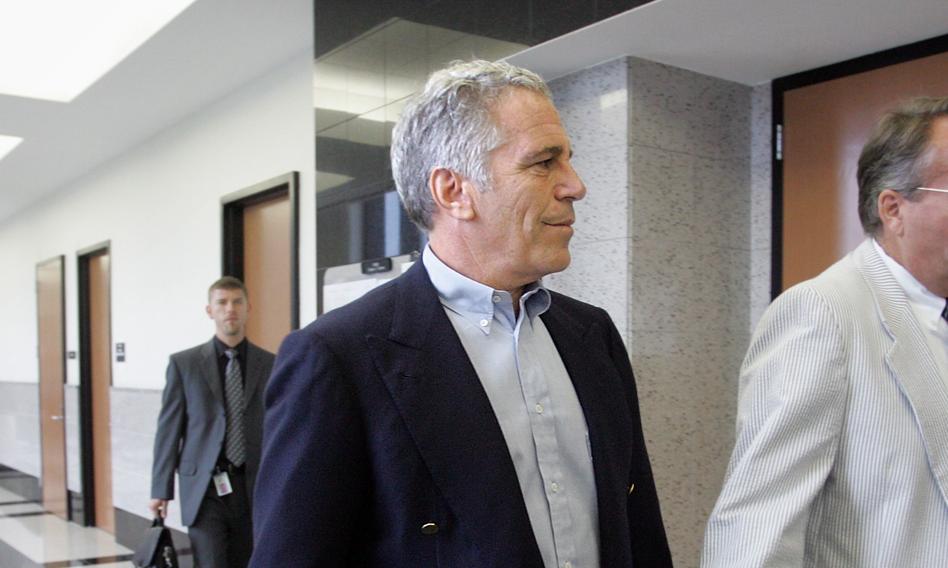
According to the British newspapers “Daily Mail” and “Daily Telegraph”, convicted pedophile and financier Jeffrey Epstein may have collected materials for Russia that compromised Western politicians and businessmen.
These are the conclusions drawn, according to the Daily Mail and the Telegraph, from the analysis of another, still incomplete portion of the investigation files into the case of the deceased American pedophile Jeffrey Epstein. It was revealed last Friday by the US Department of Justice and contains 3 million documents, including 180,000. photos and 2 thousand video materials.
According to the Telegraph, the published files include 1,056 documents mentioning the name of Vladimir Putin and over 9,000. mentions about Russia. According to the newspaper, these documents “suggest” that Epstein may have had contacts with the Russian president himself, even after he was convicted in 2008 of soliciting children for prostitution.
In 2010, for example, Epstein sent an e-mail to a colleague, offering him help in obtaining a Russian visa and referring to his contacts in Putin's entourage. Epstein also allegedly arranged a meeting with Putin in 2014, although, as the newspaper emphasizes, it could have been canceled after the downing of the Malaysian plane. The intermediary who arranged the meeting for Epstein – according to the email revealed on Friday – told him that it was a “bad idea after the disaster” in which Russia had a hand.
The newspaper also emphasizes that among the girls Epstein brought to his island, where the rich and famous came to have sex, there were Russians. As evidence, the Telegraph quotes Epstein's email sent to Andrew Mountbatten-Windsor, the former Duke of York and brother of King Charles. In it, the financier mentions a “beautiful and trustworthy Russian woman” who would accompany the then prince to dinner.
According to the Telegraph, Epstein put a lot of effort into recruiting “attractive young Russian women.” The disclosed emails include requests to book flights for models and hostesses from Moscow to Paris and New York.
According to the newspaper, it can be concluded from the disclosed documents that Epstein, at the request of the Russians, lured influential businessmen, media magnates and politicians to his island in order to record their sexual contacts with women and then blackmail them.
The daily calls these activities the world's largest “honeytrap”. In the language of services around the world, it is an operation consisting in arranging sexual relations and collecting the so-called kompromats.
However, the Telegraph does not cite any sources or expert opinions on this matter and only analyzes the circumstantial evidence resulting from the disclosed e-mails.
Another British daily, the Daily Mail, relies on the opinions of anonymous “high-ranking intelligence sources” and puts forward an identical thesis that Epstein collected compromising materials on the island on the Kremlin's request for Western politicians and celebrities. According to the daily, this is the only way to explain Epstein's “extremely affluent lifestyle.”
Epstein's leaked e-mail messages show – also according to the Daily Mail – that the American pedophile had close contacts with Russian politicians, because he offered them “valuable information” on how to deal with the US president before the Trump-Putin summit in Helsinki in 2018. The financier then sent a message on this matter to Thorbjorn Jagland, then Secretary General of the Council of Europe and former Prime Minister of Norway, that he could “suggest to Putin” his options.
According to both the Daily Mail and the Daily Telegraph, Epstein was drawn into espionage by Robert Maxwell, the disgraced British media magnate and father of Epstein's accomplice Ghislaine Maxwell, who is serving a 20-year sentence for child trafficking.
According to the newspaper, Maxwell was said to have been a Russian agent since the 1970s, but he was also associated with Mossad. The newspapers do not rule out such connections in the case of Epstein. Maxwell participated, among others, in organizing the extradition of Soviet Jews to Israel. In return, he allegedly laundered Russian money in the West with Epstein's help.
According to the newspaper, Epstein also allegedly had long-term connections with Russian organized crime, which explains the ease with which he was able to import “girls” from Russia.
Grzegorz Kuczyński, author of the book “How Russians Kill”, asked by PAP to comment on the British media reports, said that considering how long Epstein's activity lasted and the scale of his connections with politicians, assigning him the role of a Russian spy is only a “media sensation” for now. – It undoubtedly had to be checked by Western services – Kuczyński emphasized.
However, the Daily Mail, citing “sources”, points out that the British services were “reticent” in monitoring Epstein's activities due to his contacts with a member of the royal family.
The documents published last Friday contain Epstein's correspondence or at least mentions of prominent public figures, including British businessman Richard Branson, Elon Musk, Bill Clinton, and Donald Trump.
The new collection of documents contains thousands of references to the current US president, but – as emphasized by, among others, PBS News – sheds 'little light' on his relationship with Epstein. The leaked packet included emails in which Epstein and others shared news articles about Trump, commented on his politics or political views, and gossiped about him and his family. The president, who was a friend of Epstein's in the 1990s, cut off contacts with him before the first allegations of sexual crimes against the financier.
Like Trump, former US President Bill Clinton met with Epstein over two decades ago, including occasionally flying on his private jet. Clinton has denied knowing about Epstein's abuses, and his representatives say he severed ties with Epstein in 2006.
“Honeytrap” is a well-known type of intelligence operation in which, among others, they specialize. Russian services. The “sweet trap” was attempted by, for example, the red-haired Russian Anna Chapman, one of 10 Russian agents deported from America in 2010 and accused of espionage for the Foreign Intelligence Service of the Russian Federation.
FBI Deputy Director of Counterintelligence Frank Figliuzzi admitted in 2012 that one of the main reasons for Chapman's deportation was fear that she would infiltrate President Obama's administration.
During the Cold War, men also set sweet traps. The East German Stasi sent agents to hunt lonely secretaries working for influential officials, e.g. in NATO. This was such an effective intelligence method that in 1980 NATO began monitoring the private lives of secretaries to make sure they were not marrying East German spies.
Anna Gwozdowska (PAP)
agw/ pś/ mhr/