Missiles full of water and faulty silos. Xi Jinping is cleaning up the military as he prepares troops for Taiwan


In western China, nuclear missile silos should be able to be activated at the push of a button, launching weapons capable of reaching the United States.
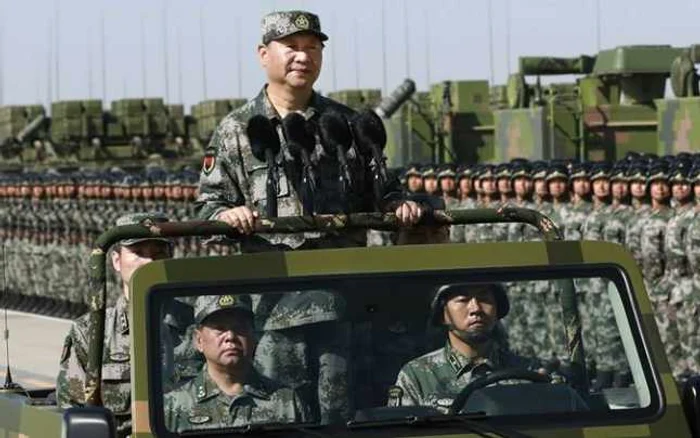
Chinese President Xi Jinping wants a modern army/PHOTO:X
But according to information from US intelligence services published in 2024, the materials used to build them were too heavy, and some rockets were, surprisingly, filled with water instead of fuel.
The scandal — or at least part of it — prompted President Xi Jinping to remove the entire leadership of the Missile Forces, the division of the People's Liberation Army (PLA) responsible for China's nuclear deterrent, in the months leading up to the release of the information.
The cleanup is part of a massive effort to combat corruption among the Chinese military. Since taking power 14 years ago, Xi has dismissed hundreds of officers and initiated criminal trials against some of the most influential members of the military, writes The Telegraph.
Last week, the campaign also targeted General Zhang Youxia, the PLA's top uniformed commander and a former childhood friend of the president.
Modernization and political discipline
Experts say that beyond rooting out corruption, Xi aims to transform the PLA into a modern military force capable of invading Taiwan by 2027 and rivaling the United States by 2049.
“The size and scope of this purge is staggering,” said Jonathan Czin, former CIA China analyst. Neil Thomas of the Asia Society think tank explained that the president has built a “much wider political disciplinary apparatus around the original anti-corruption campaign, which also targets disloyalty, incompetence and other failures to implement Xi's policies”.
General Zhang's case suggests that the purges go beyond mere administrative cleanliness. The PLA Daily charged that he had “trampled the president's accountability system,” a reference to Xi's campaign to command total loyalty to his position as chairman of the Central Military Committee (CMC), the body that coordinates PLA strategy and operations.
The exact details remain unclear. Zhang has been accused of leaking US nuclear secrets, and rumors suggest he contested Xi's planned timetable for an eventual invasion of Taiwan. His recent speeches highlighted the importance of training programs that would have delayed the complex crossing of the Taiwan Strait, as well as the principle of “collective leadership” in the PLA.
Corruption as a tool and threat
At present, corruption seems to be the only objective that the CMC can combat. Xi's purges have reduced the committee to just two members: himself and anti-corruption chief Zhang Shenmin.
Analysts warn, however, that this sweeping cleanup could diminish the expertise needed for core tasks, but Xi remains focused on the strategic goals: an eventual reunification of Taiwan, preferably through political means, but with the military option at the ready.
“He wants the army to be ready and he does not hesitate to be relentless with the PLA because he is focused on the fundamental objectives,” explains Czin. Christopher K Johnson, another former CIA China analyst, points out that the purges are not just to strengthen Xi's position, but reflect the president's annoyance with generals who “don't do the right thing in time”.
Army resized and modernized
The purge campaign and massive investment in the military turned the PLA into an almost unrecognizable force. Under Deng Xiaoping, the military was involved in commercial affairs and operated government money in the economy, and corruption was rampant. Xi has reduced the military by 300,000 troops, reorganized command structures and invested in a world-class navy, a world-class air force and a rapidly growing missile arsenal.
The official budget is $250 billion, but analysts believe the real amount is higher, with much spending not being public. The anti-corruption campaign has simultaneously allowed military modernization to be maintained while preventing corruption from undermining the strategic programme.
“Corruption exists and is widespread, but military modernization is impressive,” concludes Czin. In November, Xi dismissed nine generals, including seven in charge of the Eastern theater of operations, which oversees Taiwan. The following month, he ordered the largest military exercises to date around the island.
In short, the road may be difficult, but the destination remains the same: a modernized, disciplined and prepared military for any scenario related to Taiwan and China's global position, underlines The Telegraph.