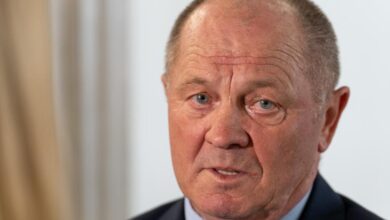
Could Poland win more from the EU's agreement with Mercosur? According to Jan Krzysztof Ardanowski, former Minister of Agriculture in the PiS government and currently chairman of the Presidential Council of Agriculture and Rural Areas, Italy managed to achieve much more than Warsaw. “Poland has positioned itself as a stupid idiot,” he argues in an interview with Onet Rano Finansowo.
Prime Minister Giorgia Meloni, seeing German dominance in pushing for the agreement, “negotiated approximately EUR 40 billion more for the common agricultural policy,” says Jan Krzysztof Ardanowski. “Poland should have moved in this direction. Since the agreement could not be blocked, it was necessary to fight for the future EU budget, for funds that would reduce the pressure of this incoming food” – says the MP and chairman of the Presidential Council of Agriculture and Rural Areas in the Onet Morning Finansowo program.
Quoted fragment of the program:
The European Parliament referred the controversial EU-Mercosur agreement to the Court of Justice of the EU. The decision is expected to delay the ratification process for many months. 334 MEPs voted in favor of the motion, 324 against it, so it passed with a minimal majority.
Read also: Former minister in the PiS government facing allegations. “Wąsik and Kamiński wanted to put me down” [TYLKO U NAS]
The CJEU will decide on the full agreement
The EP's decision effectively suspends further proceedings until a legal decision is reached. As Ardanowski explains, the main objection is the way in which the European Commission divided the agreement into a framework part and a temporary trade agreement. “By isolating a temporary trade agreement which, in the Commission's opinion, could be ratified by a simple majority in the Council of the European Union, treaty provisions have been violated,” says the MP and presidential adviser.
Mirror clauses – fiction or reality?
Another flashpoint is the so-called mirror clauses, intended to ensure that products from Mercosur countries will meet the same production standards as European ones. “This is deceiving and cheating consumers,” says Ardanowski. As he claims, on the first day after von der Leyen signed the contract in Asunción, “it fell apart.”
“The leaders of South America, including the president of Brazil, claim that no clauses apply to them. 'Apply European law at home. We do what we think is right,'” the MP reports. He adds that in November the European Commission agreed to that poultry production in Argentina is not controlled by European sanitary inspections, but by Brazilian institutions.
However, the Minister of Agriculture, Stefan Krajewski, assures that “mirror rules apply” and products from outside the EU must meet EU standards. The ministry is preparing a regulation on “mirror standards”, providing for enhanced controls and blocking of goods that do not meet the standards.
Mercosur – an opportunity for industry
However, the agreement with Mercosur is also an opportunity for the European industry to acquire additional markets and, what's more, also raw materials, especially rare earth metals. For Europe, the agreement is an element of diversifying supply chains away from China and securing access to key raw materials, such as lithium, necessary for the energy transformation.
Research commissioned by the Federal Ministry of Labor and Social Affairs predicts an increase in employment in Germany by approximately 60,000. jobs. Other forecasts say 100,000. new posts across the EU. The European Commission estimates that the agreement would increase annual EU exports to South America by 39%, or EUR 49 billion, bringing customs savings of around EUR 4 billion per year.
Ardanowski talks about German pressure to conclude the agreement. “Chancellor Merz clearly stated at the European Council that the recession in Germany can only be overcome by exports to South America,” he argues. According to him, there were even suggestions that if there is no Mercosur agreement, “Germany will think about paying into the European Union's coffers.”
In fact, the German industry – automotive, chemical and machinery – is indicated as the main beneficiary of the agreement. Currently, Germany pays up to 35%. customs duty on cars exported to Mercosur countries. The German Automotive Industry Association (VDA) estimates that the agreement creates “enormous opportunities” for manufacturers and suppliers.
The Polish automotive sector, which is linked to Germany, also hopes to increase orders as a result of the agreement.
The Italians came out on their own
Prime Minister Giorgia Meloni, seeing German dominance in pushing for the agreement, “negotiated approximately EUR 40 million more for the common agricultural policy” – says Ardanowski. “Poland should have moved in this direction. Since the agreement could not be blocked, it was necessary to fight for the future EU budget, for funds that would reduce the pressure of this food“- says the MP.
He accuses Prime Minister Donald Tusk's government of passivity. He states that “Poland played the role of such a stupid idiot by agreeing to the dictates of the European Commission.”
Prime Minister Donald Tusk recently assured: “Polish MEPs were the initiators and will vote to refer Mercosur to the CJEU. Poland is consistent here, our MEPs, and me too, will certainly not give in to any pressure or requests.”
Business versus farmers
Indeed, agriculture accounts for only 1-2 percent. added value in countries such as France or Italy, while the agreement could increase Germany's long-term GDP by almost 0.3%, which at current values would mean over EUR 29 billion. For the entire EU, long-term benefits are estimated at over 0.6%. GDP.
Defenders of the agreement argue that the agreement contains protective mechanisms. The safety clause may lead to the exclusion of customs preferences for Mercosur producers if the prices of sensitive products in the EU fall by 5%, or if too many of these goods suddenly hit the market. Quota limits were also introduced for the import of beef, poultry, dairy products, sugar and ethanol.
The European Commission argues that opening public procurement markets in South America will create new opportunities for European companies, including small and medium-sized enterprises. Over 8.5 thousand German companies already export to Mercosur countries, three quarters of which are SMEs.
The chances of blocking are slim
Despite the CJEU's opinion, which may take more than a year, the European Commission is signaling its readiness to temporarily apply the trade agreement. “The Commission continues to argue that temporary solutions must be introduced, that regardless of the Tribunal's verdict, this agreement must function,” Ardanowski says, irritated.
Parliament will be able to vote on whether to approve or reject the agreement only after the CJEU's analysis. However, as analysts point out, the real question is: will farmers be able to block such a geopolitically important agreement? For Europe, the agreement is an element of diversifying supply chains away from China and securing access to key raw materials, such as lithium, necessary for the energy transformation.
The further fate of the agreement will now depend on the opinion of the Luxembourg Court. If the CJEU confirms the legality of the Commission's legal solution, the trade part may enter into force sooner than opponents expected. However, if the Court finds this to be a violation of the treaties, the entire process will have to start over – most likely with full ratification by all national parliaments.
Onet Morning. Financially
“Onet Rano. Finansowo” is a weekly program in which Business Insider journalists talk to invited experts from the world of business and politics about current events and issues related to the Polish economy, public finances and the impact of politics on the wallets of every Pole.
The program can be watched every Wednesday at 10 on the main page of the Onet portal, and from 11 as podcast at Onet Audio.