The shocking culinary delicacies of the Thracians. Why did they eat dog meat and what was the explanation of the specialists


Archaeological discoveries in Bulgaria have revealed that the Thracians ate dog meat at their feasts. The number of canids consumed was quite significant and the researchers believe that the animals were not eaten due to food shortages, but had a ritual role.
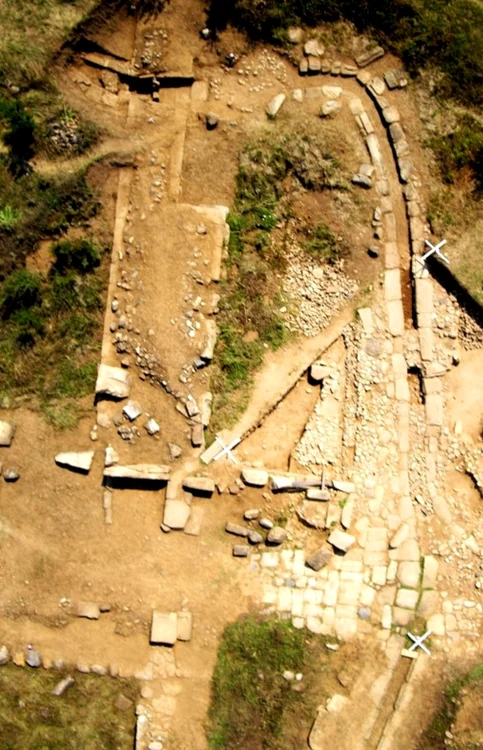
The ruins of Pistiros PHOTO wikipedia
In most contemporary societies, especially in the European area, the consumption of certain animals is taboo. We are mainly talking about the most well-known and familiar pets, dogs and cats.
Just the thought of a dog roast would turn many modern people's stomachs. This is not the case with the ancients either. Including the Thracians. The new archaeological discoveries in Bulgaria show a totally different gastronomic reality than today (less so in certain areas of Asia although much reduced and with pressures to ban consumption). More precisely, the Thracians ate dog meat at feasts. At least that's what the archaeological evidence from one of the most important Thracian sites in Bulgaria shows.
Skinned and roasted dogs
Near the town of Vetren in Bulgaria, in the westernmost part of the Maritsa river valley, is one of the most important archaeological sites related to the history of the South Danube Thracians. It is about the ancient Emporion Pistiros, a particularly important commercial center where trade took place 2500 years ago between ancient Greek and Thracian merchants. The settlement was very prosperous and had a heterogeneous population. In the sense that both Thracians and Greeks lived here, who came with economic interests and who probably stayed seasonally at Emporion Pistiros. This trade center was under the control of the powerful Thracian kings from the Odris tribes.
In addition to an impressive amount of coins, ceramic objects, but also luxury objects of the time, at Emporion Pistiros, following archaeological campaigns and osteological remains of animals, remains of guests given in the great shopping center were discovered. It was not sheep, pig or beef bones that were seen as normal, knowing that they were widely consumed by the Thracians, but dog bones provided a new perspective on the culinary habits of this ancient people. As shown by Bulgarian Iron Age specialists, the dogs in question bore clear traces of butchery and thermal preparation.
The researchers also identified cut marks from metal tools and burn marks on the canine jaws, suggesting skinning or scalding before cooking, rather than haphazard disposal. Zooarchaeologist Stella Nikolova examined remains of dogs from the entire Bulgarian Iron Age, i.e. from the 5th century BC to the 1st century BC, and noticed that there was a consistent custom, a tradition of eating dog meat during this period, at least, in the southern Thracians.
At Pistiros, almost 20% of the dog bones examined were found to have cut marks from metal tools, with some teeth burned on the lower jaws, possibly from the fire used to remove the fur. What makes the interpretation more compelling is where the bones were found. The remains of butchered dogs were mixed in household pits, coming from feasts. “This research examines the consumption of dogs as a widely attested activity in Iron Age (6th century BC) Bulgaria, clearly present in multiple settlements located throughout the country. The data show that this practice is not limited to a single ancient Thracian state or tribe, and a detailed analysis of the literature shows a wider distribution of dog consumption in the Mediterranean. Materials from five sites were analyzed, of which dogs constituted 2%-10% of all specimens identified. The site with the highest concentration of dog remains is Emporion Pistiros, which served as a trading port between ancient Greek merchants and the local Thracians”states Stella Nikolova, in the paper “Dog Meat in Late Iron Age Bulgaria: Necessity, Delicacy, or Part of a Wider Intercultural Tradition?”, for the International Journal of Osteoarchaeology.
A delicacy or part of a ritual
As archeological findings from several Thracian settlements of the Iron Age show, that is, from 2500 years ago, dogs were not eaten because of desperation, caused by hunger. In contrast, dog bones were found alongside an abundance of osteological remains from numerous other commonly consumed animals, such as cows, chickens, pigs. This is precisely why specialists believe that these dogs were most likely eaten for ritual purposes. “Contextual analysis of the material shows that dog bones with cut marks are found associated with a wide range of food remains, which excludes their use during periods of famine. There is a somewhat repetitive pattern of butchery between sites. At Pistiros, there is a higher level of portioning of dog bones compared to other sites. Most of the dogs consumed were of adult age, as opposed to farm animals.”adds Nikolova in the same paper.
Or they were simply a delicacy. There is also a differentiation, emerging throughout the Iron Age, between eaten dog bones and a series of canid skeletons ritually buried, honoring the deceased animal under different conditions. In other words, they were dogs intended for consumption and dogs revered or with a special ritual status. “A detailed analysis of the relevant classical sources is provided in the discussion to examine human-dog relationships of the period. Future studies can assess the role of dogs in the newly researched sites and examine whether there is a difference in diet between eaten and buried individuals.”the same study shows.
Last but not least, the dogs from Emporio Pistiros were consumed during festive meals, which were moments of social cohesion, public events where communities negotiate status, identity and belonging. This indicates that this consumption of dog meat most likely had a clear ritualistic role.
Dog meat also eaten by other ancient peoples
The Thracians were obviously not the only dog meat eaters in the ancient world. For example, there are studies that indicate that those “sea peoples” like the Philistines prepared dog meat for feasts. “It has been argued that the increased presence of domesticated dog (Canis familiaris) bones in Early Iron Age (Iron I) archaeological assemblages in the southern Levant is an archaeological marker for the arrival of the Philistines/”Sea Peoples” in the region. This sentence links the eating of dogs (cynophagia) to a certain ethnic/cultural group that was not present in the region before the Iron Age. This argument implies that disarticulated (free) dog bones found in faunal assemblages from this period reflect canid consumption.”state Katja Soennecken and Haskel J. Greenfield in “Dog Consumption at Tell Zirāʿa: Is It a “Cultural Marker” for the “Sea Peoples”?”.
Incidentally, dog consumption has also been attested in North America where canids have been domesticated and eaten as early as 9,400 years ago. Some indigenous groups, such as the Sioux, consumed dog meat for sacred purposes, including special ceremonial meals. Also, the same practices have been attested in some areas of Asia and Oceania. As can be seen in many areas, the dog was consumed ritually, without knowing, for example in the Thracians, the conceptions about this animal and its role in the spirituality of the tribe.