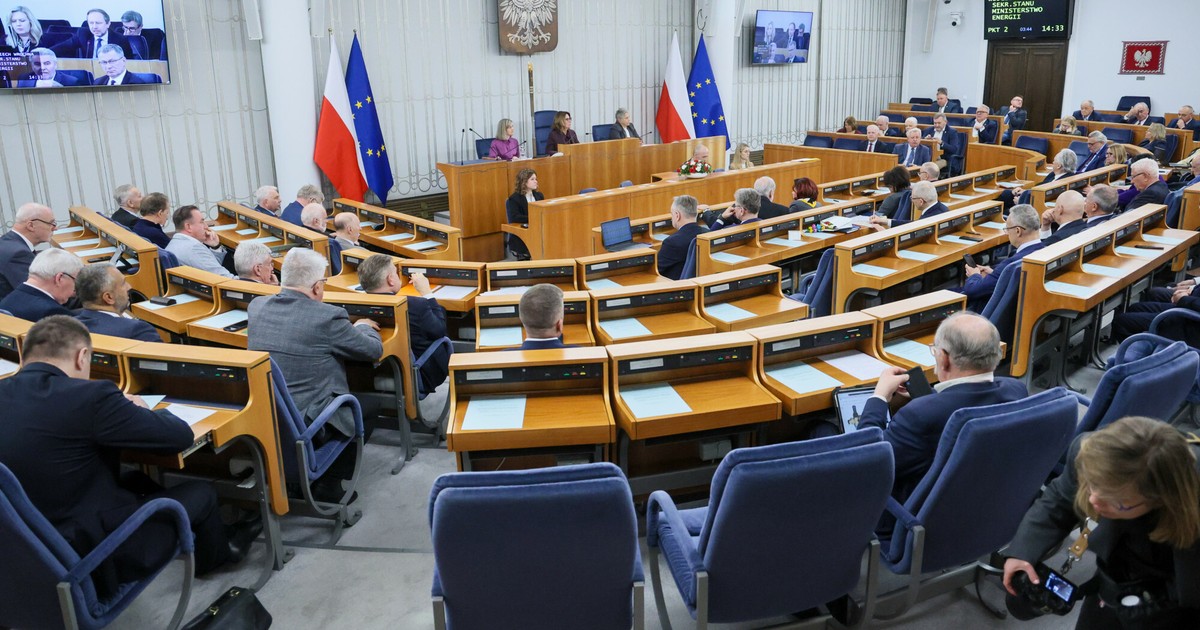
The Senate rejected a number of presidential amendments submitted by PiS senators. 57 senators voted for the adoption of the act without introducing amendments, 26 were against and no one abstained. Now the bill will go to the desk of President Karol Nawrocki, who has already vetoed the same provisions twice before.
During the work in the Sejm, it was decided to recognize the government bill on the crypto-assets market as the leading one. Therefore, work on other proposals, i.e. the president's, Poland 2050 and Confederation, was not continued.
The act is the third attempt to regulate the crypto-asset market; two previous government bills were vetoed by President Nawrocki, arguing that it was overregulation and the introduced solutions could push Polish companies out of the industry abroad.
Currently being processed the regulations contain one amendment by the president's officeaccording to which the Polish Financial Supervision Authority, in cooperation with the Minister of Finance, would annually prepare and publish reports on the functioning of the crypto-asset market in the Public Information Bulletin.
The president's other amendments did not receive support regarding, among others, introducing additional judicial control of the supervisory activities of the Polish Financial Supervision Authority, shortening the maximum period for which the Polish Financial Supervision Authority may extend the period of blocking an account or suspending a transaction (from 6 to 3 months), or introducing additional liability of the State Treasury for damages caused by blocking an account carried out in violation of the law.
The purpose of the act passed by the Sejm last Friday is to ensure the application of the EU MiCA regulation (The Markets in Crypto-Assets Regulation), which is intended to regulate the crypto-assets market. Pursuant to the regulations, the Polish Financial Supervision Authority is to supervise this market. It could, among other things, block cash or crypto-asset accounts or pause certain transactions for 96 hours, although this may be extended. The government wants the extension of the lockdown to not exceed 6 months.
The regulations assume that the maximum fee charged to the Polish Financial Supervision Authority from token issuers operating on the crypto-asset market for supervising this market will be 0.5%. In turn, the fee paid by crypto-asset service providers would not exceed 0.4%.
The Act allows the Polish Financial Supervision Authority to impose sanctions on offerors, issuers or persons applying for admission to crypto-assets. The Commission could impose fines on persons professionally intermediating transactions involving cryptoassets.
In the event of a violation of the regulations, the Polish Financial Supervision Authority would be required to enter unfair Internet domains used to conduct crypto-asset activities in its register. The Act also provides for criminal liability for crimes committed, among others, in connection with the issuance of tokens or the provision of crypto-asset services without prior notification to the Polish Financial Supervision Authority.
In February 2026, the Polish Financial Supervision Authority noted that the EU regulation allows entities providing crypto-asset services to do so until July 1, 2026 without the authorization required by EU law. Its granting was regulated by the vetoed acts, and the same matter also concerns the act currently being worked on by the Senate. The Polish Financial Supervision Authority emphasized that if the regulations do not designate the appropriate supervisory authority, domestic entities will lose the ability to provide services in the field of cryptoassets. Therefore, only cross-border activity within the territory of Poland will be possible by entities that would be authorized in another member state.