Ideally, absolutely theoretically, we should also have an answer in relation to Romanian strategic priorities in the medium and long term, but also to the developments estimated over a very long time horizon. We don't have it, so it doesn't apply.
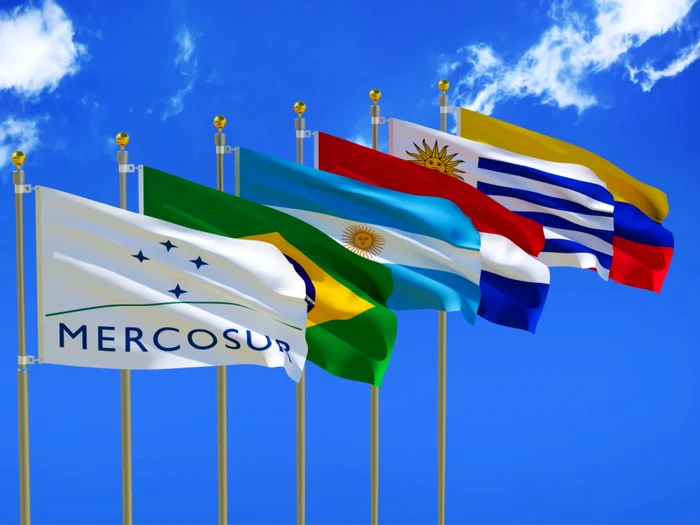
PHOTO Shutterstock
It's a pity, because you see how, in just a few days, the security axis is changing globally, deeply influenced by the emergence of the MERCOSUR free trade agreements and with India, now covering a market with more than 2.5 billion people, all of which has an extremely obvious security dimension, complex and on multiple levels. And on the other hand, we have the January 27 statement by the Chinese defense minister who, during a video call with his Russian counterpart, said that the two countries must act to strengthen their strategic coordination, “China being willing to strengthen this strategic coordination, enrich cooperation and improve exchange mechanisms“, which means that “the two countries must jointly strengthen their ability to respond to various risks and challenges to bring positive energy to world security and stability”.
General statements? I don't think so, because immediately Andrei Belousov, the Russian Minister of Defense said that, very carefully, “the examples of Venezuela and Iran make it necessary for our ministries to organize a permanent analysis of the situation in the fields of security and take all appropriate measures.”
The easiest and, therefore, the most tempting would be to translate these statements exclusively by applying them to the military field, in the inevitable enumeration of the missiles, tanks, assault troops available to each of the two superpowers, a picture possibly completed by joining the allied forces from BRICS or the Shanghai Cooperation Organization. I think we should expand the analysis by adding an essential component: energy cooperation which, for several reasons that are obvious to you, constitutes an argument of first-rate strategic value.
That this is so is proven by the fact that, at the beginning of the year, China maintains its first position in the ranking of importers of Russian oil, with imports reaching 1.4 billion barrels per day transported by sea and 900,00 barrels per day transported by the land network of pipelines. But overall, since the end of last year, a problem had appeared on the landscape that was by no means easy to solve: severe American and European sanctions on Russian oil that had caused a drop in the value of Chinese imports and, in any case, were costing Russia in the sense that they forced producers there to identify new, longer transport routes, using intermediaries or vessels from Russia's now famous “ghost fleet”.
“Strengthening strategic cooperation”, in these new terms of the “post-Maduro and Iran” era, however, means a reaction primarily in the energy area: according to analyzes published by Reuters, China now expects, on a monthly basis, 1.5 million barrels per day, compared to 1.1 million in December. The extra amount comes from curtailing the amount of oil imported by India or Turkey, two countries that until now refined and then exported large quantities of diesel to Europe.
In this context, what could be the next moves under the new stage of enhanced coordination?
For example, there is growing talk of jointly sponsoring the construction of a string of independent refineries dotted along the route of the two New Silk Road routes, all designed on the ancient system of the “string of pearls” to reduce losses, help some nations avoid the current sanctions, and above all, some sources say, to support some of the key countries in Africa. A move that would be logical, but let's see how much it will be possible in the markets now, deeply disturbed by the series of Trump's decisions.
Is a large-scale movement of Europeans preparing after the gigantic agreement that would combine MERCOSUR with India? Eyes are turning ever more insistently to heavily courted Africa, and it seems ever closer to finalizing a major deal to open up the continent to these new combined markets. On the other hand, the seduction operation is in full swing by the Russians and the Chinese, who arrived with their big offer to deliver oil and other goods according to the BRICS offer, that is, partly with payment in national currencies, partly in the barter system, bypassing the use of the American dollar anyway, a reference that the Europeans will also eliminate.
There is another stage, one about which the various negotiations between discrete bodies are still being told behind the scenes: the possibility that, based on financial and commercial interests, the markets that are now coming together and building the first bridges of strengthened strategic cooperation, will evolve into a comprehensive unitary formula, following, as always in history, who is emerging as the final winner and sensing where, more recently, the money is concentrated.