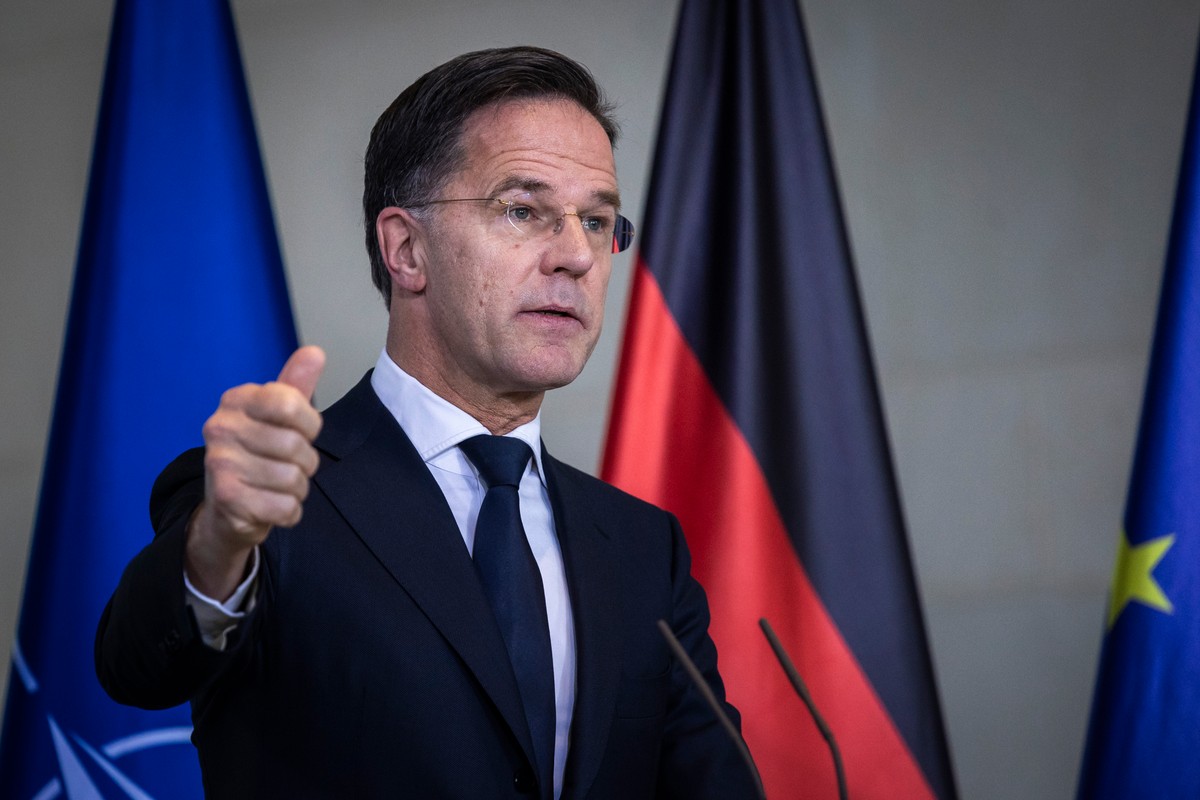
Last week, the European Parliament supported the European Union granting a loan of EUR 90 billion to Ukraine. The procedure was approved with 499 votes in favor, 135 against and 24 abstentions. On Monday, during a meeting of the Security and Defense Committee (SEDE) of the European Parliament, NATO Secretary General Mark Rutte said that the European Union should not impose the “buy in the EU” rule on Ukraine at all costs..
— I strongly appeal for flexibility in the way these funds are spent and to avoid excessive restrictions in the form of “buy in the EU” orders – noted Mark Rutte, quoted by PAP.
See also: Billions of euros for Ukraine. The European Parliament is accelerating its decision
Weapons from Europe may not be enough for Ukraine
Mark Rutte justified his appeal, among others: that EU countries will not be able to provide Ukraine with enough weapons to continue the war with Russia or defend itself in the future. — Europe is currently building its defense industry, which is crucial, but at the moment it is unable to provide Ukraine with enough resources to defend itself today and be able to deter in the future – said the head of NATO.
The €90 billion loan was agreed at the EU Summit in Brussels on December 18, 2025. As the Czech Republic, Hungary and Slovakia withdrew their support for the loan, the agreement was concluded under the enhanced cooperation procedure – a mechanism enabling interested EU countries to cooperate in specific areas. In accordance with the Treaties, the enhanced cooperation procedure requires the consent of the European Parliament.
See also: Europe stands at a crossroads and Putin rubs his hands. It's time to be on the right side of history. Our safety also depends on it
In January, the President of the European Commission, Ursula von der Leyen, proposed that EUR 60 billion of the EUR 90 billion should go to military support, and EUR 30 billion to budgetary purposes and reforms. Funds for military purposes, as she said then, would be used to purchase equipment mainly from Ukraine and the European Union. — If it is not possible to buy the necessary equipment in this region, (…) sometimes there may be a need to purchase equipment from outside the European Union and from outside the region, von der Leyen added. This means a restriction on the possibility of purchasing American equipment, which also applies to the SAFE program for co-financing defense purchases in member states.
The loan will be taken out on the capital markets by the European Commission and will be secured by the EU budget. Ukraine will repay it when it receives reparations from Russia. Until then – in accordance with the decisions of the EU summit – Russian assets will remain frozen.