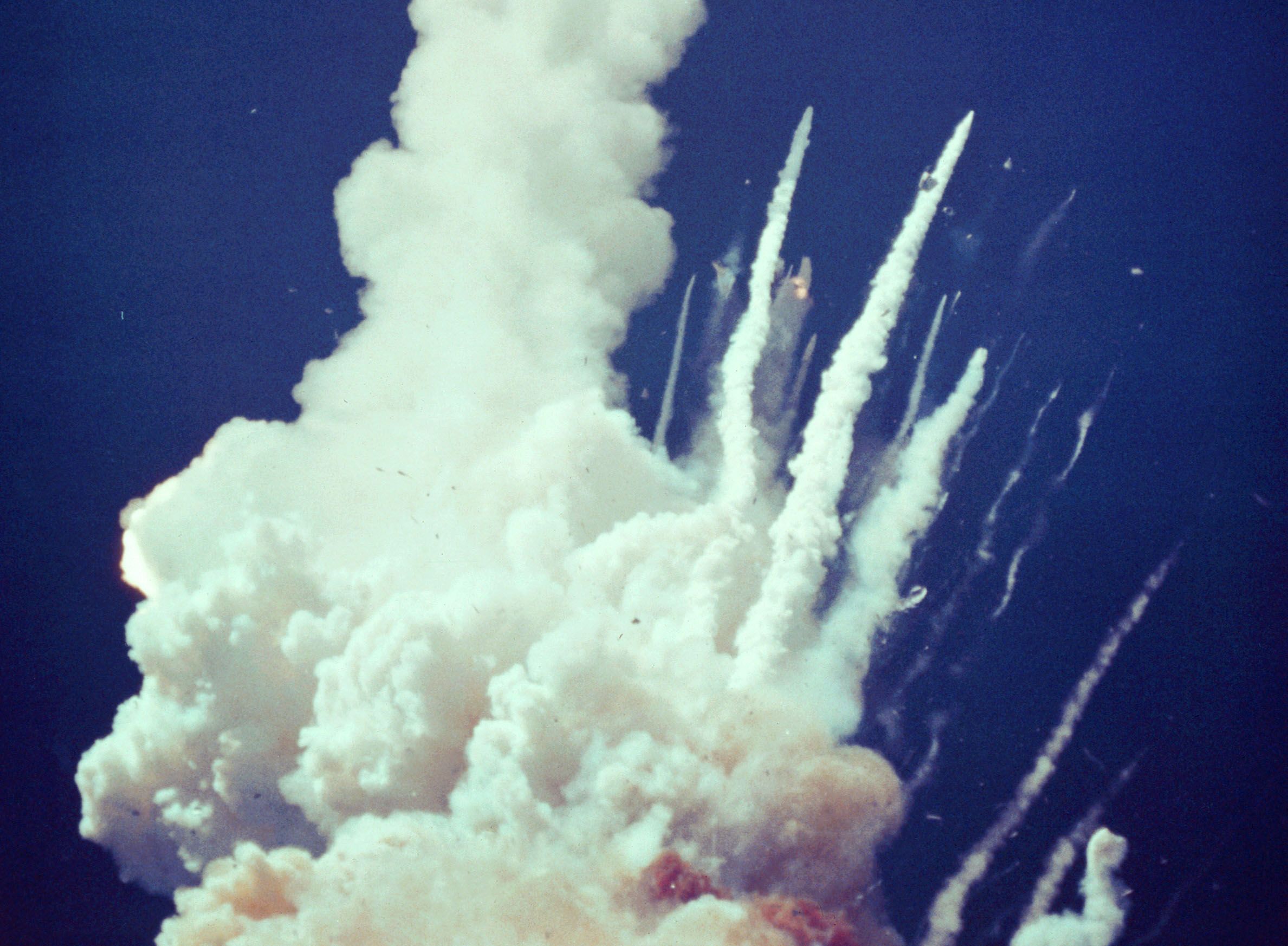
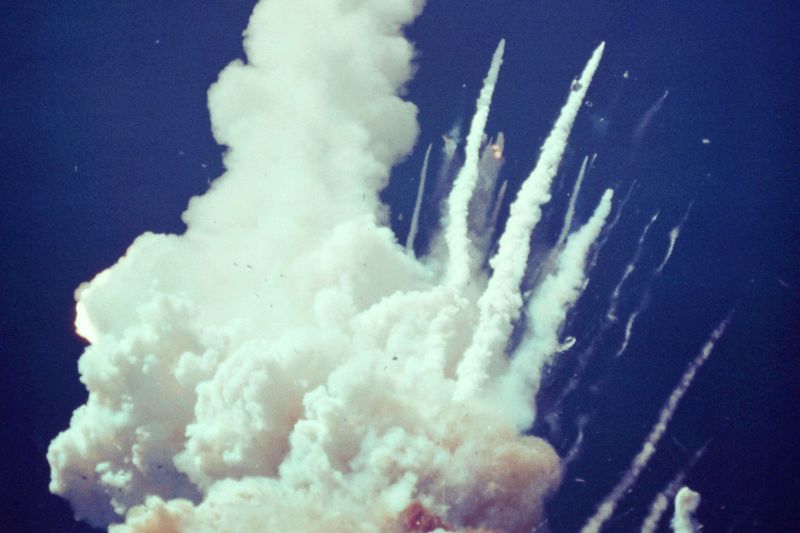
The explosion of the Challenger shuttle (source: NASA Archive / Alamy / Profimedia)
On January 28, 1986, the space shuttle Challenger exploded less than two minutes after liftoff, killing seven astronauts. The disaster showed that space launches are much more risky than many people thought, and the case was not only a technical failure, but also an institutional one, especially since the engineers warned that serious problems could arise, but were ignored.
The space shuttle Challenger exploded and disintegrated 73 seconds after launch, killing all seven astronauts. It was the first time that the entire crew of an American space mission lost their lives.
You can find documents about the mission, but also a lot of data, on the NASA website.
The investigation revealed that it all started with the failure of an O-ring, and the right thruster failed at launch after the failure of the O-ring caused a tear in the thruster joint it was securing. As a result, hot gas from inside the engine reached the outside and came into contact with the propulsion machinery and a fuel tank.
All NASA space shuttle missions were halted for nearly three years after the Challenger disaster.
The NPR (National Public Radio) media organization in the US writes, in an extensive article about the disaster in January 1986, that several engineers from one of the companies NASA collaborates with, Morton Thiokol, warned the decision-making bodies that there is a very high risk if the shuttle is launched in cold weather.
The rockets were built from segments, and where one segment joined another, two rows of synthetic rubber gaskets (so-called O-rings) were supposed to prevent the leakage of rocket fuel, which is highly volatile. Takeoff and the initial phase of flight puts enormous pressure on the rockets, causing the joints to twist and pull apart easily. These small annular pieces were supposed to keep the joints tight, but on that fateful flight, the propellant and rocket gases burned past the barrier formed by the inner ring, giving rise to a phenomenon known as “blow-by,” NPR writes.
NASA changed its decision-making process on launches after the Challenger disaster so that objections from contractors went to the control team.
Another disaster came 17 years later, after the space shuttle Columbia disintegrated on re-entry into Earth's atmosphere, and a NASA investigation blamed in part on “organizational barriers that prevented the effective communication of safety-critical information and suppressed professional differences of opinion.” Seven astronauts died then.
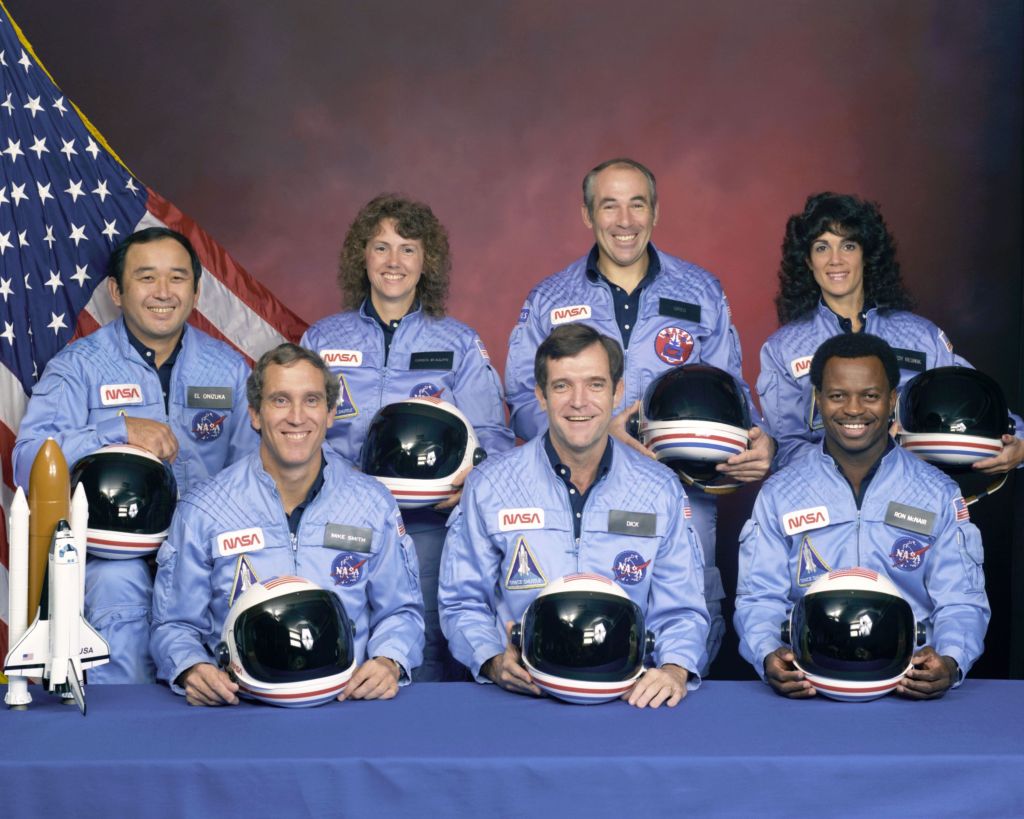
The seven people who died in that fatal incident in 1986 are: Dick Scobee, Michael Smith, Judith Resnik, Ellison Onizuka, Ronald McNair, Gregory Jarvis and Christa McAuliffe.