We are entering an era of great loneliness. This is how you can prepare


The revolution can be seen in the numbers, including Polish ones. Single-person households constitute 26.5 percent. everyone in Poland – according to data from the Central Statistical Office. In 2015 it was only 20 percent. There is a lot of talk about our demographic crisis. Less – about increasing loneliness. And this trend will definitely accelerate.
Read also in BUSINESS INSIDER
The Western world is turning into a planet of singles. As “The Economist” recently described, half of US men aged 25-34 live without a partner. Among women, this rate is 41%. This means that in 50 years the rate of people living alone in the United States has doubled.
Is living alone a problem for modern singles? “The Economist” believes that it is not necessarily true, citing statistics from the USA, which say that half of singles are not even looking for a life partner. Of course, the studies vary – some of them suggest that the vast majority of singles would prefer to have someone by their side.
A lot has been written about the reasons for this state of affairs recently. It is difficult to ignore the emancipation of women. For centuries, women's most important goal was to find a husband, but this is changing. Women have become liberated, they earn better and better – and they less and less consider being in a relationship a necessity. And sometimes it is even considered… embarrassing. “Is having a boyfriend something to be ashamed of?” – the luxury women's magazine “Vouge” recently asked. It did not find a clear answer. But we could read in it that “one thing is certain.” “Being in a relationship no longer confirms femininity. It is no longer considered an achievement,” wrote journalist Chanté Joseph.
There are, of course, more reasons for the growing number of singles. Derek Thompson, an author of the American magazine “The Atlantic”, recently described a visit to his favorite restaurant. He was surprised that it was completely empty. But it turned out that the place is more popular than ever. As the journalist described, customers did not stay at the tables – they came to pick up their orders and returned to their homes to eat. Effect? It is becoming increasingly difficult to establish social bonds that may result in relationships or marriages. Research clearly shows that Western societies are less and less likely to go out together in restaurants or bars. Naturally, the pandemic had a huge impact here. In the “Me too” era, more and more people are also afraid of starting relationships in bars or – even worse – in the workplace. You could say that technology came to the rescue. But is it a recipe for problems – or rather their basic source?
Will AI replace Tinder?
Traditionally meeting partners in bars, clubs, but also in offices or universities is becoming more and more passé. Dating – like many of our activities – has moved online. Recent CBOS research shows that as many as 70 percent young Poles dating online.
Some people thought that apps like Tinder could be the answer to modern needs – and that the technology would connect people more effectively than traditional methods. For the operators of dating platforms, however, the problem was fundamental. If someone meets their other half through an application, then… why does this person still need the application? “Designed to be deleted” is the slogan of one of the popular applications, Hinge. However, more and more users accuse platforms of tampering with codes to make finding their significant other more difficult – and thus to make users addicted to the application. Of course, it is difficult to say how true these accusations are. But data shows that the rise of dating apps is driving people apart — not closer.
Everything indicates that we are only at the beginning of the “technosexual” revolution. While applications such as Tinder were supposed to lead people to meet “in real life”, new solutions are simply intended to replace human relationships. For example, Character.AI is designed to create a virtual companion for us – and the application already has over 20 million users. There are more and more similar solutions. Recently, Time magazine (which named AI creators “person of the year”) covered the story of Jim Moore, a 66-year-old from Indiana. The man is divorced and takes care of his parents. He admitted that he would like to have a “normal, human” relationship, but he saw no chance for it. So – as he said – he has to be satisfied with AI “companions”.
The market for AI applications that pose as partners is growing very quickly – although rather quietly. Many users are ashamed of using such solutions – just like a dozen or so years ago, many people were ashamed of using Tinder. “AI partners”, on the other hand, will probably become more and more mainstream.
AI applications, however, are just a stop in the “technosexual” revolution. It is already clear that robots that will accompany people are coming. It's a small market for now, but it will probably grow in the coming years and decades.
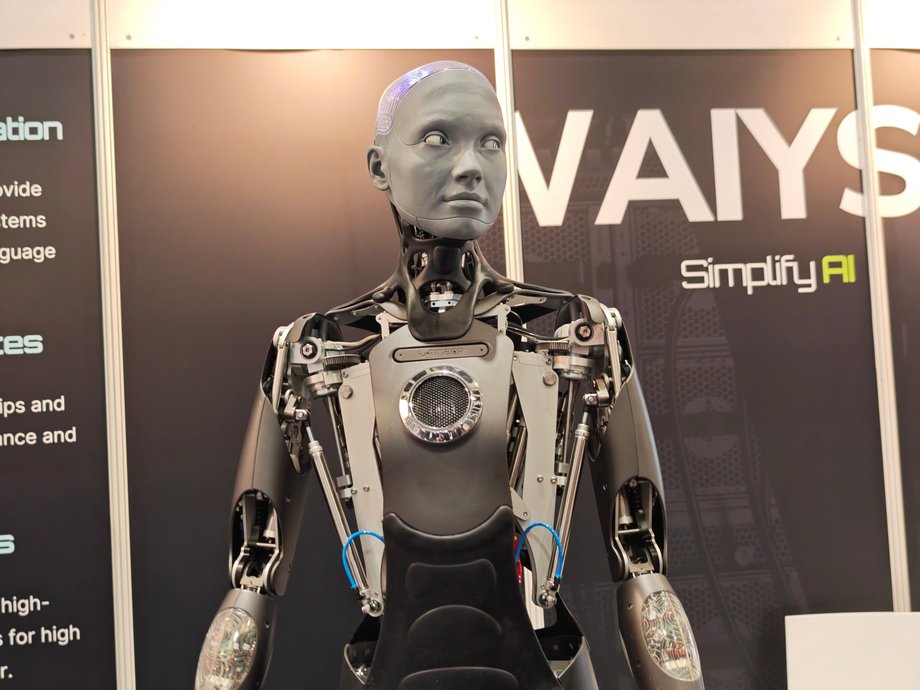
Robots are becoming more and more like humans
|
Mateusz Madejski / Business Insider
Look: You can now argue and dance with robots. Here are my impressions from the key technology fair
How to prepare for the new world?
“There is no doubt that we will have a future with even more singles,” predicts the Economist.
Businesses will have to prepare for this to survive. Fewer relationships mean fewer children. Therefore, it will be more difficult for companies that focus only on the youngest. Representatives of Nutricia told Business Insider Polska that they could no longer rely solely on producing food for children – and this was what the company specialized in. Therefore, Nutricia is trying to put more and more emphasis on the category of food for special medical purposes – primarily for the elderly and sick.
Another way is to “premiumize” offers and products that are created with the youngest in mind. The idea is to make things for children more valuable and more expensive. Parents, who increasingly often have only one child, can afford to spend more on their child. For “baby” businesses, higher earnings or margins mean a greater chance of survival.
“The Economist” advises that even accountants, tax experts and lawyers should prepare for the “singles” revolution. After all, there will be less and less demand for marriage, family and inheritance services. It is worth considering specializing in solutions for singles or seniors. Or maybe it's best to focus on legal issues around technology and robots?
The coming revolution will also affect the real estate industry. — We have had demand for studio apartments for years. That's right – I hear from one of the real estate agents from Warsaw who prefers to remain anonymous.
— In the world of singles, studio apartments are the right investment option. But is it worth investing in large houses in the suburbs? I doubt that. Just like multi-room apartments, which were recently in high demand. Well, unless we want to turn these multi-room apartments into studio apartments – smiles the agent.
See also: 500 thousand PLN per week of treatment. I run a burnout clinic for CEOs
And what will demand increase? Of course, there are various “technoromantic” or “technosexual” solutions. For now, the top projects in this industry do not come from Europe, but most often from China, sometimes also from the USA. So it looks like the Old Continent is sleeping through another great revolution.
Author: Mateusz Madejski, journalist of Business Insider Polska