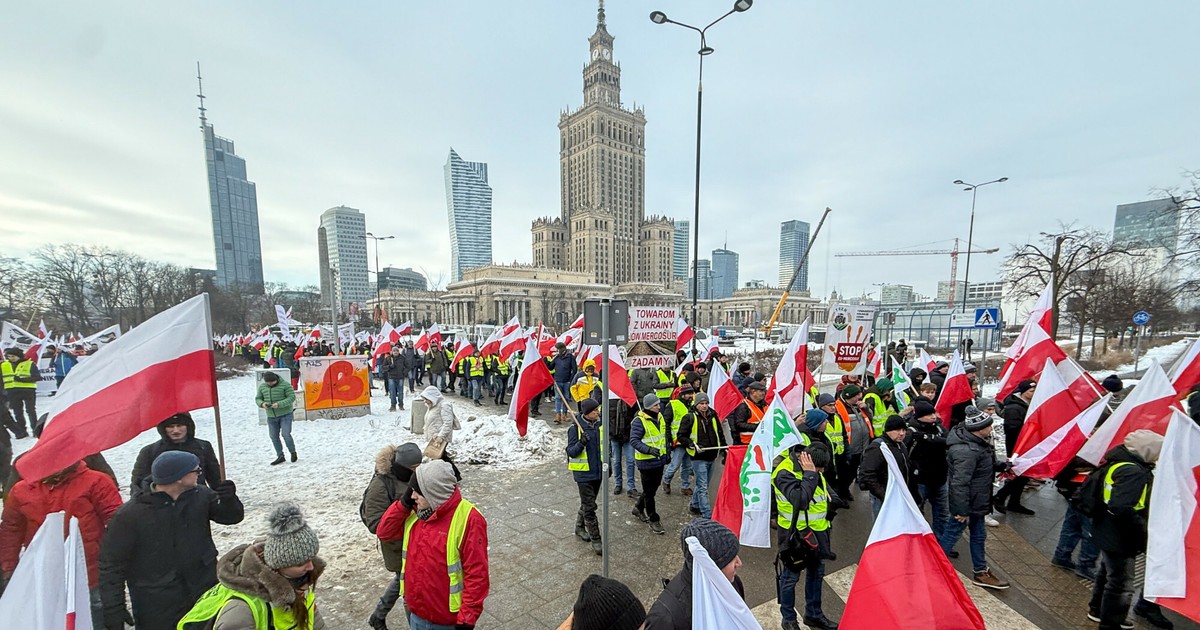
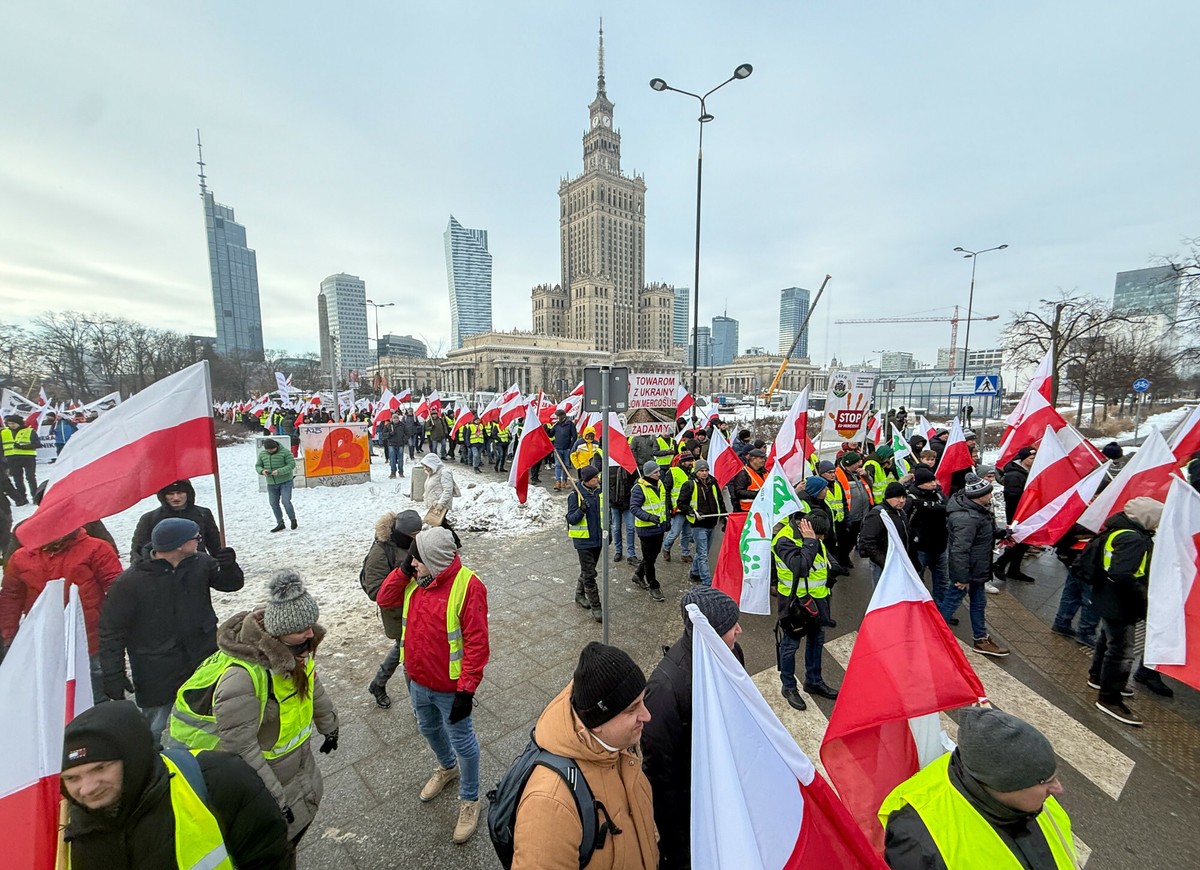
Are farmers right in saying that they will lose out on it? The agreement – as analyzed by the Society of Polish Economists – will certainly increase competition in the EU on the beef, poultry, sugar and rice markets – Mercosur countries are very strong in these industries. In Poland, beef and poultry production and sugar beet cultivation are of particular importance, so, according to the TEP analysis, the situation in this area is not very favorable for Polish farmers.
The rest of the article is below the video
Farmers usually say that they are less afraid of competition from agricultural products from Mercosur in Poland. What they care more about is that it will be more difficult for them to compete on the EU market. And we earn a fortune here on trade with Europe.
In 2024, exports of beef and veal products from Poland amounted to 541 thousand. tons and was worth over EUR 2.7 billion. Polish exports of poultry meat amounted to 2.3 million tons, and the resulting revenues amounted to PLN 5.6 billion. Poland is also the third producer of sugar in the EU, in 2024 it exported nearly 800,000. tons of this product.
However, the closer you look at the details, the more problems appear. Jacek Zarzecki, deputy head of the Polish Sustainable Beef Platform, told Business Insider Polska, for example, that Mercosur countries export the most expensive cuts of beef to the EU, such as roast beef, entrecote and tenderloin. It is these elements that bring producers margin and income. And it is for this group of the most lucrative products that competition from South America – as Zarzecki points out – is the biggest challenge.
At the same time, you must remember that the contract introduces limitations for export to the EU at reduced customs duties – e.g. beef up to PLN 99,000 tons per year, which corresponds to approximately 1.2 percent. annual beef consumption in the Union. In turn, the pork quota from Mercosur is to amount to 25,000. tons per year, poultry per 180 thousand tons, but introduced gradually over five years. There will also be restrictions on honey, dairy products and sugar. “We are not dealing with the opening of borders without controls, but with an agreement that introduces strict quantitative quotas in key agricultural sectors, long transition periods and retention of customs duties after exceeding the limits,” says Łukasz Wojdyga from Warsaw Enterprise Instiute.
Look: “The devil is in the details.” The industry warns against Mercosur
Farmers often use the argument that products from Mercosur countries will be cheaper because production standards in countries such as Brazil, Argentina, Paraguay or Uruguay are simply less restrictive than in the EU. These fears are not unfounded. “The European Union imposes rigorous standards on food quality and safety, environmental protection and animal welfare on its producers. Meanwhile, in Mercosur countries, these standards are often less restrictive,” argued the website of the Polish Ministry of Development and Technology. The European Commission, on the other hand, emphasizes that imported products must meet the same requirements as those in the EU, including those regarding food safety, GMOs, pesticide residues and veterinary drugs.
Farmers can also benefit
Removing some trade barriers is a threat to many farmers, but there are also opportunities. The EC emphasized that currently the export of many EU products to Mercosur is subject to very high tariffs, and the agreement is intended to change this. These include wine, chocolate, spirits, baked goods, waffles, biscuits and even canned peaches.
Poland may not be a power when it comes to wine – so the new markets in South America do not have to tempt farmers very much. But the agreement may be attractive for chocolate producers – Poland is, after all, the third largest power in the EU when it comes to producing this product. Who knows, maybe the agreement will also give an impulse to many Polish producers. For example, Ambra SA has long wanted to conquer the world with wines made from cherries, pears and gooseberries. New sales markets can greatly accelerate such expansion.
Will farmers be “sacrificed”?
“We need Mercosur's consumers and critical raw materials, and 450 million Europeans need friends on the international arena and farmers cannot spoil it,” we could read in an analysis by “Rzeczpospolita.” Many economic experts would agree with these words. In an era of tensions with the US or China, Europe simply needs new economic and political alliances.
The discussion about threats to the Polish farmer is reminiscent of European debates from over two decades ago. At that time, Poland was joining the EU, and Western European farmers were afraid of competition from the eastern part of the continent. It was emphasized that farmers from Poland and the Czech Republic have lower labor costs – but also lower production standards.
And it must be admitted that these fears were not unfounded. As analyzed by the Polish Institute of International Affairs, in two decades France lost approximately 30 percent. participation in the EU agri-food market. This did not happen solely due to the accession of new countries to the EU, but it was one of the main factors.
Farmers are also afraid that the agreement with Mercosur will not be the only blow to them. Another may be lower co-pays. In the next EU budget for 2028-2034, the European Commission proposes to cut the financing of the Common Agricultural Policy from EUR 387 billion to EUR 300 billion..
Some farmers may lose out on the agreement with Mercosur – although the industry is not at risk of a major disaster, as trade unionists believe. Another thing is that the Polish economy is changing and agriculture “weighs less and less” in it. Back in 1995, agriculture accounted for over 5.7 percent. Polish GDP. In 2024, it was only 2.6 percent.
Author: Mateusz Madejski, journalist of Business Insider Polska