Ads appear at the bottom of AI-generated responses, are clearly marked as sponsored content, and are separated from the main body of the response to prevent confusion with neutral results. The company emphasizes that ads will not be displayed in the context of sensitive topics such as mental health, politics or personal finance, to avoid controversy and potential abuse.
This move is part of a broader trend in the technology industry, where AI companies are looking for new sources of revenue beyond subscriptions and investments, inspired by the models of giants such as Google and Meta, which have been based on digital advertising for years. The introduction of advertising can be seen as an attempt to offset the costs of maintaining the massive computing infrastructure required to run language models on a global scale, while also expanding access to AI to a wider range of users without raising barriers to entry. However, you can't fool yourself – the advertising system is a drop in the ocean of the needs of the entire OpenAI.
OpenAI's financial situation and need for funds
OpenAI is facing massive financial losses, which is a key motivating factor behind the introduction of advertising to ChatGPT. The company, as a leader in the field of artificial intelligence, invests massively in technology development, which leads to rapid cash burn. According to the latest analyses, OpenAI forecasts that it will spend approximately USD 17 billion in 2026. more than it will earn, which is up from about $9 billion in losses in 2025.
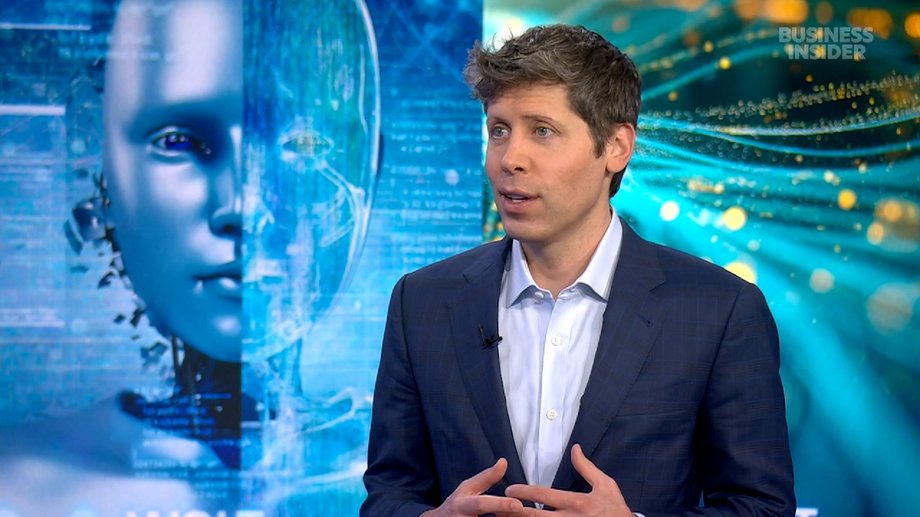
Sam Altman, CEO of OpenAI, talks about the development of artificial intelligence and announces superintelligence
|
Business Insider
Although OpenAI's revenues are also growing dynamically, which shows the company's potential, they do not keep up with expenses. The current annual run rate, i.e. estimated revenue per year based on current data, exceeded PLN 20 billion. hole. in 2025, a significant increase from $2 billion in 2023. This revenue comes mainly from premium subscriptions, enterprise AI model licensing, and partnerships with tech giants. But infrastructure costs are rising even faster — for example, the computing power used by OpenAI has increased from 0.2 GW in 2023 to about 1.9 GW in 2025, equivalent to the energy consumption of a small city and generating another billion dollars in server, chip and energy spending.
Read also: User data in the hands of AI. Privacy is in question
OpenAI also has financial liabilities of $1.4 trillion. (over PLN 5.25 trillion) in infrastructure projects by 2030, including giant data centers such as the Stargate project, valued at hundreds of billions of dollars. These commitments underscore the scale of OpenAI's ambitions, but also the risk – the company's partners, such as chip and data center suppliers, have already committed $96 billion themselves. debt, which shows how the entire AI ecosystem is based on loans and speculative investments. It is no wonder that in the context of OpenAI there is still talk of a speculative bubble.
ChatGPT
|
Klaudia Radecka/NurPhoto via Getty Images / Getty Images
Without continued funding rounds, OpenAI could run out of cash as early as mid-2027. Recently, the company has raised significant funding – for example, as part of its September 2025 deal with Nvidia, the chip giant committed to an investment of 100 billion. hole. in computing systems for OpenAI. Earlier, at the end of 2024, OpenAI avoided bankruptcy thanks to a $6 billion bailout. from investors, and additional billions were raised in 2025, raising the company's valuation to approximately $300 billion.
However, experts such as Sebastian Mallaby of the Council on Foreign Relations warn that the capital market may not be able to provide sufficient funds before AI starts generating real profits. In the context of these challenges, advertising on ChatGPT is becoming an attempt to diversify revenues – the free version of the service attracts hundreds of millions of users, but maintaining it consumes huge resources, so monetization through advertising could bring in additional billions.
Read also: Google is catching up with the creators of ChatGPT in AI. The pioneer wins the story, but may not win the market
It is estimated that OpenAI could earn up to $200 billion a year from advertising, inspired by the Meta model, from which OpenAI acquired many digital advertising specialists. This approach indicates an urgent search for funds to avoid bankruptcy in the face of growing competition from companies such as Google and Anthropic, and the exploding costs of AI development. OpenAI CFO Sarah Friar recently stressed that 2026 will be a year focused on “practical adoption” of the technology to accelerate revenues, but analysts like those at HSBC warn that even with optimistic forecasts, the company may need an additional hundreds of billions of dollars to survive.
The introduction of advertising to ChatGPT by OpenAI seems to be directly related to the urgent search for new sources of funds, which is confirmed by an analysis of the company's current financial situation. OpenAI CEO Sam Altman two years ago described advertising as a “last resort” — a solution the company would resort to only in extreme desperation when other monetization models failed.
The ads are primarily intended to finance wider access to AI for users of free and low-paid plans, including increased query limits and new features, without the need to increase subscription prices for the premium segment. This is crucial because OpenAI depends on mass adoption to maintain a competitive advantage – the company does not have its own user base, like Google has Android owners or xAI has X (Twitter) users. OpenAI must therefore do everything to attract the largest possible user base, which is slowly becoming a thing of the past after the initial ChatGPT boom.
Loss of partnership with Apple in favor of Google Gemini
OpenAI experienced a significant loss of potential due to the termination of its partnership with Apple. In January 2026, Apple announced a multi-year partnership with Google in which Gemini models will become the basis for the next generation of the Siri voice assistant. This deal shows Apple's strategic shift towards Google technology, recognizing Gemini as the most advanced foundation for the development of its AI features, such as a more personalized Siri.
Apple and Gemini
|
Thrive Studios ID / Shutterstock
Earlier in June 2024, Apple partnered with OpenAI to integrate ChatGPT with the Apple Intelligence suite of tools, allowing it to support more complex queries in the iOS ecosystem. However, this new deal with Google marks a shift away from a deeper reliance on OpenAI models, limiting their role to secondary functions while Gemini will take over key elements such as the Siri core. Altman himself explained that the decision to end the cooperation was mutual and that it would allow OpenAI to focus on “higher goals”, but it sounds like an attempt to show off.
Read also: Google Gemini with ads in 2026? The company denies it, but there are clues
For Apple, choosing Gemini is a way to make up for delays in AI – the company has already delayed the full rollout of Apple Intelligence by almost a year, and now it is counting on Google to accelerate the rollout in iOS 26.4 in spring 2026. It also raises questions about the future of OpenAI, which in response to Gemini 3 is trying to accelerate the development of its own models, but the loss of a partner like Apple could slow their momentum and increase pressure to find alternative sources of growth.
So it appears that in the face of mounting losses, the loss of key partnerships and intense competition, OpenAI has clearly reached this tipping point, forcing a change in strategy. On the other hand, it should be remembered that Sam Altman's promises have significantly decreased in value in the past. After all, OpenAI's entire current position results directly from a “change of mind” (not to write about lies and betrayal) and the transition from an open source model to a fully commercial company, something that Sam Altman openly despised years ago.
Advertising and “impartiality” – who will want to use paid AI?
A separate issue is that the introduction of advertising to ChatGPT raises serious concerns about the objectivity of artificial intelligence, which may affect the perception of the tool as a reliable source of information. OpenAI repeatedly states that ads will not influence the generated responses — they are intended to be contextually relevant to the user's query, but only displayed at the bottom, in a clearly marked sponsored section, without interfering with the main content.
The company emphasizes that user data will not be sold to advertisers, and ads will be excluded from sensitive topics such as health or politics, which is intended to protect against potential abuse. However, in practice, there is a risk of subtle bias, where AI, although formally neutral, could prefer products from sponsors in purchase recommendations or advice, which would undermine trust in the system. For example, if a user asks about an itinerary to Krakow, the response will remain standard, but an ad for a hotel may appear below it – which to some users may suggest a hidden commercial influence, even if the company denies such interference.
ChatGPT
|
subh_naskar / Shutterstock
OpenAI CEO Sam Altman, back in 2024, called the combination of advertising and AI “extremely disturbing,” fearing it could force users to question whether responses are motivated by objectivity or financial interests. Still, the company decided to test it, arguing that advertising would help fund wider access to AI without compromising quality. However, critics point out that even clearly labeled ads can skew neutrality, especially in the context of personal and important queries where users expect impartial advice.
Read also: The technological year 2026 in Europe. Five trends for business [OPINIA]
Scientific research on advertising in AI interfaces shows that even labeled sponsored content can erode trust by making users feel manipulated, especially if the ads start to blend into the natural flow of conversation. This is a phenomenon known as the “halo effect” —— where the proximity of an ad to an AI response can subconsciously influence perception of the entire interaction, even without actually changing the content.
In the long term, there is a risk of an outflow of users to competitors such as Google Gemini or Anthropic Claude, which for now remain ad-free in their basic versions, focusing on subscriptions or other forms of monetization. In 2026, as ad testing in the U.S. ramps up, this will be a key test: whether OpenAI maintains its reputation as a trusted tool, or becomes perceived as “AI with ads,” losing credibility and community loyalty.