Interview with the writer Simona Ferrante, France: “Diaspora completes Romanian literature and makes it more complex, more alive and more open to the world”

The present interview is part of the series of dialogues dedicated to Romanian authors from the Diaspora, carried out as part of my doctoral research on the literature of the contemporary Romanian Diaspora. These interviews aim to capture how the experience of migration, contact with another language and another culture, as well as the relationship with the place of origin influence the identity of the author and his forms of literary expression.
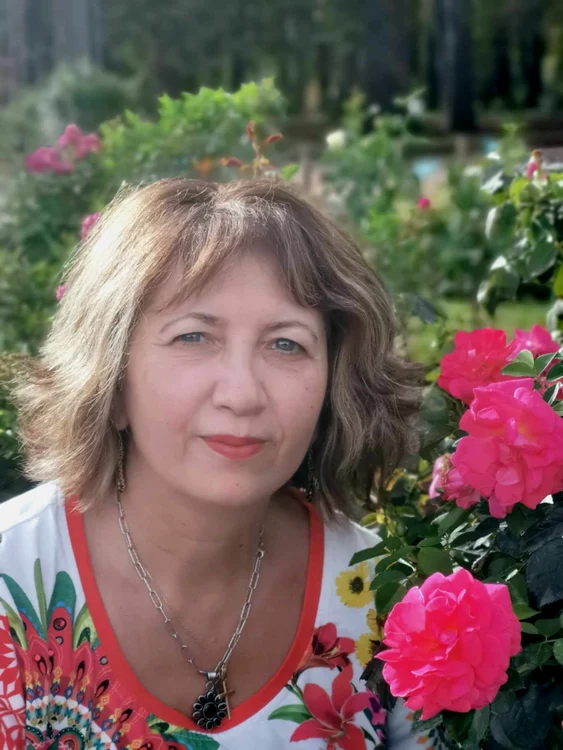
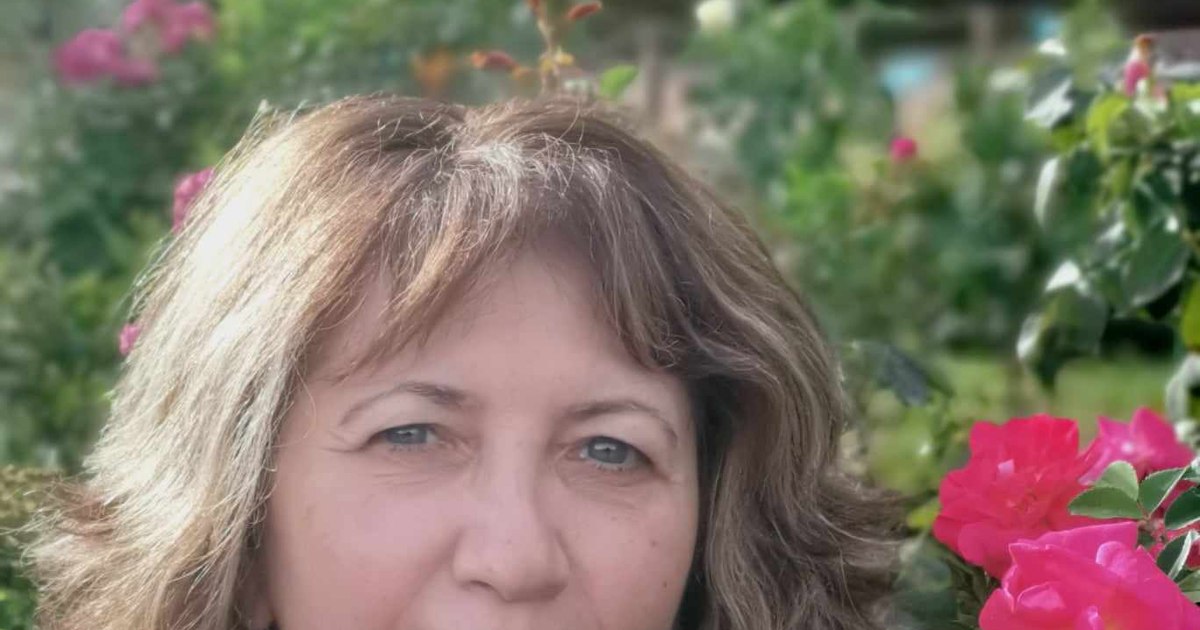
PHOTO Personal archive
Simona Ferrante is a French writer of Romanian origin, born in Timișoara and intellectually trained in Romania, established in 2002 in France, in Chambéry. His literary journey, developed at the intersection of two languages and two cultural spaces, offers a relevant example for the analysis of diasporic writing: from the rereading of Romanian myths for a French audience, to the contemporary novel and the practice of self-translation. His activity as a cultural animator completes the profile of an author who not only writes from the diaspora, but actively contributes to the maintenance and transmission of Romanian culture outside the borders.
Ciprian Apetrei: How do you define, from your own experience, the condition of a writer from the diaspora? Is it an assumed identity, a transitory stage or a permanent state of “between two worlds”?
Simona Ferrante: Hello, Ciprian Apetrei! Thank you for the invitation and I wish you a good year full of achievements, as well as the readers of the magazine. To answer the question, I think that the Romanian writer from the diaspora has gone through or is going through all these stages.
First, a stage of adaptation, of integration. It's different for everyone, depending on what history they carry with them, their age, or other factors. I think many of us have had the feeling of illegitimacy writing in the language of the adopted country.
I often find that Romanian writers from the diaspora prefer to publish in Romania. Perhaps this is where the oscillation between “two worlds” comes in: you write from one place, but with a language, memory and sensibility formed in another. Then, it is not necessarily an assumed identity, but one that settles over time, sometimes without your will. It is not a transitory stage either, because this double belonging does not dissolve with the years; on the contrary, it deepens.
Diaspora becomes an inner space, where distance from “home” clarifies certain things, but also creates a form of permanent unease. The diaspora writer often “lives” in a language that no longer fully coincides with the place where he lives and in an environment that does not fully reflect his language. But from this crack sometimes beautiful books are born.
To what extent did leaving Romania and settling in France change your relationship with literature? Was the experience of migration a triggering factor for writing or rather a process of decanting an already formed vocation?
S. F: Leaving Romania and settling in France did not trigger writing, because the vocation already existed, just like the passion for reading.
In France, at first, literature ceased to be just a natural gesture and became a form of inner survival, a way of maintaining a continuity in an ordinary existence. I have often said that I wrote my first novel as an answer to a question that was persistently put to me at the beginning: why I left my country. But I am convinced that it was a pretext like any other, because the need to write was there and would have manifested itself anyway.
Instead, I became more sensitive to certain topics. The experience of migration changed some themes, decanted what was minor from the real serious topics and brought to the surface what was essential.
You write in French, while maintaining a strong connection with the Romanian imaginary. How is this dual linguistic and cultural belonging negotiated in the act of creation?
S. F: I write directly in French, I have done so from the beginning, and I think this choice shows in the evolution of my novels. But it is something natural: every writer evolves along with his texts. Over time, French became a spontaneous, natural choice. I enjoy writing in Romanian as much as in French, and especially translating from one language to another. This double linguistic affiliation does not bother me, on the contrary, it seems fertile to me.
When I translate, French gives me clarity and structure, and Romanian brings me memories, rhythm and passion. I don't try to reconcile them, but let them coexist inside me: sometimes the Romanian reappears with a word or an image that helps me give depth, other times the French shapes the rhythm.
This combination makes writing alive and personal, and I believe it is felt in every novel I sign or translate.
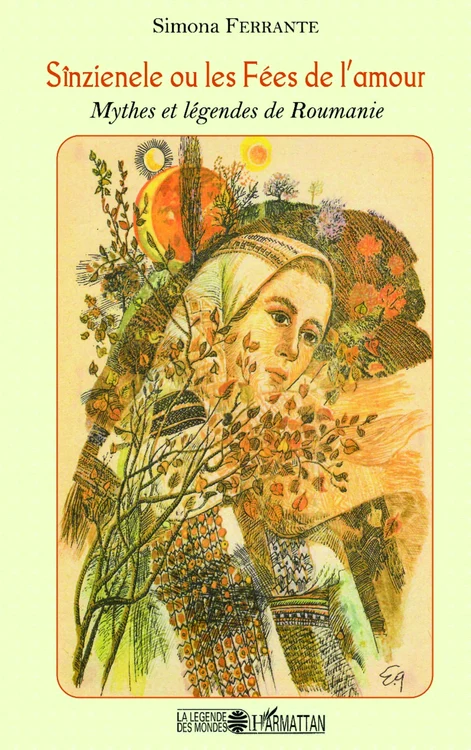
The volume “Sânzienele ou les Fées de l'amour” proposes a rewriting of Romanian myths and legends for a French audience. What role do origin tradition and mythology play in the construction of diasporic literary identity?
S. F: We are a people who have preserved their mythology with sanctity, very connected to traditions, rites, folklore; In this sense, the Bretons are much closer to us. I believe that this connection is intensified when ethos becomes the bond between an emigrant and the country of birth.
When I rewrote and adapted the myths and traditions from Romanian ballads in the form of stories, for the French public, I brought with me not only the stories themselves, but their entire emotional and cultural load: the collective imagination, the ancestral memory with which I was born.
I believe that dual culture gives us a wider opening to the world, makes us more knowledgeable and sensitive to multiple perspectives than someone who has lived in only one culture.
The novels “Promesses” and “Terre blanche” explore themes such as memory, human frailty and the reconstruction of the self. Can we talk, in your case, about an aesthetic of uprooting or rather one of re-rooting?
S. F: I confess that I was sensitive to the topic of uprooting and I addressed it in Promisesalong with alienation, loss of self, and vulnerability of the human being to fate.
In my latest novel, Eight hundred meters, sixteen hundred paces to youthis theme combines with that of re-rooting: it is also about uprooting, but also about creating human connections, about finding a place to belong, after being uprooted from home.
I think my writing therefore reflects a tension between loss and recovery, between fragility and the search for an emotional and identity anchor.
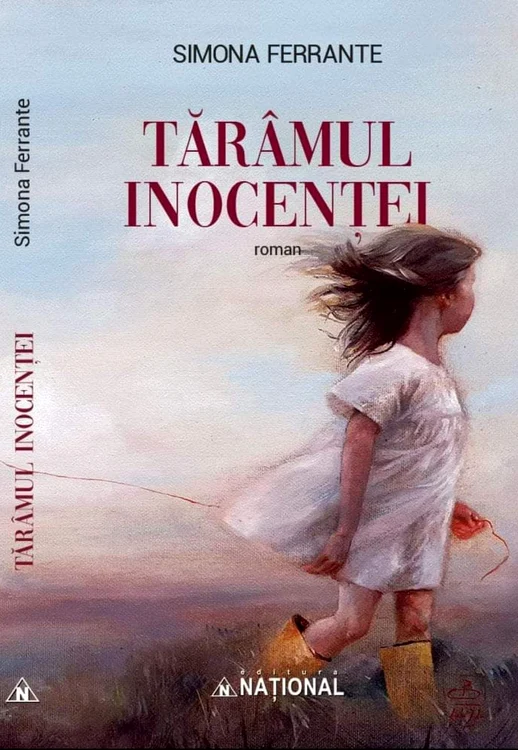
You personally translated the novel “Terre blanche” into Romanian, under the title “The Land of Innocence”. How did you experience the self-translation and what differences did you perceive between the two versions of the same text?
S. F: I thought it would be very easy for me to return to my mother tongue, but I realized that the duality of languages implies a continuous circulation between them.
In self-translation Terre blanche In Romanian, I tried to keep as alive as possible the spirit of the original language, the style and rhythm of the text, and I try to do the same thing all the time in all the translations I deal with. Terre blanche it is a story in which several stories unfold, and the text constantly alternates between the past, the present and a more distant past; the challenge was to reproduce the same narrative complexity in Romanian.
It was a beneficial exercise, which I used in subsequent novels.
In several interviews in this series, the theme of the “fragmented reader” or the multiple audience of the diaspora author came up. How do you represent your reader and to what extent is your writing constructed in dialogue with a Romanian, French or transnational audience?
S. F: It is true that Sanzienele I originally wrote it for a French audience, out of a desire to make known the myths that built me. Likewise Promiseswhich talks about the experience of dictatorship and the alienations it generates. Even today, 36 years after the Revolution, novels appear in which those years are in the “arrière-plan”, which continue to shape the collective memory.
In the end, what really matters are the universal themes and characters: they make a novel speak to both Romanian and French readers or, more broadly, a transnational audience.
I think my writing is built precisely in this tension, between the specificity of a culture and the universality of human experience.
Your activity as a cultural animator – especially the coordination of the Romanian language reading circle in Chambéry – goes beyond the strictly literary sphere. What role do you think such initiatives play in keeping a culture alive in the diaspora?
S. F: For me, these initiatives are as important as writing. I have said this before: without false modesty, I do what I can and as much as I can, but I wish I could do more for Romanian literature. Not out of national pride, but because, having had the opportunity to closely compare contemporary French literature with Romanian literature, I realized that Romanian literature has nothing to be ashamed of, nor to remain in the shadows, like Cinderella.
In the last 30 years, many good Romanian novels have appeared, which deserve to be known, read and discussed, and reading circles, meetings with readers and cultural projects from the diaspora are a concrete way to keep this culture alive.
Looking back, what has remained essential from your intellectual training in Timișoara in your current career as a writer based in France? Are you talking about continuity or rupture?
S. F: Without any hesitation, I'd say it's about continuity. The figures of the teachers who trained me in Timișoara remained alive in my spirit. The interest in folklore, the passion for literature, the pleasure of discovering the French language through the music of Joe Dassin or Edith Piaf, were passed on to me by teachers like Vasile Crețu, Mr. Cheie or Mr. Ciocârlie, and others who left a deep mark on me.
I have kept a certain credulity, despite the dramatic events that inflame the world political scene every day: I believe that literature can change something. So I continue to surround myself with books, with people who write and read, and I get excited at the appearance of each new publication.
What would you like the Romanian public to understand better about writers who live and create far from the country? Are there perceptions or expectations that you think should be tempered?
S. F: Currently, many Romanian writers live abroad and publish in Romania. This says a lot about the sense of identity. Of course, we do not sound torn from our roots, but continue to be connected to the Romanian culture and imagination, even if we live in a different context.
Dual culture gives thought a beneficial depth and openness. The experience of living in another culture broadens our perspective, makes us more sensitive to differences, more attentive to the universality of themes, and perhaps even more aware of the value of our own tradition.
In the context of current research on the literature of the Romanian Diaspora, do you consider that it forms a distinct corpus or that it is an integral part of contemporary Romanian literature, in a broader sense?
S. F: I think that diasporic literature should not be seen as a separate corpus, but as an integral, expanded part of contemporary Romanian literature. Diaspora writers keep common cultural roots, themes and collective memory, but the distance from the country gives them a different perspective, which enriches the literature.
The diasporic text can speak simultaneously to the Romanian and the foreign reader, opening Romanian literature to intercultural dialogue and universalization. In addition, contact with other languages and literatures stimulates stylistic and lexical experimentation.
In this way, the diaspora does not separate Romanian literature, but complements it and makes it more complex, more alive and more open to the world.