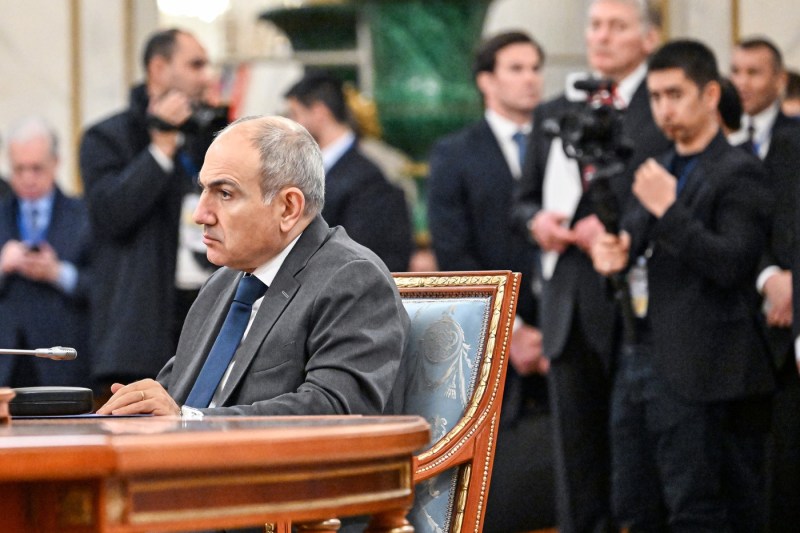
Armenian Prime Minister Nikol Pashinian Photo: Kommersant Photo Agency / ddp USA / Profimedia
Armenia and Azerbaijan will integrate their energy systems to facilitate energy imports and exports, Armenian Prime Minister Nikol Pashinian said in the Yerevan parliament on Wednesday, according to local media reported by Reuters.
Pashinian did not give details and did not specify a deadline for the project, but he showed that it falls within the strategic transit corridor in the South Caucasus known as the Trump Route for International Peace and Prosperity (TRIPP), reports Agerpres.
The two countries, former Soviet republics that have been at war for decades over Azerbaijan's formerly Armenian-majority Nagorno-Karabakh enclave, reached an agreement last August following a summit hosted by US President Donald Trump at the White House.
The TRIPP project will provide Azerbaijan with a direct route through southern Armenia to the Nakhichevan exclave and to Turkey, with which it has close relations.
Armenia is to give the United States a 74 percent stake in the TRIPP Development Company, retaining a minority stake, as noted in a joint statement after a meeting this month between Armenian Foreign Minister Ararat Mirzoian and his counterpart, US Secretary of State Marco Rubio. According to the bilateral agreement, the company will have the exclusive right to develop the transit corridor and could extend its activity for 50 years, during which the Armenian participation will increase to 49%. Armenia will retain full sovereignty over borders, customs, taxes and security.
The project envisages new or modernized railway infrastructures, oil and gas pipelines, fiber optic cables through the entire South Caucasus region, strategically located between Russia, Iran and Turkey.
Azerbaijan has already started supplying gasoline to Armenia, after an interruption of about three decades, which – according to the Reuters agency – indicates the gradual improvement of bilateral relations, although no peace agreement has been signed.
The Azeris demand that the Armenians amend the preamble to the Constitution, considered in Baku to be a confirmation of implicit claims on the Azeri territory.
Pashinian, who is preparing for parliamentary elections in June, has called a referendum to amend the fundamental law, but the date has not yet been set.