Fractures between France and Germany are weakening the EU's attempts to respond unitedly to Trump's pressure

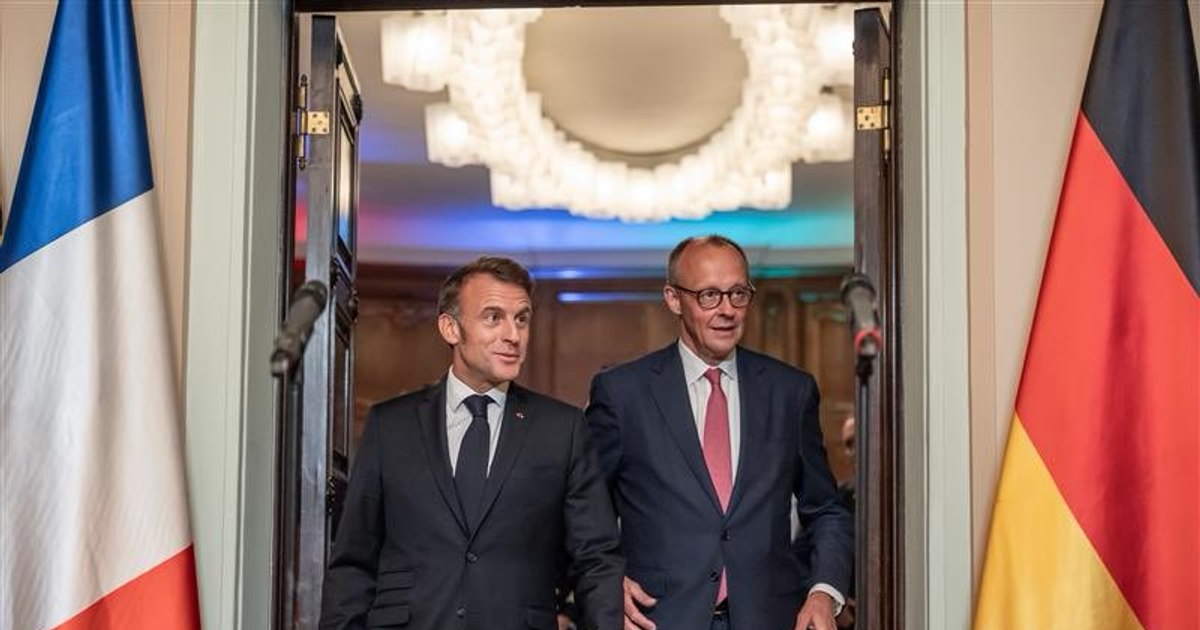
Exactly at the moment when the European Union would need a solid Franco-German couple to face the increasingly direct threats of American President Donald Trump – including in the Greenland file -, relations between Paris and Berlin are in a phase of heightened tension, writes Politico.
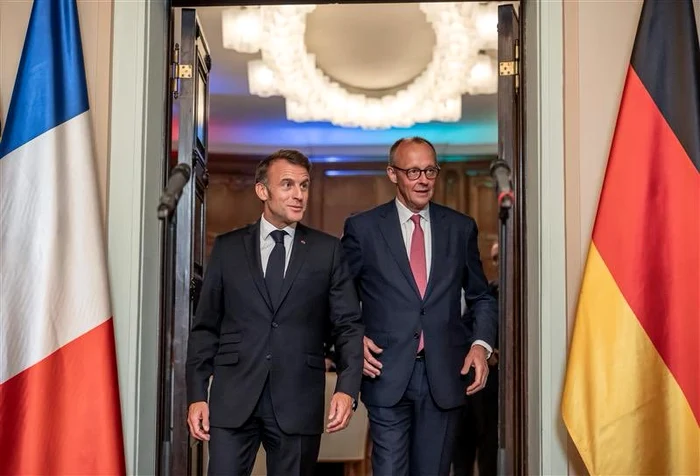
Emmanuel Macron and Friedrich Merz/PHOTO:X
German Chancellor Friedrich Merz has announced that he plans to build a “common front” with French President Emmanuel Macron in the coming days in an attempt to restart the Franco-German engine and achieve a coherent European position in negotiations with Washington. But, diplomatic sources warn, the road to such a convergence is strewn with accumulated frustrations, mutual suspicions and deep strategic divergences.
French diplomats watch with concern Germany's strengthening position as the dominant player in Europe, while Berlin increasingly expresses exasperation with Paris. Among the reasons for irritation are blockages in the joint program to develop the FCAS fighter jet, French opposition to the EU-MERCOSUR trade deal and procrastination on decisions on the use of frozen Russian assets to support Ukraine.
The differences in approach also became visible in the reaction of the two leaders to Trump's threats to impose tariffs on European states that oppose his plans for Greenland. Macron, true to the French tradition of strategic autonomy from the US, called for a firm response, including activating the EU's coercive trade tools. Merz, on the other hand, known as a staunch Atlanticist, pleaded for calm and persuasive efforts aimed at steering the White House leader away from a dangerous escalation.
On January 19, Merz publicly acknowledged the difference in tone between Berlin and Paris, explaining that France can afford a tougher line because it is less vulnerable to the consequences of an all-out trade war with the United States.
For Paris, one of the great difficulties in defining a common position is the lack of internal coherence of the German coalition government. While Macron promotes the idea of using the EU's “trade sledgehammer” against American pressure, the messages from Berlin are mixed.
“German politicians say different things. The finance minister supports this option, while others, including the foreign minister, are much more reserved“, said a European diplomat under the protection of anonymity.
Although Merz is convinced that he will be able to reach a common position with Macron in the short term, the structural problems of the Franco-German relationship run much deeper. “For the last six months, the Franco-German engine has practically not worked,” an EU official acknowledged.
A shifting balance of power
France has long called for Germany to take a more active role in major European projects, but Berlin now appears more powerful and influential than Paris anticipated. Germany is moving towards building the largest military in the EU and is on track to become, by 2050, the only European economy in the world's top 10.
While Macron is constrained domestically by high levels of public debt and political instability, Merz is gaining ground on the European stage. His role in the Ukraine negotiations, including the Berlin summit at the end of last year, strengthened his profile as a leader capable of mediating between Europe and the United States.
At the same time, Merz's statements that Germany could become Trump's preferred “partner” if he fails to reach a deal with Europe have sparked irritation in Paris. The suggestion that Berlin could act on its own goes against the idea of European unity.
“Germany talks a lot more and Merz is comfortable in an expanded political role. For the French, this is deranjant”, explained another European diplomat.
On the other hand, Berlin accuses Paris of ambitious rhetoric without practical support. German officials accuse France of promoting strategic autonomy from the US but blocking key trade deals such as MERCOSUR and aspiring to a leadership role in the Ukraine issue, while its financial and military contributions are more modest than Germany's.
Tensions have also increased recently in the discussions regarding the use of the European loan of 90 billion euros for Ukraine. France insisted that the funds be directed primarily to European arms purchases – a solution favorable to its industry – while Germany demanded that the main beneficiaries be the states that contributed the most to the support given to Kiev.
“Given the gap in French contributions, the message sent to Paris was quite clear”, commented an EU diplomat.
According to the former French ambassador to Syria and Switzerland, Michel Duclos, Berlin believes that it is already taking on a disproportionate burden in support of Ukraine. “When the French talk about military operations, the Germans react with exasperation. And the fear in Paris is that Germany's defense budget could end up being double that of France – a historic shift in balance,” he explained.
In this tense context, the joint FCAS fighter jet project, estimated at 100 billion euros, is in question after negotiations between Paris and Berlin reached a deadlock last month. In addition, the rise of the far-right Rassemblement National party in French polls ahead of next year's presidential election further complicates bilateral defense cooperation.
All these fissures risk undermining the European Union's ability to act as a coherent bloc at a time when external pressures – particularly from Washington – are stronger than ever.