Peace Council, or what? Trump's “UN” is starting to take shape and multiplying further questions

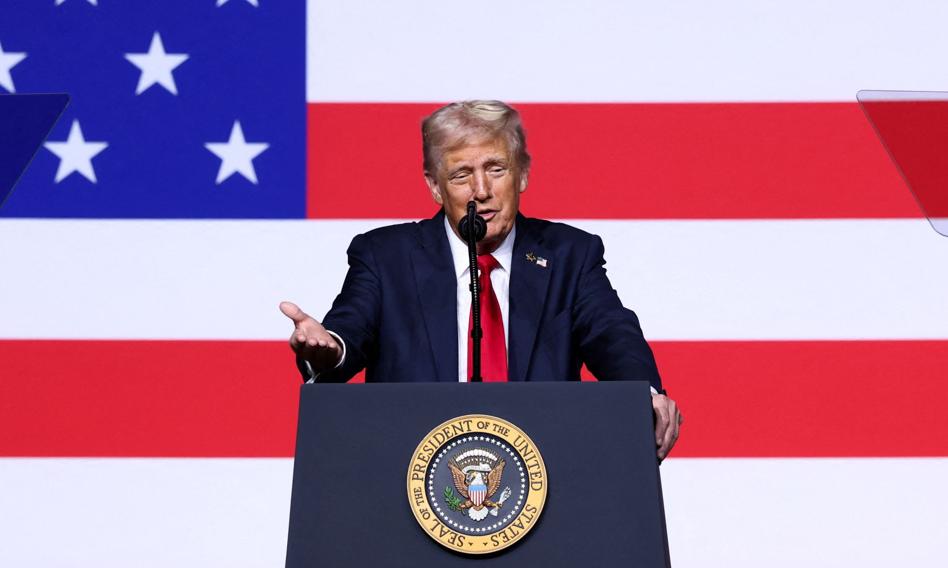
The Peace Council, a new institution headed by US President Donald Trump, is beginning to take a concrete form. More than 60 leaders were to be invited to the Council. The council was established to govern the Gaza Strip, but its activities may extend beyond that area, and its structure, composition and mandate raise many questions.
According to the assumptions presented by the American government The Peace Council is to oversee the reconstruction of the Gaza Strip and manage the Palestinian semi-enclave. However, Trump, for example, in an interview for Reuters, suggested that the Council was to help resolve other conflicts in the world.
The governing body of the Peace Council is to be a board headed by the President of the United States. The invitation from Trump to join this body was to be received by over 60 leaders, including Polish President Karol Nawrocki, Russian leader Vladimir Putin, British Prime Minister Keir Starmer.
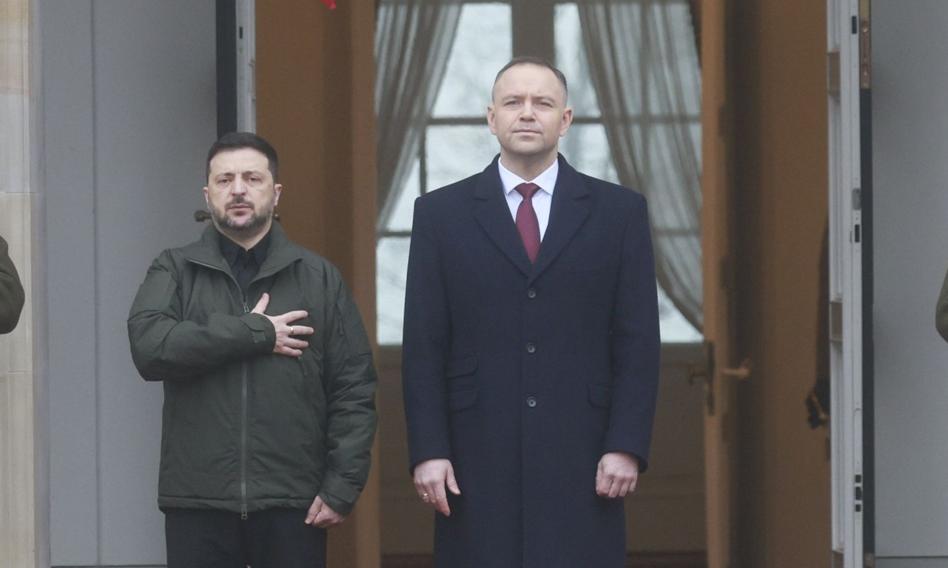
The head of the presidential Office of International Policy, Marcin Przydacz, confirmed on Monday at a press conference in Davos, Switzerland, that Nawrocki had received an invitation from the US president. Przydacz noted that “information is being provided that people or politicians with whom the Polish president is not in any way in touch with are also invited to such a Council.” – Vladimir Putin is certainly such a politician – he added.
France and Canada are key to the issue of membership
Nevertheless, as reported by AFP, among others At this stage, France and Canada do not want to respond positively to the invitation to join the board of the Peace Council. So far, only Hungary has clearly declared that it will join this organization.
A source close to President Emmanuel Macron, quoted by AFP on Monday, said that despite previous expectations Council 'charter' 'goes beyond Gaza'. “Important issues arise, including respect for the principles and structure of the United Nations” that cannot “under any circumstances be questioned,” the source added.
Peace Council, a private UN?
As the Financial Times wrote on Friday, American officials presented the idea of the Peace Council also dealing with other conflicts in the world, including in Ukraine and Venezuela. One of the newspaper's sources said that the Trump administration sees the council as “a potential substitute for the UN, (…) a kind of parallel, unofficial body dealing with conflicts also outside Gaza.”
A spokesman for the German government thanked on Monday for the invitation to the Peace Council and said that Berlin intended to analyze it. He added that, in Germany's opinion, Trump's initiative does not undermine the role of the United Nations (UN).
Contribution? A trifle of $1 billion a year
According to Bloomberg, the US administration wants countries to pay at least USD 1 billion for permanent membership in the Peace Council. If they fail to do so, their term of office would be three years, renewable with the consent of the Council President.
The White House published a statement on Friday night outlining what the Peace Council would look like. However, its organization and structure remain largely unclear.
The Board of Peace, which will include Trump and world leaders, is to be assisted by two executive bodies and a high representative who will oversee the local government in the Gaza Strip.
At the helm of the new creation “the rabbit's friends”
The first body is the founding Executive Board, which includes the head of US diplomacy Marco Rubio, Trump's son-in-law and his adviser Jared Kushner, former British Prime Minister Tony Blair, American billionaire Marc Rowan, president of the World Bank Ajay Banga and former Trump national security adviser Robert Gabriel.
The second body is the Gaza Executive Board and includes US Presidential Envoy Steve Witkoff, Kushner, Blair, Rowan, Turkish Foreign Minister Hakan Fidan, senior Qatari diplomat Ali Thawadi, Egyptian intelligence chief Hasan Rashad, United Arab Emirates Minister of State for International Cooperation Rim Al-Hashimy, businessman Yakir Gabay, former UN humanitarian coordinator Sigrid Kaag and former UN envoy to the Middle East Nikolai Mladenov.
Mladenov was also appointed high representative for the Gaza Strip. The White House statement said that Mladenov is to act as a liaison between the Peace Council and the new local authorities in the enclave – the National Committee for the Administration of Gaza (NCAG), also known as the Palestinian local government. The committee was established on Thursday, noting that it is composed of “Palestinian technocrats.”
On January 14, US special presidential envoy Steve Witkoff announced the launch of the second phase of the peace plan in the Gaza Strip. In the second stage, the local government controlled by the Peace Council is to take over power from Hamas. The Gaza Strip is to be demilitarized and reconstructed.
Israel: The council is not in line with our policy
Israeli Prime Minister Benjamin Netanyahu's office said Saturday that the composition of the Gaza Strip executive committee was not coordinated with Israel and is not consistent with the policy of this country. The Times of Israel website pointed out that the executive committee includes officials from Turkey and Qatar who were critical of Israel's conduct of the war in the Gaza Strip against the Palestinian Hamas.
Trump invited world leaders to take part in the Peace Council signing ceremony on Thursday. The ceremony is to take place in Davos, Switzerland, on the sidelines of the World Economic Forum taking place there. (PAP)
awm/adj/ktl/