“You're back? Oh my, oh my.” What happens when leaders don't bite their tongue


For example, when Viktor Orban from Hungary arrived at the EU summit in Lithuania in 2015 – Jean-Claude Juncker, upon seeing him, said “the dictator is coming” and greeted him with a joking slap in the face.
This behavior of the then President of the European Commission revealed some of the political dynamics that usually remain hidden behind closed doors, or even only in the heads of leaders. Whether it was a slip-up or a hidden signal, this stunt sparked discussions about democratic regression in Hungary.
When everything they say is analyzed and every statement twisted by political opponents, politicians have learned that they must remain silent, refine their messages and behave diplomatically. But under enormous pressure, whether in private or in jest, the mask slips—revealing more than carefully crafted speeches will ever reveal.
Last Wednesday, the EU's top diplomat Kaja Kallas summed up what many had in mind when she privately joked that the state of the world made it a “good time” to start drinking. It may not have been intended as a serious assessment, but it provided a telling insight into the situation: Europe's representative on the international stage thinks things are looking pretty bleak.
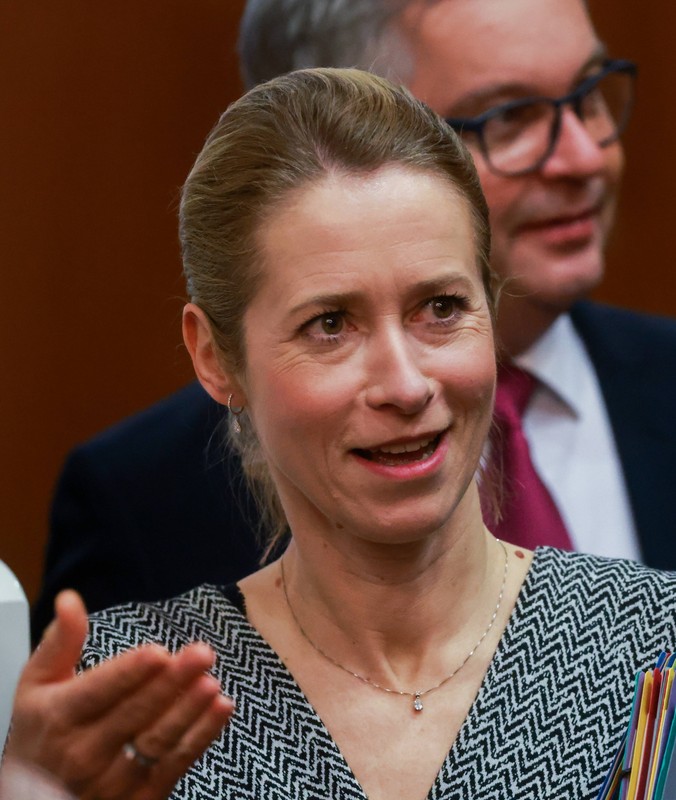
High Representative of the Union for Foreign Affairs Kaja Kallas before the meeting of the EC College, Brussels, Belgium, 14 January 2026.OLIVIER HOSLET / PAP
Some of the asides contain political truths that have stood the test of time. Juncker's declaration that “all” European leaders “know what needs to be done, but we don't know how to win elections again once we do it” became known as the Juncker curse, shorthand for the electoral challenges facing reformist governments.
— Advisors and communications specialists often try to control everything a politician says. But leaders are human, and sometimes they just say what's on their mind, whether jokingly or under the pressure of duty, says Louis Rynsard, a former political adviser in the British House of Commons and co-founder of Milton Advisers. — The instinctive reaction is, “Oh God, what just happened,” but nine times out of ten, the human nature of political leaders works better than all the beautifully crafted PR messages. In one out of ten cases, all you can do is hope that no one heard it.
For people living in a world full of secrets, what they laugh about can reveal their attitudes about issues they cannot discuss openly.
“Politicians can only hold so much information in their heads, so there is leakage of ideas, things that have only been half thought through,” says Ashley Weinberg, senior lecturer at the University of Salford and author of The Psychology of Politicians.
The British royal family is famous for its restraint in communication. But King Charles III was unusually candid as he welcomed his first prime minister, Liz Truss, to a weekly audience at Buckingham Palace in 2022, at a time when her draft budget caused confusion in markets. – Are you back? Oh my, my, he smiled. Truss resigned 12 days later.
According to political psychologist Ramzi Abou Ismail, these kinds of jokes can be “a way to convey a message in a subtle way, something like 'I don't really mean it – unless you agree with it'.”
Diplomats who have been involved in high-stakes international negotiations told Politico that they are often wittier than people realize, an antidote to the anxiety that comes with high-level politics.
— People would be surprised how often in tense diplomatic situations jokes are made and the entire room relaxes a little and realizes that they are dealing with people – says Chris Fitzgerald, a former British diplomat seconded to Brussels during the Brexit negotiations. — The best texts are often those that are not planned, and even better if they show that you understand the culture of your interlocutor, he adds.
Belgian Prime Minister Bart De Wever, often called the continent's funniest leader, said after the European Council summit that he likes on-point jokes that use “dark humor” to convey his message. Former Lithuanian Foreign Minister Gabrielius Landsbergis, who gained a reputation for writing political bon mots, said absurd political situations simply called for laughter. “When you see what's going on in the world, just taking it seriously no longer seems to be enough, you feel like the best way to address it is to show the absurdity,” he says.
– However, this is not always a refined strategy – adds one of the EU diplomats who participated in hundreds of meetings with partners in Brussels. — These meetings are often long and boring, and you see an opportunity to make people laugh. Sometimes it works and makes you seem more human, other times it backfires and causes problems.
It's a balancing act that US President Donald Trump's candidate for ambassador to Iceland failed to achieve last week. Billy Long sparked a diplomatic crisis by joking that Iceland would become the 52nd US state at a time when the White House is under pressure to take over Greenland.
Ismail, a political psychologist, credits Trump with expanding the boundaries of political norms to the point where tough figures in Europe and other parts of the world feel freer to speak out honestly. — Trump not only changed norms regarding political communication, but also demolished the boundaries between what are considered private beliefs and public statements, says the psychologist.
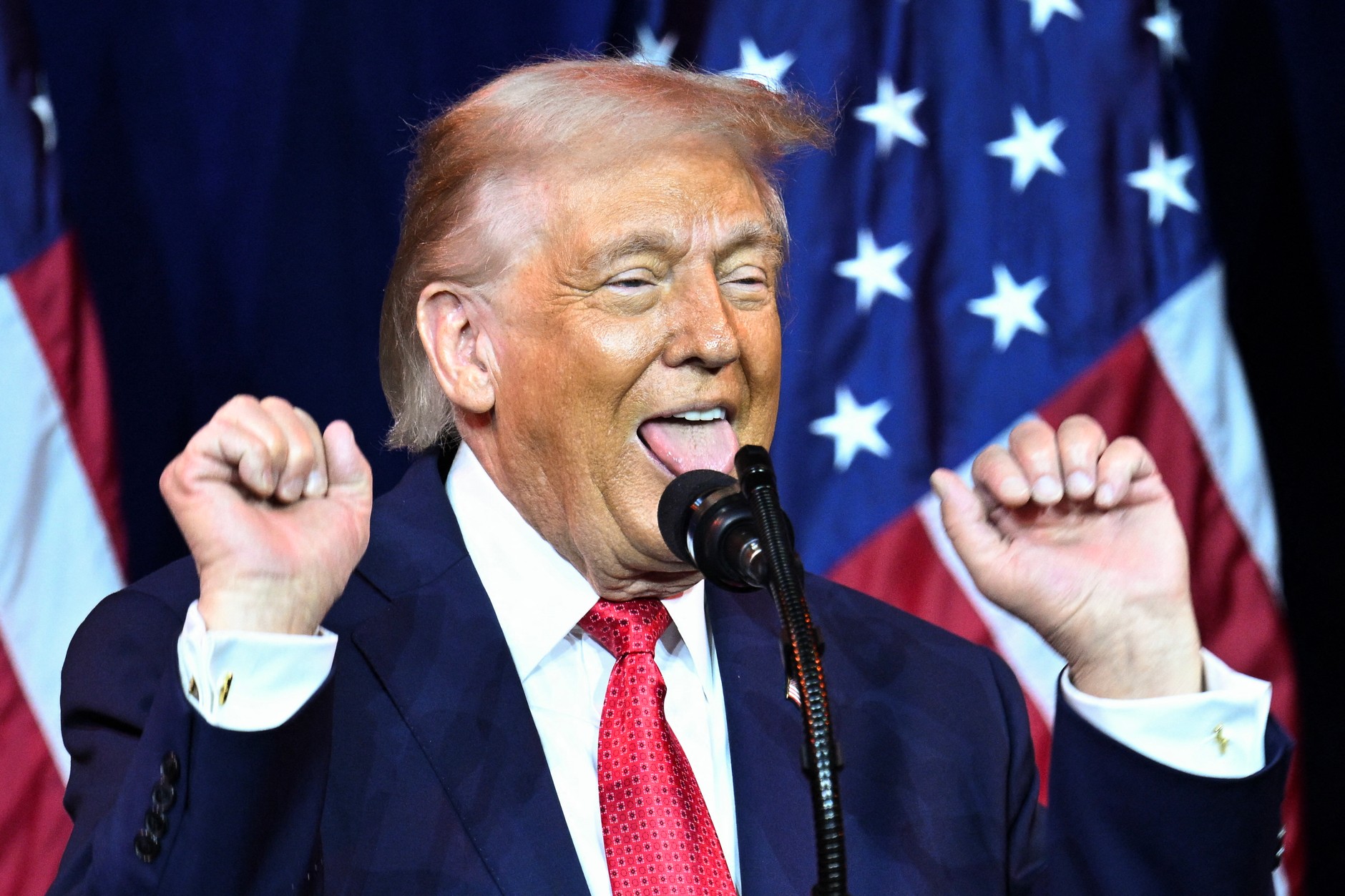
U.S. President Donald Trump speaks at a meeting of Republican Party members in Washington, U.S., January 6, 2026.Photo by MANDEL NGAN / AFP / AFP
European politicians are also realizing the value of a less polished style of speech. One EU official said that EU institutions 'have a notorious humor deficit', which is a growing handicap when it comes to conveying the European message “in the era of Trumpian soundbites effective on social media [krótkich i chwytliwych fragmentów wypowiedzi]” and a public that values simple language.
The humorous approach is promoted by Olof Gill, deputy spokesman for the European Commission, who jokes and ridicules both rivals and journalists during his daily television appearances.
“The value of the Commission's midday press conference as a living political spectacle is enormous, and within that spectacle humor can be a very useful tool to soften a difficult question or highlight the absurdity of a political view,” explains Gill.
For his part, Orban seemed to understand the nature of the game when Juncker called him a dictator. “Hungarians talk directly about difficult issues,” he said then. — We don't like to beat around the bush. We are an honest nation.
“Situations like this will become more and more common at a time when the established world order is collapsing and leaders often can do nothing but laugh,” Ismail says.
“There is also a kind of psychological adaptation to permanent political crises like the ones we have had in the last five years,” he adds. — Leaders will feel crisis fatigue, and this gives room for humor and irony, because it somehow breaks the pattern. You have to think of it as a valve – humor simply relieves the pressure.