Maximilian Heimerzheim: Your parents come from Sudan, you grew up in Germany. How do you receive what is happening in this country?
Niddal Salah-Eldin: I was born in 1985 in Khartoum, in the capital of Sudan, and at almost four years old, I came to Germany with my family. My parents come from Sudan, most of my family lived there for a long time, but after the outbreak of war many relatives had to run away. I often visited Sudan, I also celebrated a wedding there. What is happening there is not just distant news from television. Finally, my family, aunts, uncles, cousins, cousins and neighbors with whom I am closely connected. It is very important for me to emphasize that personal commitment is not a political category. There are many reasons why the greatest crisis of hunger and displacement of our time should move us all.
How do you keep in touch with them? What do relatives say about the situation in Sudan?
Most of them found shelter in neighboring countries, such as Egypt, Uganda and Ethiopia. We maintain contact mainly via the Internet, although there were weekly breaks in access to the network. Talks often relate to their deep longing for returning to Sudan. At first, many of them thought they were going only for a few days. Now they understood that they lost everything: a house or a flat, documents, future. Especially for young people this is a shock. They are trying to stick to the hope that one day they will be able to live again in a peaceful Sudan.
It is catastrophic, it is difficult for people in Europe to imagine the scale of problems tiring this country.
According to current estimates, about 150,000 have been killed since the outbreak of war. people. The situation of children is particularly disturbing – there are nearly 16 million in need, more than all children in Germany combined. Many of them do not have access to clean water, food, medical care or education.
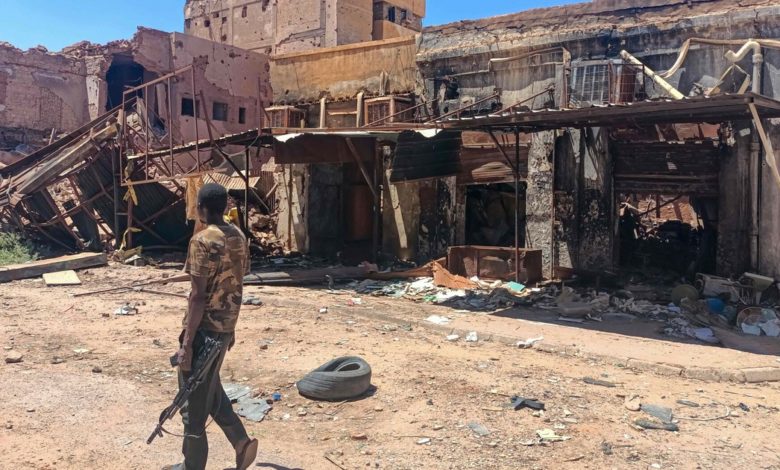
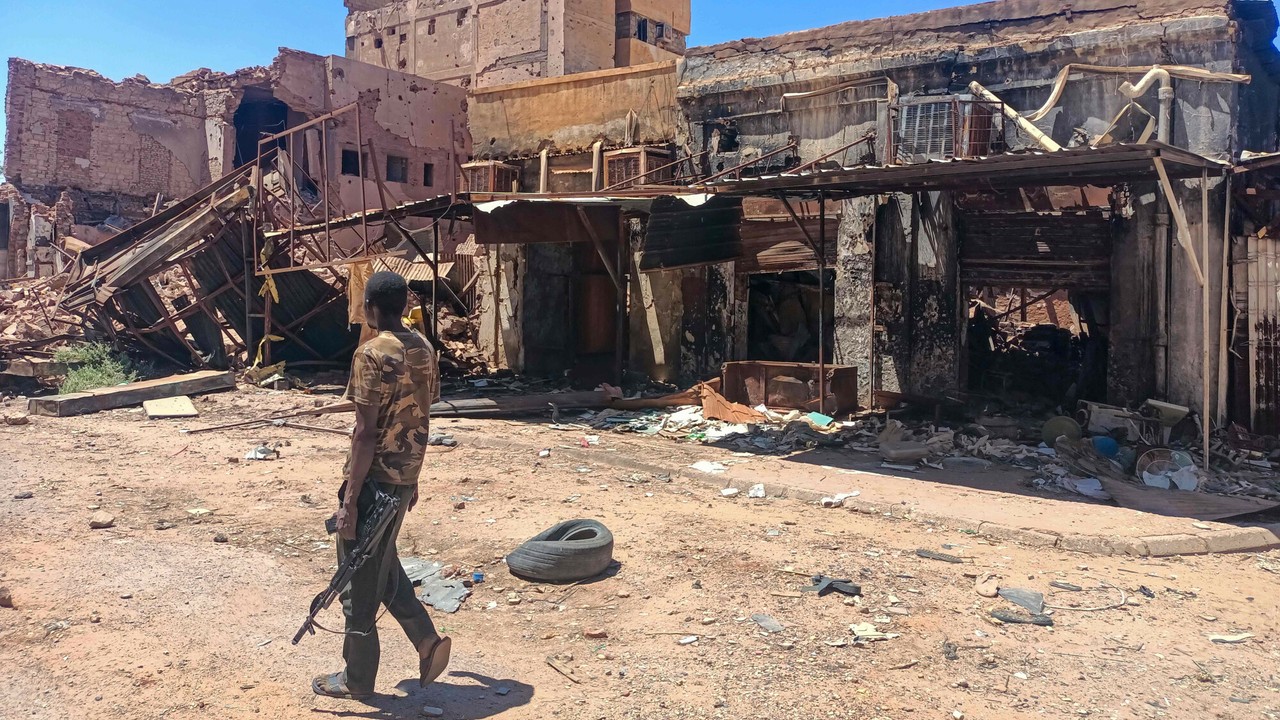
A total of 25 million people in Sudan are at risk of hunger. The entire areas are devastated, the hospitals are destroyed, the infrastructure was in ruins. The United Nations is called this the greatest humanitarian crisis in the history of the world. The state has largely broke up, there are no central administration and supply systems. Sudan is in the face of a complete collapse, if the war does not end, it may have unpredictable consequences for the entire region, but also Europe.
Why almost nobody talks about it?
The world is full of crises – such as the war in Ukraine, the Middle East, global reorganization. Sudan seems distant to many people. However, it lies in a very sensitive region and is of great geostrategic importance – it has gold deposits, raw materials sought all over the world, but also access to the Red Sea. Russia uses Sudan gold to finance the war and is currently planning to create the first maritime base in Africa. Other involved sites, such as the United Arab Emirates, provide weapons and benefit from the chaos in the country. And Europe looks away. If we do not take action now, it will have its consequences – also for Germany.
What exactly do you expect from the federal government?
During the conference dedicated to Sudan, which took place on April 15 in London, all participating countries undertook to help to help a total of over EUR 800 million (PLN 3.4 billion), of which EUR 125 million (PLN 535 million) comes from Germany. This is an important signal and the first step. However, taking into account the scale of the humanitarian disaster, it can be stated that the funds themselves are not enough. According to UN estimates, only EUR 4 billion (17 billion PLN) is needed for helping Sudan only at 2025. A clear political commitment is needed, a coherent strategy and courage to take diplomatic actions with the participation of Sudan civil society. Sudan must also be a priority for the new federal government.
What exactly can this help look like?
The new Foreign Minister Johann Wadephul and the new Minister of Development Reem Alabali-Rradovan should take the opportunity to get a realistic picture of the situation on the spot. Persons incurring political responsibility must know the scale of suffering. Sudan is not a secondary place, but a geopolitical inflammatory point. Actions should be taken from the humanitarian necessity and a clear interest of your own – to prevent instability, new refugee waves and further increase in the influence of authoritarian states.
Continuation of the material under the video
How do you help Sudan?
I divided my commitment into three areas. First of all, I directly support my family – in search of a flat, in matters related to education and prospects for work in countries neighboring Sudan. It is about rebuilding life prospects that were ruined by the war. Secondly, I am involved in numerous local initiatives in Sudan. These are neighborly networks that organize very practical help: kitchens for the poor, medical care, water and food. These groups consist of committed volunteers who help others despite their own problems. This form of solidarity self -organization makes a huge impression on me.
In addition, I work closely with international assistance organizations such as UNICEF. Over 300 Sudan local employees work there every day – many of them also lost everything as a result of the war. UNICEF provides, for example, medicines, medical equipment and clean water to hospitals, health centers and camps. He also implements educational projects and organizes psychosocial care over women and children. I believe that the combination of local initiatives and international help is a decisive factor for the success of humanitarian activities in Sudan.
Does the help actually reach the needy?
Yes. There are effective control mechanisms, including thanks to transparent documentation and regular monitoring of assistance activities. In UNICEF, I see up close how people effectively and intentionally work there-even in the most difficult conditions. However, more support, money and cooperation with local partners are needed. You should urgently strengthen humanitarian aid on the spot and end the war.
Is the hope of improving the situation in Sudan still justified?
Hope alone is not enough – it only has a value when it translates into specific actions. Now the point is to take responsibility for this situation, even if you are not responsible for its cause. This applies to every form of crisis, but in Sudan it is particularly important. Turn -out is not an option because the further breakup of Sudan will not affect Europe. There is still a chance to solve problems in a political way, negotiations that will bring peace. However, this requires decisive commitment – now, not someday. The international community must use this moment.
Is Sudan threatened with complete breakup, just like Libya?
Yes, this is a very real threat. If the international community continues to delay, Sudan can divide into regions or influence zones controlled by local militia or foreign entities. In many places, state structures have already collapsed, until each subsequent month without political progress, the risk is growing that soon there will be no uniform Sudan government, with which one could negotiate at all.
Particularly annoying was that the last conference on Sudan took place without the participation of the Sudan civil society. This is more than symbolic neglect – it shows how far international processes have moved from real actors in the country. If the country continues to crush, the risk of losing a long -term perspective of the room will increase. Sudan's breakdown would be practically irreversible. Those who bear political responsibility for this catastrophe and do not take any action to remedy it, are complicated by its effects.
I’m Ashley Davis as an editor, I’m committed to upholding the highest standards of integrity and accuracy in every piece we publish. My work is driven by curiosity, a passion for truth, and a belief that journalism plays a crucial role in shaping public discourse. I strive to tell stories that not only inform but also inspire action and conversation.