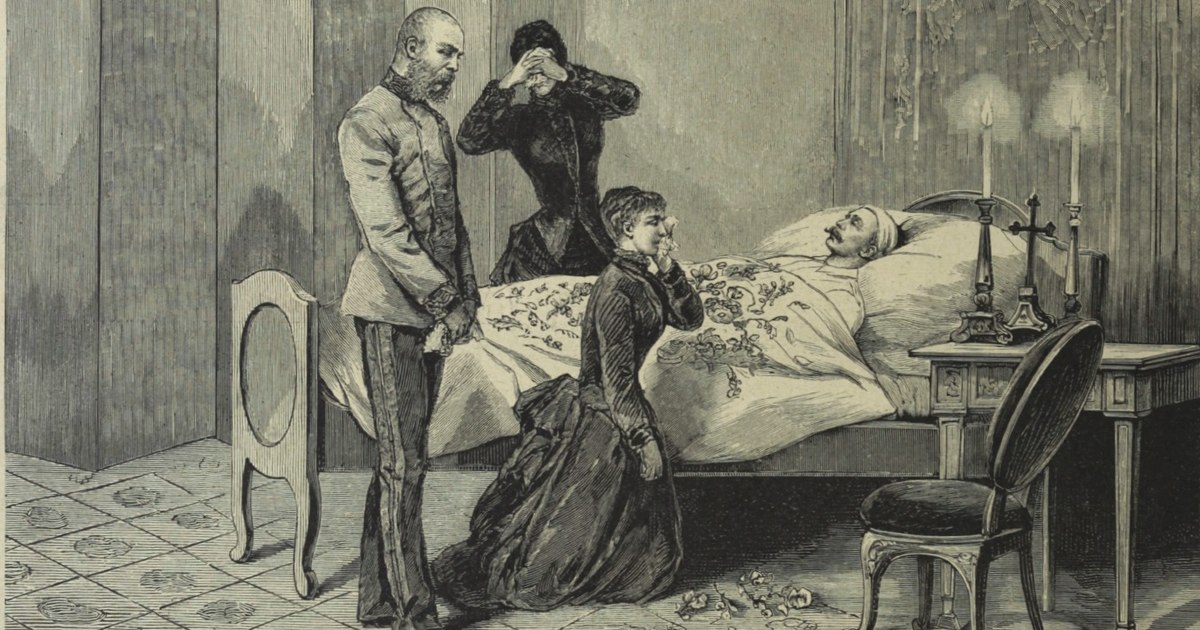
A suicide for love reasons shook one of the last great empires of Europe. It is one of the most tragic love stories in the history of the continent marked by mystery, controversies, investigations, cover-ups. Some say it indirectly led to the outbreak of the First World War.
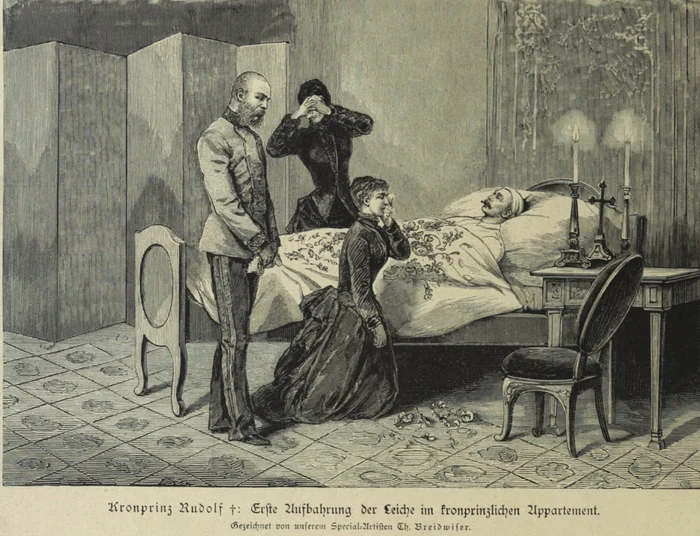
The Emperor of Austria at the head of his dead son PHOTO wikipedia
On January 30, 1889, at the imperial hunting lodge at Mayerling, located in the Viennese Forest 26 kilometers southwest of the capital, a real dynastic catastrophe took place for the Habsburgs, the family that had ruled one of Europe's largest empires for hundreds of years.
The crown prince, the last of his line, Rudolf of Habsburg was found dead next to his mistress, a child of only 17 years, in one of the rooms of the imperial lodge. Due to the bureaucracy and the almost absurd ritual of the Austrian imperial house, the news did not reach the emperor's ears until the evening. A truly devastating news that would indirectly change the destiny of the Austro-Hungarian Empire but also of the European continent. The death of the crown prince with his young mistress was surrounded by mystery, controversy, cover-ups and many assumptions. It is one of the most tragic love stories in European history, an Austrian story about a different Romeo and a different Juliet, from the end of the 19th century.
A sudden love, an imperial lover, scandalized parents
The story begins with the moment when the crown prince of the Austro-Hungarian throne meets Baroness Maria Vetsera in 1888, at a court party. Maria Vetsera was only a 16-year-old child, while Crown Prince Rudolf was a 30-year-old man, married with a child. But it was love at first sight. The feelings were shared and the two started an affair. Rudolf had a liberal spirit, contemporaries say, different from the conservatism of the Court of Vienna and his father, Emperor Franz Joseph. Some say that Rudolf inherited this emancipation from his mother Elisabeth, the famous “Princess Sissi”. Initially, Maria Vescera was reluctant to get involved in a secret relationship with the emperor's son, afraid of the possible consequences. It was common knowledge that a crown prince could only marry a woman of his own rank, from a ruling house. It was a relationship without a future, from the start.
However, convinced by Prince Rudolf's insistence but also by the feelings she had towards the heir to the throne, Maria Vescera entered this love game. For a year, the two lovers spent time, secretly, in different houses in Vienna or in the Mayerling cottage bought in 1886 by Prince Rudolf, who was fond of hunting and transformed into an imperial domain. At Mayerling they were safe from prying eyes, because Rudolf came here accompanied only by his valet and eventually a bodyguard, a faithful officer who kept the secret of the affair. Before long, however, the passionate couple began to forget their precautions. “We both lost our heads (…) and I became a woman! Now we belong to each other in body and soul“, Baroness Maria Vetsera wrote to her friend. It didn't take long before everyone found out about the prince's affair. Including his wife, Princess Stephanie of Belgium, daughter of King Leopold II of Belgium.
A father-son quarrel and the tragedy in the forest
Prince Rudolf's father, the Emperor of the Austro-Hungarian Empire, Franz Joseph I, considered this whole story extremely inappropriate and scandalous. Especially risking creating diplomatic and dynastic problems. That is exactly why he decided to take action. Heated discussions took place between father and son, culminating in an ultimatum given to Prince Rudolf after the family dinner on 29 January 1889. Franz Joseph and Elisabeta were to leave for Buda in Hungary on 31 January on a popularity tour, especially as there were tensions with the Hungarian nobility. After the last argument with his father, Rudolf announced that he was leaving for Mayerling on January 30 for a hunting trip.
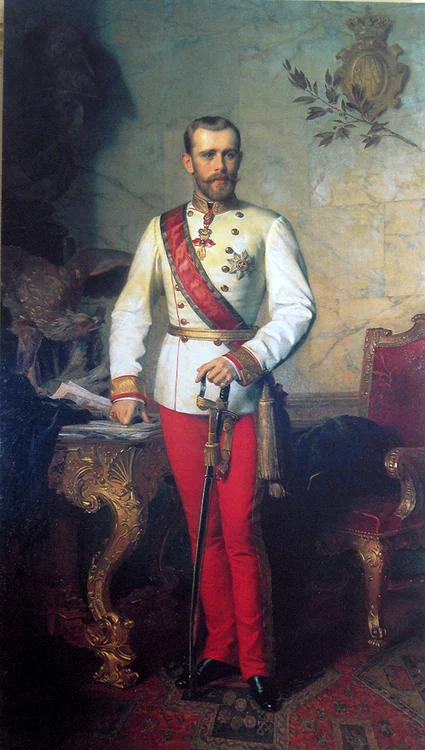
Prince Rudolf PHOTO wikipedia
His valet Loschek and a friend, Joseph Hoyos, were to accompany him. In reality, the prince had already gone to Mayerling that evening. On the morning of January 30, 1889, the valet Loschek and Joseph Hoyos were already ready for the hunting party and were waiting for Rudolf. Loschek, went to call him. The door to the prince's room, however, was locked and he received no answer. Joseph Hoyos along with the valet tried to force the door, but to no avail. Finally, Loschek broke one of the wooden panels of the door with a hammer, enough to reach in and open the door from the inside.
He found a shocking scene. In the room with the shutters drawn, in the semi-darkness, Crown Prince Rudolf was lying by the bed, bent forward and bleeding from the mouth. Next to him, on the bed, lay the body of Maria Vetsera, his mistress. They were both dead. Hoyos ran to the station and took a special train to Vienna. It was a real dynastic catastrophe and the message had to be sent confidentially. The aberrant protocol of the imperial court meant that the news reached the emperor's ears late. Empress Elizabeth was first informed and began to cry uncontrollably and suffered a panic attack. Only after he calmed down did he go to inform the emperor. The head of the Imperial Police was immediately summoned, and the national security services sealed off the Imperial hunting lodge and the surrounding area.
Cover-up, mystery and a dynastic drama
The Mayerling incident was a real dynastic disaster. Basically, the death of Prince Rudolf interrupted the direct line of succession of the Habsurgs. The situation was dangerous because there were differences with the Hungarian factions of the empire. Later, in order not to extinguish the dynasty, Franz Joseph named his brother, Archduke Karl Ludwig, heir to the throne. Later, Archduke Franz Ferdinand followed in a direct line. Basically, history changed: Franz Ferdinand was assassinated in Sarajevo in 1914, which led to the outbreak of the First World War. Returning to the Mayerling incident, the emperor initially tried to cover up the case.
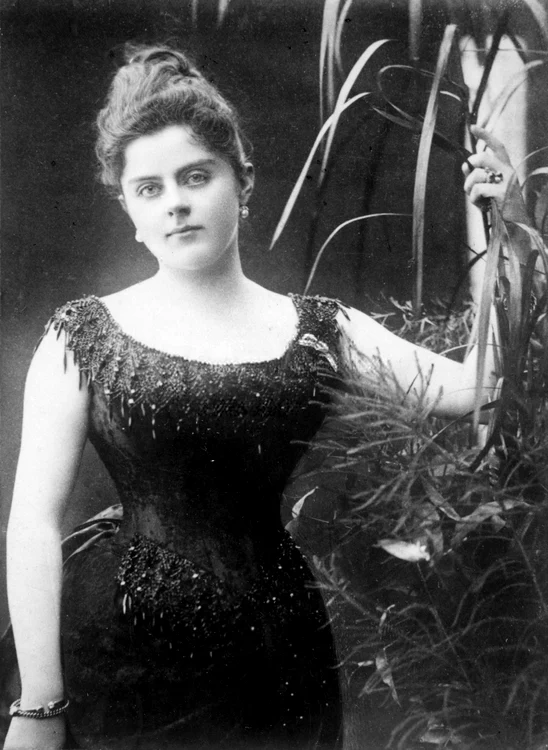
Baroness Maria Vetsera PHOTO wikipedia
It was publicly announced that Prince Rudolf had died of an aneurysm. At the same time they claimed that Vetsera had died on the way to Venice. Vetsera was quickly buried, and the imperial court refused to let Vetsera's mother see her daughter's grave for over two months after the burial. Later, the story came to light, also following the insistence of the foreign press. It was officially concluded that Prince Rudolf and Maria Vetsera had decided to die together. Rudolf shot Vetsera and then killed himself by shooting himself in the head.
Later, the speculations arose. It is said that Maria was already pregnant and they had tried to have an abortion. The operation went wrong and Vetsera died. Prince Rudolf later committed suicide. Others issued the assassination theory: the two were assassinated by foreign agents. None of these theories have been confirmed. Instead, the murder-suicide theory is supported by the documents. First, the teenage girl's farewell letter left for her mother. “Dear mother, please forgive me for what I have done. I couldn't resist the love. I want to be buried next to him in the Alland Cemetery. I am happier in death than in life”he had written this to his mother.
Later, the news spread to the Royal Houses of Europe and the real story was learned. Everything would have started from the ultimatum given by Emperor Franz Joseph to his son Rudolf. “I have heard various things about poor Rudolf which may perhaps interest you. Prince Bismarck told me that the violent scenes and altercations between the Emperor and Rudolf were the cause of Rudolf's suicide”wrote the Empress of Germany, to her mother Queen Victoria of Great Britain.
An unstable young man and his sick passions
Specialists studied the biography of Prince Rudolf and revealed absolutely shocking things. He was considered mentally unstable, due to childhood traumas. His education was left in the hands of General Leopold Gondrecourt, of French origin who tried to make little Rudolf a soldier.
The bad education left him with huge traumas. He had become melancholic and suicidal. In addition, he was known for his adventures and parties with a lot of alcohol. Rudolf had other attempts to commit suicide together with his girlfriends, but was refused each time. Even marrying Princess Sophie of Belgium didn't change his behavior.
After the birth of the only child, a girl, Prince Rudolf resumed his love affairs. He even made his wife sick with gonorrhea. Later Rudolf contracted syphilis. To improve his health, he used morphine. Eventually he started a relationship with Maria Vetsera. The last of his life.