“The loss of Maduro is a shame that China will not forget,” the publication writes, citing sources.
Journalists listed factors that depended on Russia. In particular, during the US special operation, Russian S-300 and Buk-M2 anti-aircraft missile systems were inoperative, and before that, Russian diplomats and their families began to be evacuated from Caracas.
In addition, The Times' interlocutors claim that, “understanding the inevitability of intervention,” Moscow did not warn Beijing about this (even about the departure of Russian diplomats).
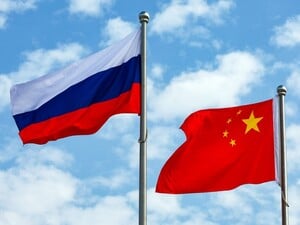
In China, such situations raised questions about “what this means for relations” between the PRC and the Russian Federation, which should be “comprehensive,” “mutually beneficial” and “eternal,” the media writes.
According to him, Beijing was confident in its partnership with Maduro and his regime and therefore invested about $9 billion in the construction of a petrochemical plant in Guangdong province to process oil from Venezuela, which accounts for 4% of Chinese imports.
Beijing finds itself in a situation where it is “outplayed by the United States and let down by Russia,” the media emphasizes. According to him, China now suspects that it was no coincidence that Russian air defense systems did not work in Venezuela during the US special operation, but were “evidence of high-level cooperation” between Moscow and Washington.
The Times writes that in China over the past few years, the question has been raised about how reliable Moscow is as an ally for Beijing, as well as how much Russia’s actions are beneficial to China.
The publication quotes the former dean of the School of International Studies at Peking University and one of the most influential figures in Chinese strategic thinking, Jia Qingguo, who said that although the isolation of Russia due to the war against Ukraine brought economic benefits to the PRC, a solution to the war in Ukraine would be beneficial to China.
This view has begun to gain popularity in recent months in Beijing, the media claims.
The alliance with Russia is becoming “increasingly asymmetrical and inconvenient” for China, its authors write. In their view, Russia's disregard for the UN Charter, Moscow's use of military force and threats of nuclear escalation “do not fit well” with China's preferred image of a stabilizing power “operating through institutions, rules and long-term balance.”
The Times notes that on January 16, China signed an agreement with Canada to reduce tariffs on Chinese electric vehicles and Canadian agricultural products.
This seemingly modest deal is a reminder that China still values interaction with developed economies operating within established legal and institutional frameworks, and that Beijing has “alternative paths beyond dependence on a sanctioned, militarized Russia,” the media writes.