
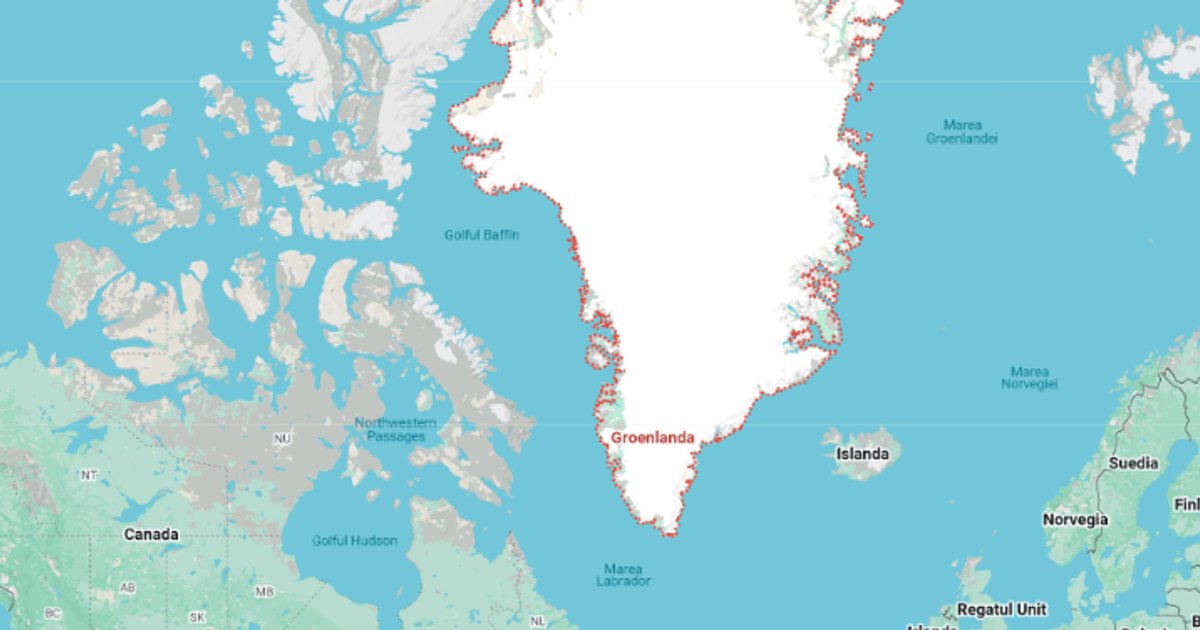
Greenland, the island that has nowadays become one of the most disputed territories, along with Ukraine and Taiwan, means, in translation, “Green Country” or “Green Land”. A strange name, considering that 80-90% of it is covered with ice.
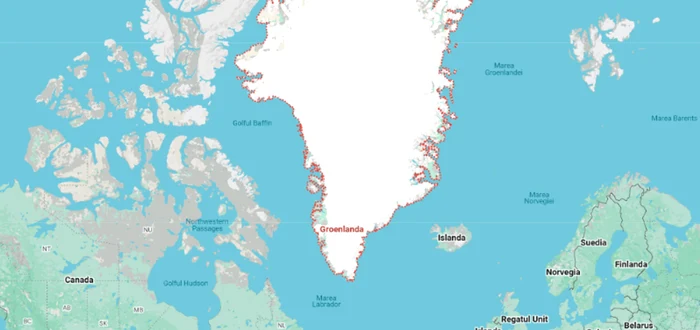
Greenland, a land of ice with a misleading name. Google Maps photo
The name Grœnland, in Old Norse, has a strategic rather than a descriptive motive. According to historical sources, the name was given around 982 by Erik the Red, a Viking explorer, for “marketing” reasons. Exiled from Iceland, the fighter arrived on the huge neighboring island. Wanting to establish more settlements here, he wanted to bring other northern settlers, so he chose a catchy name, hoping that “Greenland” would sound more welcoming than the reality of a mostly ice-covered island.
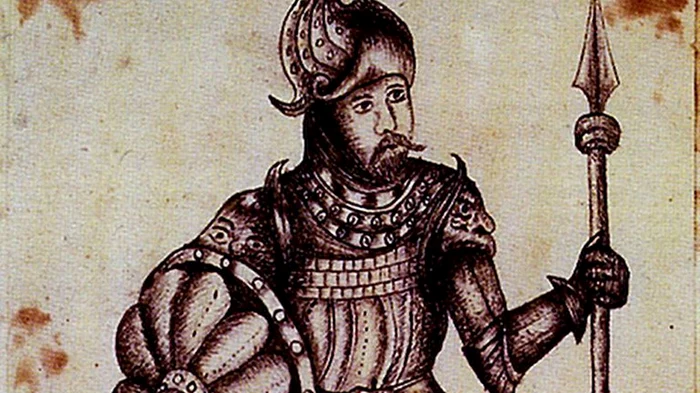
Erik the Red, discoverer of Greenland
However, the name was not entirely misleading. Even today, southern Greenland has relatively mild summers with green grasslands, especially in the coastal areas. And in the early medieval period (the so-called Medieval Warm Period), the climate was somewhat more favorable to agriculture than it is today.
5,000 settlers followed him to Greenland
His plan initially brought around 500 settlers to the “Green Country”, and over time their number reached around 5,000 people, distributed in two settlements located near the fjords on the south-west coast. The settlers organized themselves politically on the Icelandic model and Erik the Red became the supreme leader of Greenland, rich and respected.
Greenland – from Erik the Red to Donald the Orange – an inspired title by those from politico.eu
Around the year 1010, however, an epidemic broke out in the colony which led to the death of the leader. Towards the end of the 14th century, the last settlers also disappeared from Greenland, victims of the cooling of the climate, the flooding of the coastal areas, the battles with the Inuit and hunger.
Iceland, the “Land of Ice” that is green
Also in the far north, there is another name anomaly. Iceland translates as “Land of Ice”, although it is greener than Greenland. The island received its name in the 9th century, according to the Norse sagas, from a Viking named Hrafna-Flóki Vilgerðarson. He arrived on the island after a very hard winter and, seeing icy fjords and harsh conditions, named it this way.
But, as with Greenland, the name is misleading: Iceland has a milder climate, thanks to the Gulf Stream. It has many green areas, pastures and even agriculture (however, unproductive until the use of geothermal water in greenhouses), only about 10–11% of its surface is covered by ice.
Here are other misleading names on the world map
Patagonia – “Land of Big Feet”: the name comes from “patagón”, a legendary character described by European explorers. The locals seemed huge to the settlers, but in reality they only had large leather shoes.
The Black Sea – it's not really black. Named alternately Axaina (“dark blue”, in the language of the Cimmerians), Pontos Euxeinos (The Receiving Sea, given by the Greeks), the Great Sea (Byzantines), our sea later received “black” from the Turks: Kara Deniz. They associated it with the north, in their language black also meant north. Other sources state that strong storms made it appear dark.
Cape of Good Hope – not exactly “good”. Contrary to the belief of some, the Cape of Good Hope is not the southernmost point of the African continent, it is 150 kilometers away, at Agulhas. Originally, this point was called the Cape of Storms by the Portuguese navigator Bartolomeu Dias, because of the extreme weather. Later it was renamed, so as not to demoralize the sailors.


