Israel is unlikely to act to accelerate a regime change in Iran, as it assesses that the government is far from the brink of collapse, while the current protests would not have the power to bring it to that point, the NYT reports.
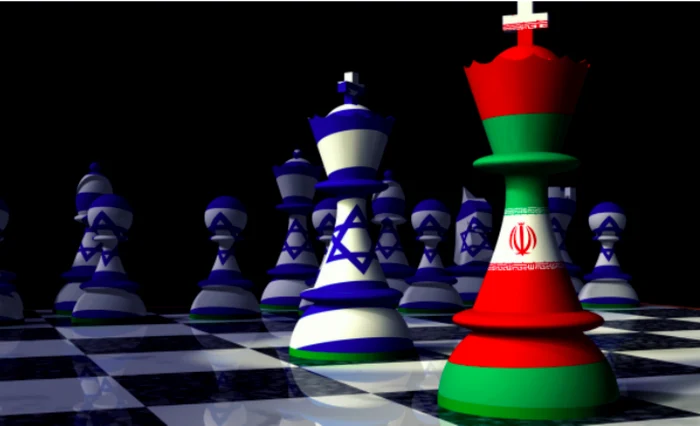
Perhaps no country is watching the protests in Iran more closely than Israel, for which the Islamic Republic is an enemy and an existential threat.
Iran is the obsession of Israeli Prime Minister Benjamin Netanyahu, who has portrayed the government in Tehran and its supreme leader, Ayatollah Ali Khamenei, as a global threat on the order of Nazi Germany. The two countries fought a 12-day war last June, with the US at one point joining in bombing Iranian military and nuclear sites. Iran then launched ballistic missiles at Israel, so no doubt the latter would be the first to welcome a regime fall.
However, former officials and analysts say it is unlikely that Israel will actively try to move to hasten a regime change, as they believe it would not be opportune. Israel would only act in a scenario where it was co-opted into a US operation or if somehow Iran strikes first.
Israel's caution is perfectly justified, given the not inconsiderable risks of a counterattack by Iran or even the outbreak of a new war, experts say.
Besides, a major offensive would probably be necessary to remove the religious leaders from power – and anyway, it's unclear how successful any kind of military intervention would be at this stage.
Israel's caution is linked to several factors, the NYT writes.
Protests do not have the power to overthrow the regime
Israeli analysts predict that the current wave of demonstrations in Iran will be short-lived. Protesters lack the leadership and means to defend themselves, they said, citing reports this week that Iranian security forces have killed thousands of demonstrators.
“If there were millions of people on the street, it would be very difficult to stop them. You can't kill everyone,” said Sima Shine, a former Iran expert at Israel's Mossad spy agency. “But we don't see millions. We see thousands. And this regime knows how to manage that. The main tool is to kill people and make sure everyone knows they're doing it.”
According to Israeli analysts, the protests are being repressed including by the Revolutionary Guard Corps and its volunteer militia, the Basij.
Both have a strong motivation to defend the existing power structure because their fate is tied to that of the government, which has brutalized the Iranian people for years, said Zohar Palti, former head of the Mossad's intelligence directorate.
“If the regime changes, they are dead,” he added. “This is why they kill people in the streets.”
A successful uprising would require a well-organized opposition capable of maintaining pressure on Iran even in the face of a violent and sustained crackdown, according to Eyal Hulata, Israel's former national security adviser from 2021 to 2023.
“That's missing in Iran, and that's the main reason why everyone is kind of skeptical that this could be successful,” he said.
It is difficult to overturn the power structure of a distant state
Using tools like social media to amplify the voices of the opposition, or cyber attacks to sabotage the government — the kind of efforts that can be made remotely apart from military action — is not enough to threaten the Islamic Republic, experts say.
“We have not seen that cyber technology can be used effectively to bring down countries,” he said.
And with Iran shutting down the Internet and stifling independent reporting of the protests, it has been difficult even for Israel — whose intelligence service has repeatedly troubled the Iranians with its ability to operate inside their country — to get an accurate picture of the situation on the ground.
“Israel cannot change the regime in Iran,” said Hulata, Israel's former national security adviser.
“Israel can provide assistance to opposition groups, exert some influence,” he added. “But this alone is not enough.”
What could make a difference, several experts said, would be a much larger military crackdown on the government's ability to crack down on protests. This could involve targeting Revolutionary Guard forces, the Basij, or Iran's command and control systems. However, such an operation would be a challenge in such a large country.
Israeli leaders would also welcome an attack on Iran's ballistic missiles and missile factories, which Israel and other countries in the region see as threats and which Iran sees as a vital deterrent.
But such an attack would not be within Israel's discretion, analysts said. It would depend on the United States.
Israel's options are limited
At this point, for Israel, any possible gains from an intervention in Iran are far outweighed by the risks, experts said.
“Most of the options are bad for Israel,” said Danny Citrinowicz, a former Iran expert for Israeli military intelligence.
For Israel, the biggest risk would be that its actions lend credence to the Iranian government's claim that foreign provocateurs are behind these protests.
“Israel is 'doing everything possible to be perceived as watching events from the outside,'” he explained, precisely to avoid Iran using evidence of Israeli actions as justification for using force against protesters.
After an obscure Israeli government minister told a radio producer that the country had agents in Iran “right now,” Netanyahu ordered officials to stop giving interviews on the matter.
Another reason Israel is wary of such an attack is the risk of a direct strike against Israel, at a time when it already has troops in Gaza, the occupied West Bank, Syria and Lebanon and is still rebuilding its ammunition stocks after two years of engaging in hostilities with several countries.
Any Israeli intervention detected by Iran could increase the likelihood of a serious miscalculation on Tehran's part, experts warned.
If Iran believes that Israel is preparing for an attack, it could launch a pre-emptive strike against Israel. The Israeli Air Force could be expected to respond with force given how weak Iran's air defenses were in the June war. But experts say it would not make sense to put Israeli citizens at risk if such an intervention has little chance of toppling the regime.
The son of chess does not inspire confidence.
Reza Pahlavi, the exiled son of the last shah of Iran, has proposed himself as the future leader of Iran. Netanyahu welcomed him to Israel in 2023, and some ministers in his government promoted him online.
But Israeli national security experts have been skeptical of Pahlavi's ability to garner significant support from Iran, arguing that he lacks experience, charisma and a significant base inside the country.
Citrinowicz, a former Israeli military analyst, said it was a mistake on Pahlavi's part to meet with Netanyahu, but also on the part of Israeli officials to continue amplifying his voice, as they too obviously associate the idea of regime change with Israel, risking alienating some potential demonstrators.
There is also little chance that Pahlavi will return to Iran, he said.
“Most Iranians do not want to replace one dictator with another.”