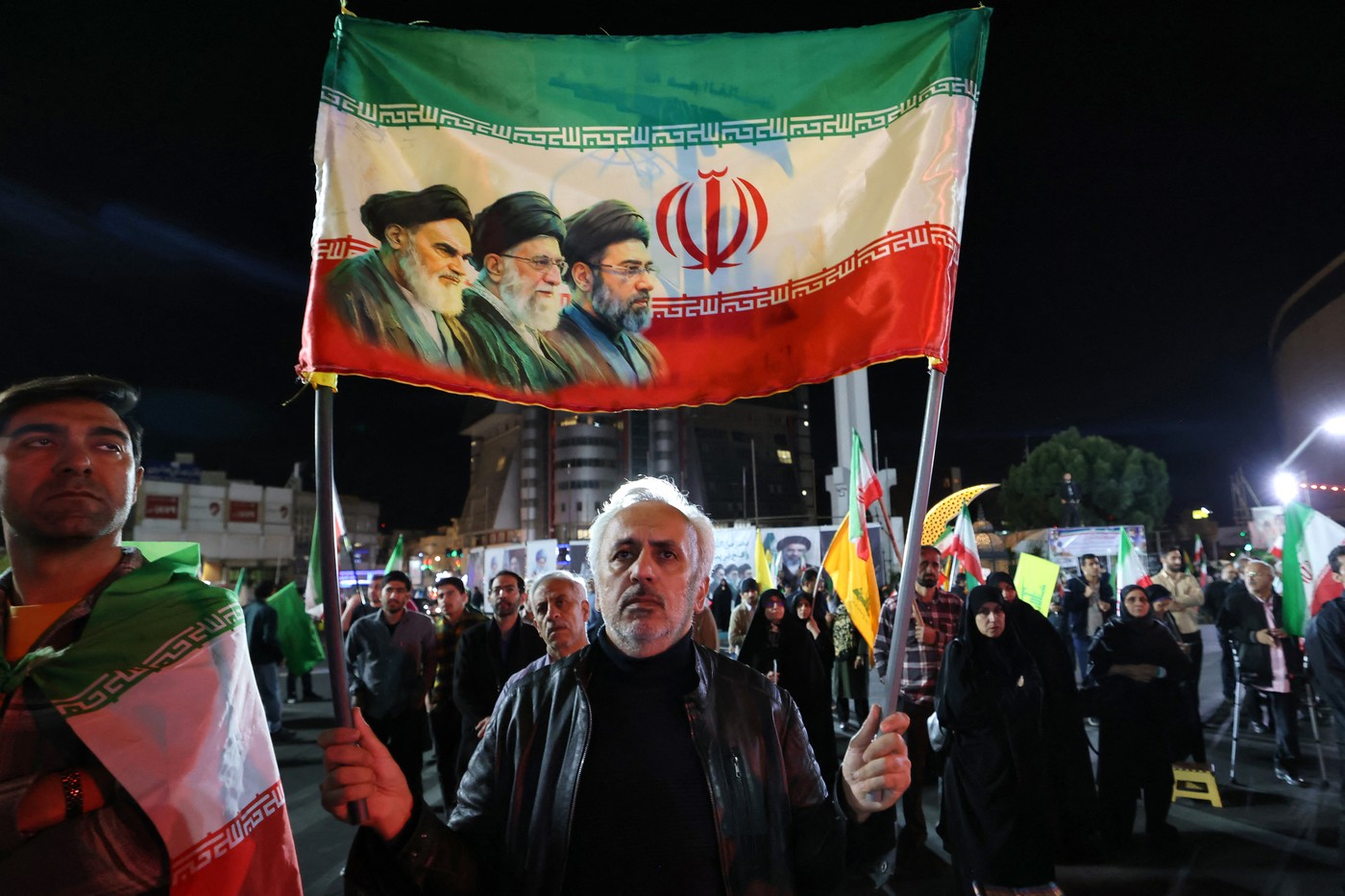
What images are currently being broadcast on Iranian television. “I did something so stupid”


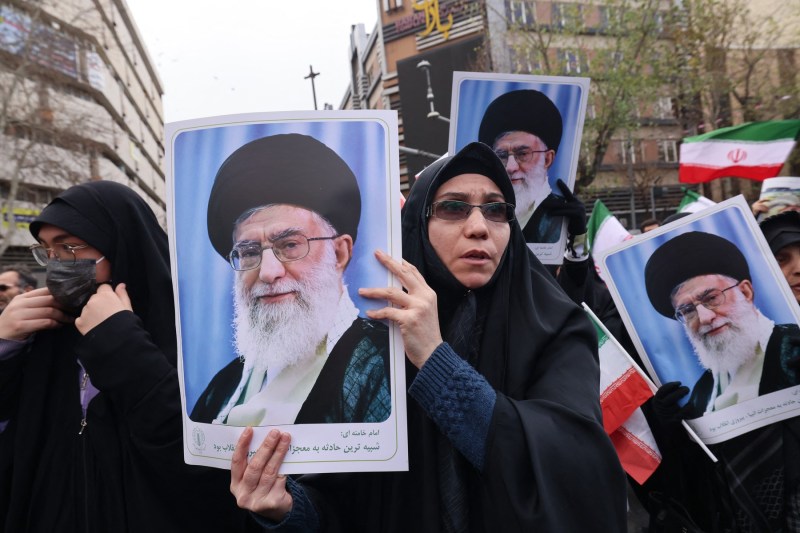
Iranian women holding portraits of Iran's Supreme Leader Ayatollah Ali Khamenei during the funeral of members of the security forces killed in recent protests in Tehran on January 14, 2026. PHOTO: ATTA KENARE / AFP / Profimedia
The head of Iran's judiciary, Gholamhossein Mohseni Ejei, personally conducted interrogations of arrested protesters in front of state television cameras, raising fears among human rights activists about the possibility of “forced testimony” staged to instill fear in the country, writes AFP.
In images released throughout Thursday, Gholamhossein Mohseni Ejei is seen sitting down, surrounded by other officials, under portraits of Iran's supreme leader, Ayatollah Ali Khamenei, and the founder of the Islamic Republic, Ruhollah Khomeini.
In front of them sits a woman seated on a chair, her face blurred, wearing a black veil and a red jacket. She is accused of throwing pieces of concrete at security forces from the roof of a building in Tehran.
“I don't know what happened, why I did something so stupid,” she said through sobs.
Activists say confessions are 'obtained under duress and torture'
State television has aired dozens of similar sequences in recent days, non-governmental organizations say, with protesters being questioned by the head of the judiciary himself. They all seem to admit their guilt without contesting the accusations brought against them.
State television “started airing forced testimonies of protesters a few days after the protests started” that broke out on December 28, said Iran Human Rights (IRH), a non-governmental organization based in Norway.
“The dissemination of confessions obtained under coercion and torture, before any judicial procedure, is contrary to the presumption of innocence,” the NGO also said.
According to IRH, at least 3,428 people have died and around 10,000 have been arrested since the protests began.
“I did something I can't even forgive myself for”
During a five-hour visit to a Tehran prison on Wednesday, Gholamhossein Mohseni Ejei promised “swift” and “public” trials for the arrested protesters.
There he was seen in a room interrogating a man in gray prison clothes who was answering accusations of possession of Molotov cocktails with his head down.
In another video, according to Iran's human rights news agency HRANA, two teenage girls arrested in the city of Isfahan are seen “confessing” that they were paid to protest.
In another sequence, a woman admits to sending a message to Israeli Prime Minister Benjamin Netanyahu.
“I did something I can't even forgive myself for. I sent a message…” she said.
“Who?” Ejei insisted.
“I can't even pronounce his name. The worst individual in Israel,” the accused replied.
“She sent messages to Netanyahu,” another official chimed in.
Targeted by Western sanctions
Gholamhossein Mohseni Ejei, targeted by US and EU sanctions, former intelligence minister, is an ultra-conservative religious figure who has made a career in the heart of power.
United Against Nuclear Iran, a US-based NGO, described it in 2024 as a “ruthless executioner of the Islamic Republic with no respect for human rights”.
Opposition groups accused him of being involved in the mass executions of political prisoners in 1988.
According to the organization Reporters Without Borders, which also said that in 2024 he bit a journalist on the shoulder during a debate, Ejei has “blood on his hands”.