Small companies are losing optimism. The burdens and disappointed expectations among entrepreneurs are increasing


The mood of small business owners is declining. Entrepreneurs do not have financial problems so much as they feel overwhelmed by regulations and unfulfilled promises of the state. This is the first clear signal in two years that the improvement in sentiment observed after the pandemic and the peak of inflation has begun to fade.
– In 2024, the result in this area was (-) 25.5 points., while in 2025 it worsened to (-) 38.4 points. We recorded a drop of as much as 12.9 points. This is not yet the same result as in 2022, but it is certainly a signal growing frustration of entrepreneurs – comments Piotr Juszczyk, inFakt tax advisor.
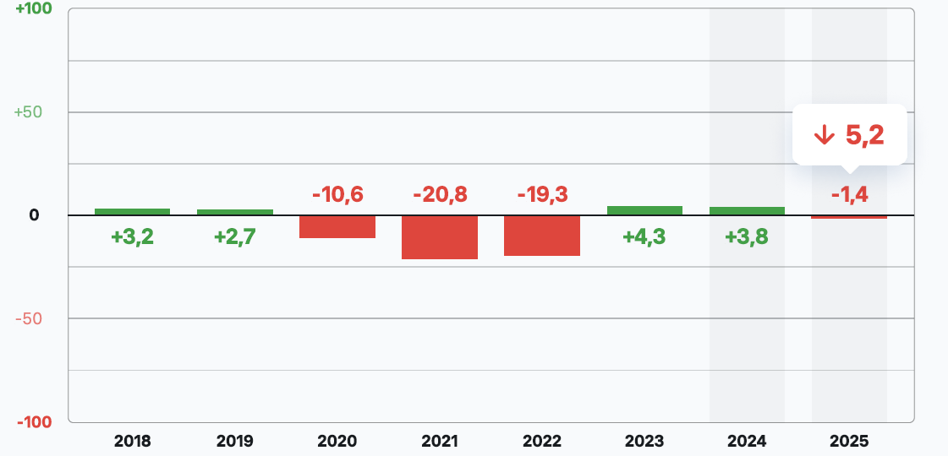
– The perspective of micro and small companieswhich are the basis for the inFakt 2025 index study, is clearly changing direction, and not in an optimistic direction. Interestingly, this tendency is not consistent with the general trend of the economy and the level of expectations recorded in the large enterprise sector. After a wave of not so much euphoria but growing optimism, at least as to the direction of changes, entering 2026 we see a clear correction in the mood of micro and small entities, not so much resulting from the current difficult situation (the assessment of the financial situation of the surveyed companies has only slightly deteriorated, and the financial prospects are rather positive), but rather from rationalization of expectations towards the government and state institutions – comments Dr. Anna Czarczyńska from the Department of Economics at the Kozminski University.
Advertisement
High taxes drain entrepreneurs' budgets
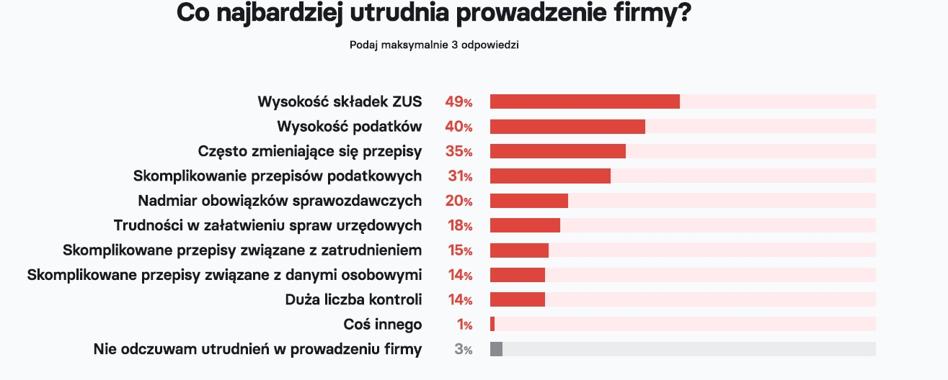
The surveyed entrepreneurs were also asked what makes running a business most difficult. Respondents most often indicated: high ZUS contributions, tax levels, frequent changes in regulations and an increasing number of reporting obligations. Compared to 2024, the belief that business conditions are actually improving is becoming less common.
– Macroeconomic indicators at the end of 2025 were very good, which was influenced by the stabilization of inflation and, consequently, the growing purchasing power of money, the reduction of interest rates, the release of funds from the KPO, the persistently high internal consumption and the good results of the Warsaw Stock Exchange. However, these macro factors only indirectly affect our study group. Various forms of financing in Poland are mainly used by large enterprises, sometimes also medium-sized ones with the prospect of expanding the scale of their operations, which means that Small entities that avoid debt do not benefit from improved lending conditions – he adds Dr. Anna Czarczyńska.
– The assessment of the current financial condition of companies has also slightly worsened. In 2024, the result was (-) 4.0 points, while in 2025 it dropped to (-) 4.9 points. Although the difference is not large, it shows the increasing caution of entrepreneurs in assessing their own financial situation, especially in the conditions of persistent cost pressure and high contributions and tax burdens – emphasizes Juszczyk.
Good accounting and committed employees are essential
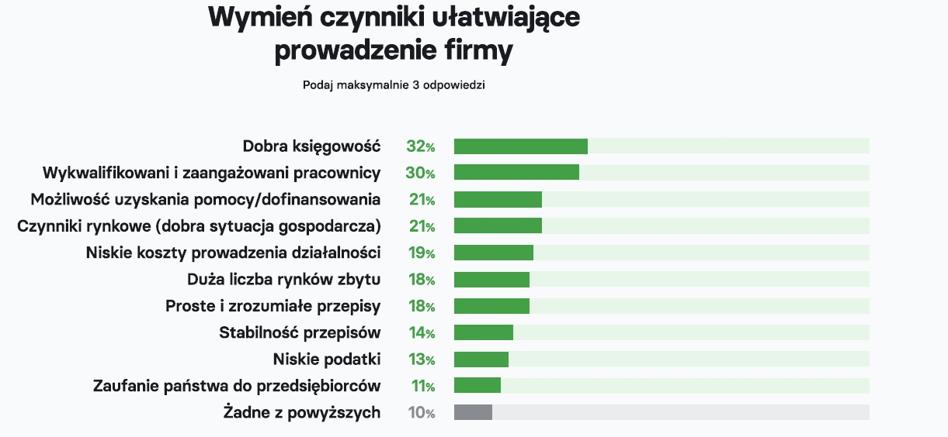
In addition to the factors that make running their own business difficult, entrepreneurs also indicated those that, in their opinion, make running a business easier. According to the study, the three most important parameters are: good accounting (32%), qualified and committed employees (30%), and the possibility of obtaining assistance or funding (21%).
– In my opinion, the change in mood also has a political context. In 2024, some companies linked the improvement of the economic climate with election promises and announcements of changes, including: in terms of health insurance premium or tax-free allowance. A year later, Due to the lack of implementation of key declarations, this optimism gave way to disappointmentwhich was clearly reflected in the results of the inFakt index for 2025. To sum up, the inFakt 2025 index shows a deterioration in the mood of entrepreneurs compared to the previous year. Companies assess the conditions of doing business and their current financial situation increasingly worse, and at the same time their optimism about the future is weakening. Although satisfaction with running a business remains relatively high, there are no increasing regulatory burdens, Juszczyk says.
– Central Statistical Office data for Q3 indicate 3.8%. y/y growth, driven mainly by consumption and investment, which was significantly higher than the euro area average. Growth forecasts for Poland in 2026 are up to 4%. So the question is why this optimism is not visible among our respondents? Or they were not the beneficiaries of this growth to such an extent (companies of the so-called business environment), or the expectations were higher and were not realized, which lowers the subjective level of satisfaction – sums up Dr. Czarczyńska.
How was the data collected?
The inFakt index measures the mood of Polish entrepreneurs for the eighth time and shows the condition of micro and small companies. The indicator is created on the basis of the “Polish Entrepreneurship Survey”, carried out by SW Research on behalf of inFakt. It covers four key areas: ease of doing business, assessment of the company's current financial condition compared to the previous year, forecasts of the financial situation for the next year and satisfaction with running a business. The index can range from (-) 100 points, meaning extreme pessimism, to (+) 100 points, meaning extreme optimism. The study analyzed micro (employing up to 10 people) and small entrepreneurs (up to 50 people).
Respondents most often indicated: high ZUS contributions,
tax level, frequent changes in regulations and growing number of reporting obligations. Compared to 2024, the belief that business conditions are actually improving is becoming less common.
The publication contains affiliate links.