Iraq 2.0. Trump's plans for Venezuela take shape: Private military contractors to protect Venezuelan oil


President Donald Trump's administration is considering using private military contractors to protect Venezuela's oil and energy infrastructure instead of deploying US troops, according to sources familiar with the plans being discussed in Washington.
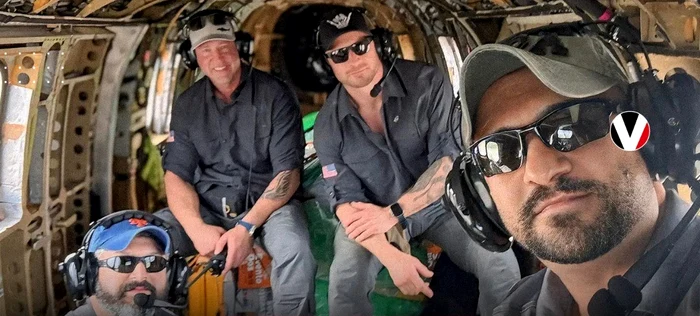
Members of the Gray Bull Rescue Foundation/PHOTO:X
Although Donald Trump has not completely ruled out a possible US military presence in Venezuela, those close to the president say he is reluctant to send US troops for an extended period. But that approach raises a major problem after the capture of former Venezuelan President Nicolás Maduro: how to protect American economic interests in a country in a power vacuum.
Reviving oil production is seen as central to Trump's vision of a post-Maduro Venezuela. But to convince the big oil companies to return to a collapsing industry, the administration must provide strong security guarantees — not in the short term, but for years.
The role of private contractors
Talks to secure the oil assets are at an early stage, the sources said, but several private security firms have already expressed interest. In the past, the United States has spent considerable sums on such services: during the Iraq war, about $138 billion was allocated to contractors for security, logistics and reconstruction, CNN notes.
Last week, the Defense Department issued a request for information to private companies, asking for details about their ability to support possible US operations in Venezuela. The security firms also discussed with the State Department about protecting a possible reopening of the US embassy in Caracas. The Pentagon declined to comment officially on this information.
Among the organizations cited as well-placed is the Gray Bull Rescue Foundation, made up of former US special forces members who allegedly helped opposition leader María Corina Machado secretly leave Venezuela last year.
A controversial strategy
Turning to private military contractors is an option that attracts controversy. Over the past two decades, these firms have been involved in numerous US missions, but have also been associated with scandals, including allegations of civilian abuse and profiting from armed conflict.
Sources indicate that the involvement of Erik Prince, the founder of Blackwater and controversial Trump ally, could also be considered. His company played a significant role in Iraq after the 2003 invasion, but came under fire after an incident that killed several Iraqi civilians in 2007. Reached for comment, Prince declined to comment.
The reluctance of major oil companies
Despite the Trump administration's efforts, some major oil companies remain cautious. ExxonMobil CEO Darren Woods recently told the president that Venezuela is currently “uninvestable.” Trump later said he was “inclined” to exclude Exxon from any projects in the country.
Analysts say major companies will wait for clarification on security, especially as remnants of the old regime and armed groups are still active.
“The key question is whether personnel can work safely now and whether they will be able to do so in a few years,” says Bob McNally, president of consulting firm Rapidan Energy.
An extremely fragile security environment
Venezuela is under the highest level travel warning issued by the US State Department, citing severe risks, including arbitrary detentions, violence, kidnappings and a lack of adequate medical infrastructure.
In addition to the local militias known as “colectivos”, factions of the Colombian armed groups FARC and ELN are also present in Venezuela, interested in maintaining drug trafficking routes, analysts warn. Any further pressure on these groups could turn oil infrastructure into a target.
“It's a highly volatile situation, and US energy assets could become direct targets”says Theodore Kahn, an analyst specializing in Venezuela.
An American presence, but not a military one
According to the sources, the Trump administration's plan is not about occupying the country or protecting a specific government, but about securing the oil infrastructure and limiting illegal oil exports to US adversaries such as Russia, China, Iran and Cuba.
“American presence does not necessarily mean American troops,” a source close to the administration said. “It can mean a security presence to protect strategic assets.”
For now, it remains unclear whether this strategy will succeed in convincing both oil companies and international allies in a regional context described by analysts as one of the most unstable in the world.